Operators around the UK, helped by specialists in decarbonisation technology, are working hard to install the necessary charging infrastructure at bus depots to support the expanding number of zero emission buses.
It is an important step on the journey to deliver a cleaner and more green transport network and build more efficient bus operations, as the sector looks to rapidly switch over to electric vehicles.
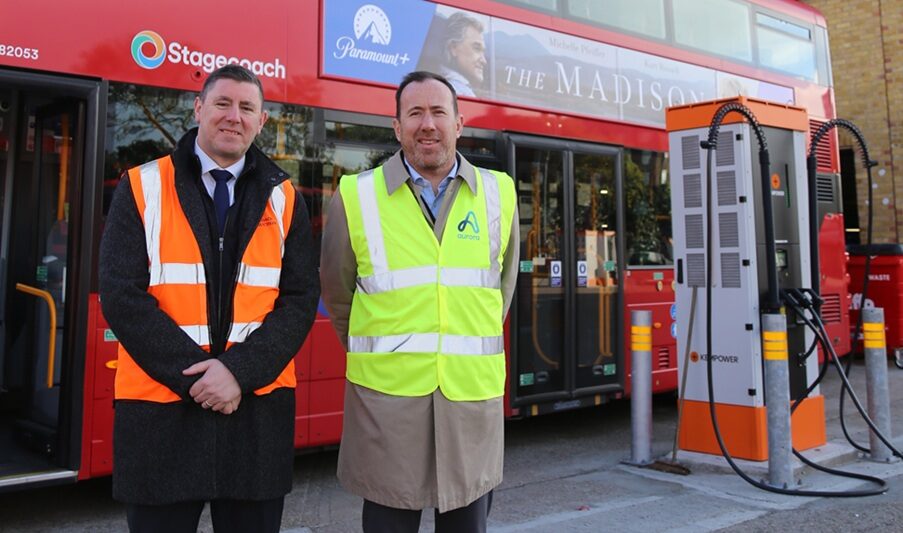
For example, Aurora Utilities, the independent distribution network operator (IDNO), is accelerating Stagecoach Group’s zero-carbon transition, energising an expanding number of bus depots across the UK as part of a major electrification programme.
Sites now live include Aldershot, Arbroath, Ardrossan, Ash Grove, Barking, Barnstaple, Bow, Bromley, Cheltenham, Dover, Dundee, Exeter, Gloucester, Kilmarnock, Leyton, St Andrews and Torquay.
Aurora’s expanded network upgrades will enable capacity for about 1,330 new electric buses – representing more than 16% of Stagecoach’s total UK fleet – and marking a major step forward in the operator’s electrification plans.
The programme is expected to cut tens of thousands of tonnes of carbon emissions each year while modernising depot infrastructure across the country.
Aurora is adopting and operating the new grid connections required to power high-capacity EV charging infrastructure, enabling faster, more flexible connections at scale.
The London depots – including Ash Grove, Barking, Bow, Bromley and Leyton – are also aligned with Transport for London’s (TfL’s) ambition for all London facilities and public transport to run on renewable energy by 2030.
Alongside fleet electrification, Stagecoach is investing in battery storage and on-site solar to further reduce reliance on the grid and strengthen energy resilience.
Aurora, licensed by Ofgem in 2024 and backed by a multi-million pound investment from I Squared, supports transport operators, developers and public sector organisations nationwide with fast, flexible grid connections that power decarbonisation.
Tony Cockcroft, Asset Management and Infrastructure Director at Stagecoach, said: “Electrifying our nationwide depots is critical to delivering a modern, sustainable public transport network.
“Aurora’s expertise as an IDNO has allowed us to accelerate new connections, and get more electric buses on the road sooner, lowering our emissions and benefiting the communities we serve through more reliable services.”
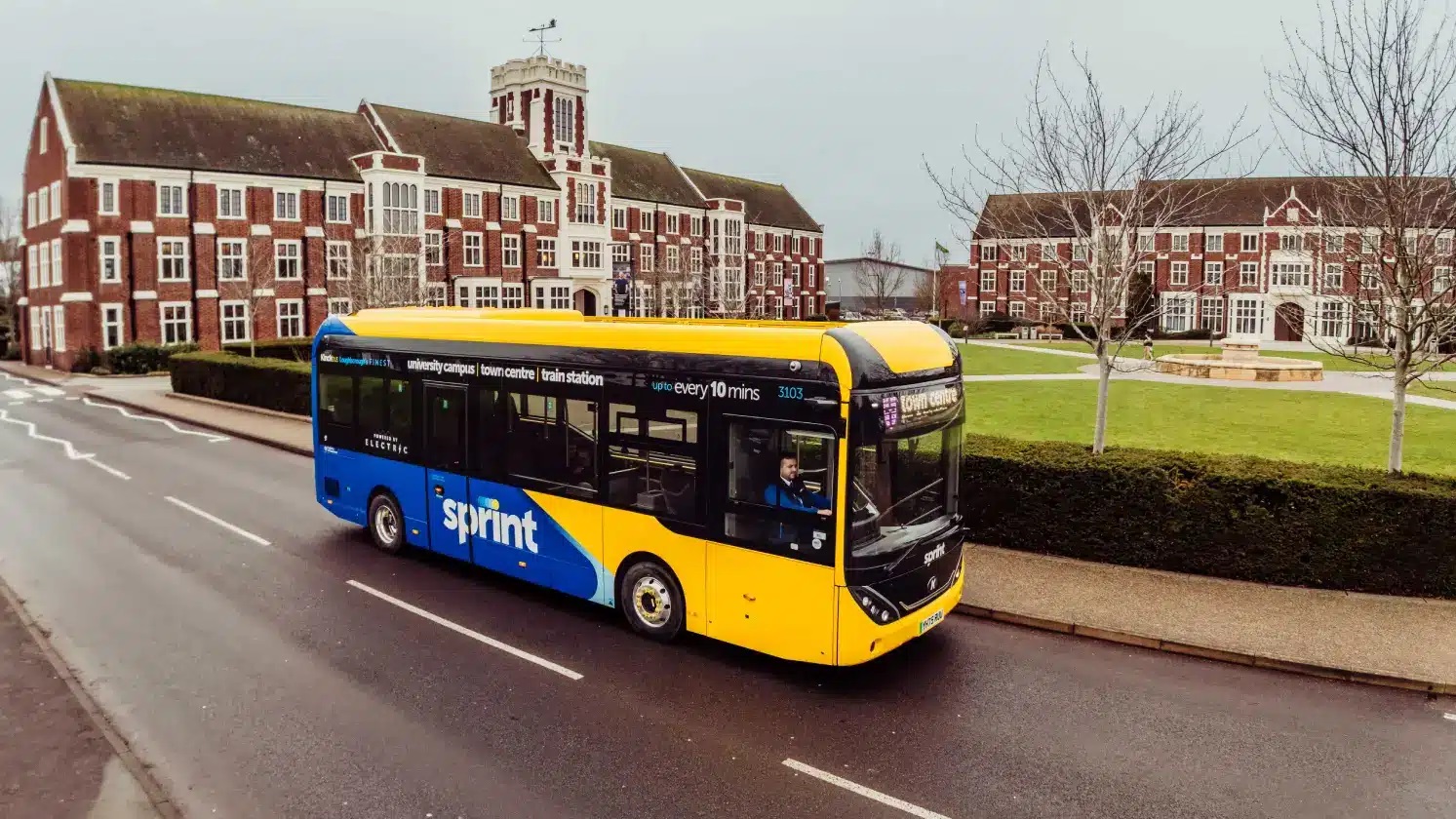
Meanwhile, E-fleet solutions specialist VEV has installed high-powered smart charging and energy infrastructure to support the rollout of fully electric buses at the Kinchbus depot in Loughborough.
The project forms part of an £8 million investment by Kinchbus to begin the electrification of its fleet, which has seen 22 new electric buses enter service.
When fully deployed, the electric fleet is expected to require up to 1.4GWh of electricity per year, all managed through VEV’s intelligent charging and energy management platform, VEV-IQ.
As part of the depot upgrade, VEV is also working to install 53kWp of on-site solar PV, which is expected to generate about 44MWh of renewable electricity per year.
All charging activity will be intelligently managed to prioritise lower-cost, off-peak electricity while actively limiting demand during peak grid-stress periods, particularly between 4pm and 9pm.
VEV’s software platform is already being used to manage charging across hundreds of chargers nationwide, delivering high levels of reliability for mission-critical fleet and public charging operations.
Tom Morgan, Managing Director at Kinchbus, said: “This is a huge milestone for public transport in Loughborough.
“It’s a green new dawn for the town, with zero emissions from quieter, smoother and more reliable journeys.
“Kinchbus customers can be proud and excited to be part of the future of bus travel, enjoying a next-level experience of comfort and convenience while supporting sustainable public transport that benefits both the climate and local air quality.”
Also, Basildon has become home to Essex’s first fully electric bus depot following the completion of a £30.6 million project delivered by First Bus in partnership with Essex County Council and backed by the Department for Transport’s Zero Emission Bus Regional Areas (ZEBRA2) scheme.
The project at the Cherrydown Way depot was supported by a £4.8 million ZEBRA2 grant from the DfT, alongside a £25.8 million investment from First Bus.
This funding has delivered new high-capacity charging infrastructure at the depot, enabling buses to fully recharge overnight using Renewable Energy Guarantees of Origin (REGO) electricity.
So far more than 1,500 electric buses have been introduced by First Bus, and the operator has recently put 55 new zero tailpipe emission buses into service across Basildon and South Essex.
This new Basildon fleet will save an estimated 4,000 tonnes of CO₂ annually compared with the diesel buses they replace.
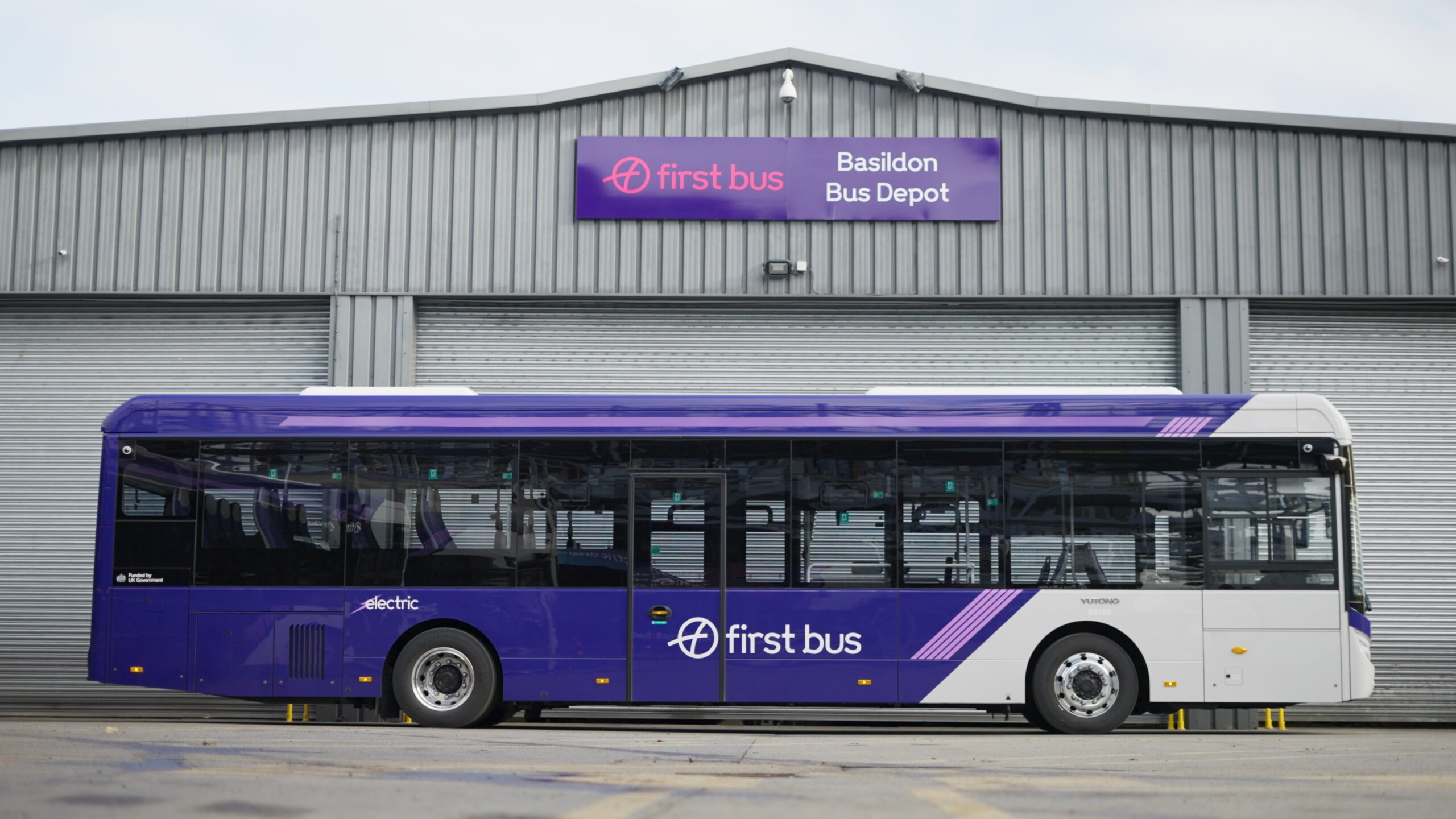
Simon Mathieson, Managing Director of First Bus East of England, said the transformation of the depot marks a major milestone in Essex’s journey towards cleaner, public transport.
He added: “Working in close partnership with Essex County Council, we’ve delivered a once-in-a-generation investment that will make bus travel cleaner, quieter and more sustainable for years to come.
“The electrification of our Basildon depot is another important step in our mission to run an entirely electric fleet by 2035.”
Fleet electrification specialist Zenobē also worked on delivering the newly electrified Trent Bridge Garage for Nottingham City Transport (NCT), which was supported by £12.3 million from the DfT’s Zero Emission Bus Regional Areas (ZEBRA) fund.
As part of the £30 million total project investment, NCT’s 1901 tram shed was electrified with modern charging infrastructure, ready to support 78 electric buses.
It represents NCT’s first electrification project, with Zenobē providing finance for vehicles and batteries, charging infrastructure and crucial expertise.
This ensured that NCT could get the required grid connection and continue to deliver for their passengers.
According to David Astill, NCT Managing Director, the depot is a significant step towards Nottingham’s aspiration to be carbon-neutral by 2028.
He added: “Zenobē have been instrumental in successfully delivering Nottingham City Transport’s ambitions and supporting our team along the way.
“This project proves that with the right partners, public and private sector collaboration can deliver real change.”
All the projects mentioned demonstrate that by working in partnership with stakeholders and government, and investing in the latest technology, bus operators are helping develop a transport network that is fit for the future.