Tell us how Mission Community started?
Mission Community began from a very practical insight: there was a disconnect between one of the most disciplined, technically skilled talent pools in the UK; the Armed Forces community and industries facing structural skills shortages.
That insight was sharpened through early work on Mission Automotive, which we established under the auspices of a military motorsport charity with support from the SMMT and leadership from Mike Hawes. At the time, the automotive sector was rapidly electrifying, and it became clear that many conventional routes into high-voltage electric vehicle work didn’t recognise the levels of electrical discipline and safety culture that people gain from military technical roles, especially those experienced with complex power systems in field environments.
That experience is often highly relevant to civilian EV and commercial vehicle electrification, even though those industries traditionally categorise high-voltage differently from military systems.
The success of Mission Automotive drew attention from government. They recognised that if this model could improve employer engagement, workforce outcomes, and veteran employment in one sector, it could be applied more broadly. That led to government support for what is now the Veterans Industry Engagement Programme (VIEP); a UK Government-backed, accessible initiative designed to help organisations adopt veteran-friendly practices, value veteran skills, and engage deeply with the Armed Forces community. Mission Community was selected to deliver that programme, expanding our work from automotive into wider sectors through activities like guidance, events, and employer engagement campaigns.
That combination of industry insight, government mandate, and structured sector initiatives is the foundation of how Mission Community now works with employers, trade bodies, and sector events to build sustainable opportunities for service leavers, veterans, reservists, and military families.
How is Mission Community helping Armed Forces veterans into careers within the road transport industry?
We are first and foremost an advocacy organisation. Our role is not simply to direct veterans toward vacancies it is to work with industry to create the conditions, behaviours and leadership culture that allow the Armed Forces community to genuinely thrive.
That means helping employers understand how military skills translate into commercial value, supporting them to adopt veteran-friendly practices, and guiding them through frameworks such as the Armed Forces Covenant and Employer Recognition Scheme alongside highlighting the benefits such as National Insurance Rate Relief employers can benefit from if they employ a veteran in their first year leaving the service – up to a £6.5k saving per employee so a huge commercial saving too.
We convene industry at scale to make this visible. For the past seven years, we have hosted the UK’s largest Armed Forces community gathering at the National Transition Event (NTE), held annually at Silverstone. On 2 March, forces-friendly organisations, industry bodies, and Defence stakeholders come together with service leavers, veterans, reservists and military families.
The NTE isn’t a generic careers fair; it shines a spotlight on the industries actively seeking the skills this community offers. Road transport and logistics are prime examples. These sectors require operational discipline, safety culture, compliance awareness, technical competence and leadership under pressure which are all characteristics deeply embedded in military training.
Alongside our industry partners and the MOD, we create space for initiatives that are at the forefront of mapping structured pathways into employment. One example is Veterans into Logistics, a government-supported programme helping ex-service personnel retrain as HGV drivers and access roles in the transport sector. That initiative, and others like it, will be represented at the NTE, ensuring veterans can see tangible routes into road transport careers.
Our approach is ecosystem-based. We bring industry bodies, employers and Defence into the same room. We showcase practical pathways and we remove friction from transition.
Also, we make Armed Forces engagement visible and credible at major industry events like the CV Show.
Ultimately, our role is to ensure that employers don’t just say they support veterans; they build environments where they succeed.
What sort of opportunities are there for army veterans to work in road transport?
The opportunities are significant, and in many cases, immediate. A substantial proportion of those leaving the Armed Forces already hold HGV and large vehicle licences, having operated logistics fleets, transport convoys and specialist vehicles during service. They also bring experience in compliance, safety-critical environments, time-sensitive operations, and working within structured regulatory frameworks which are all directly relevant to the road transport sector.
Beyond that, service leavers have access to structured resettlement support. Through the Enhanced Learning Credits Scheme (ELCAS), eligible personnel can access up to £6,000 in funding (depending on length of service) for Level 3 and above approved training, usable for up to ten years after leaving. That creates real opportunity for additional qualifications; whether in transport management, engineering, fleet maintenance, compliance, or emerging technologies such as electrification.
In other words, much of the investment has already been made. The training discipline is there. The licences are often there. The funding for further qualifications is available. What’s required is employer awareness and proactive engagement.
The road transport industry has a genuine opportunity to attract individuals who are used to responsibility, accountability and operational tempo. But like any talent pool, they need to see clear pathways, visible commitment, and employers who understand how their experience translates.
That’s where events like the CV Show and initiatives like the Armed Forces Covenant play a role as they send a clear signal that this sector recognises and values military capability.
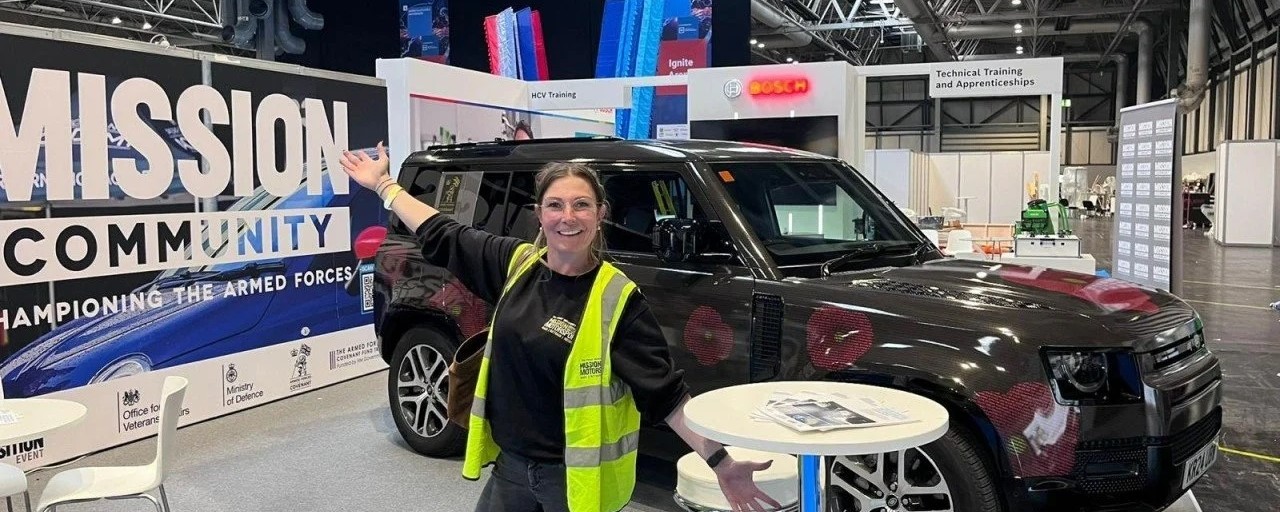
What products/information will Mission Community have on its stand at the Commercial Vehicle Show this year?
At this year’s CV Show, we’ll be focused on practical tools rather than promotional material.
Through our strategic partnership with the SMMT, we will be launching an Organisational Toolkit designed specifically to help businesses understand exactly how to become genuinely forces-friendly. Many organisations want to engage with the Armed Forces community but are unsure where to begin. The toolkit removes that uncertainty.
It sets out clear, structured steps; from signing the Armed Forces Covenant, to progressing through the Employer Recognition Scheme, to embedding supportive policies for reservists and service leavers. Importantly, it highlights the existing mechanisms and levers that are already available, many of which are funded through government programmes and taxpayer-supported transition frameworks but are often underutilised by industry.
This builds on the Mission Automotive Sector Guide, which we launched with SMMT in 2024 to the Armed Forces community. That guide helped service leavers understand the breadth of opportunity within automotive sector. The new organisational toolkit complements that by helping employers understand how to attract, support and retain that talent effectively.
In addition, we’ll have information on The Armed Forces Covenant and how to sign at the show; The Employer Recognition Scheme and progression pathways; best practice examples from forces-friendly employers, as well as insight into national initiatives such as Veterans into Logistics
Our aim is simple: to ensure that organisations leave the CV Show not just supportive in principle, but equipped with clear, actionable steps to engage this talent pool confidently and responsibly.
How important is the CV Show for Mission Community?
The CV Show is strategically important because the commercial vehicle sector sits at the heart of UK economic resilience. Transport is not peripheral; it underpins national security, supply chains, infrastructure delivery and emergency response.
Events like the CV Show bring together decision-makers who can influence workforce strategy at scale. That makes it the right environment to demonstrate that Armed Forces engagement is not symbolic; it is commercially and nationally significant. If we get this right, we strengthen both industry capability and veteran employment outcomes.

James Cameron
CEO, Mission Community