- UK vehicle production falls -17.2% in February, with 68,061 units leaving factories.
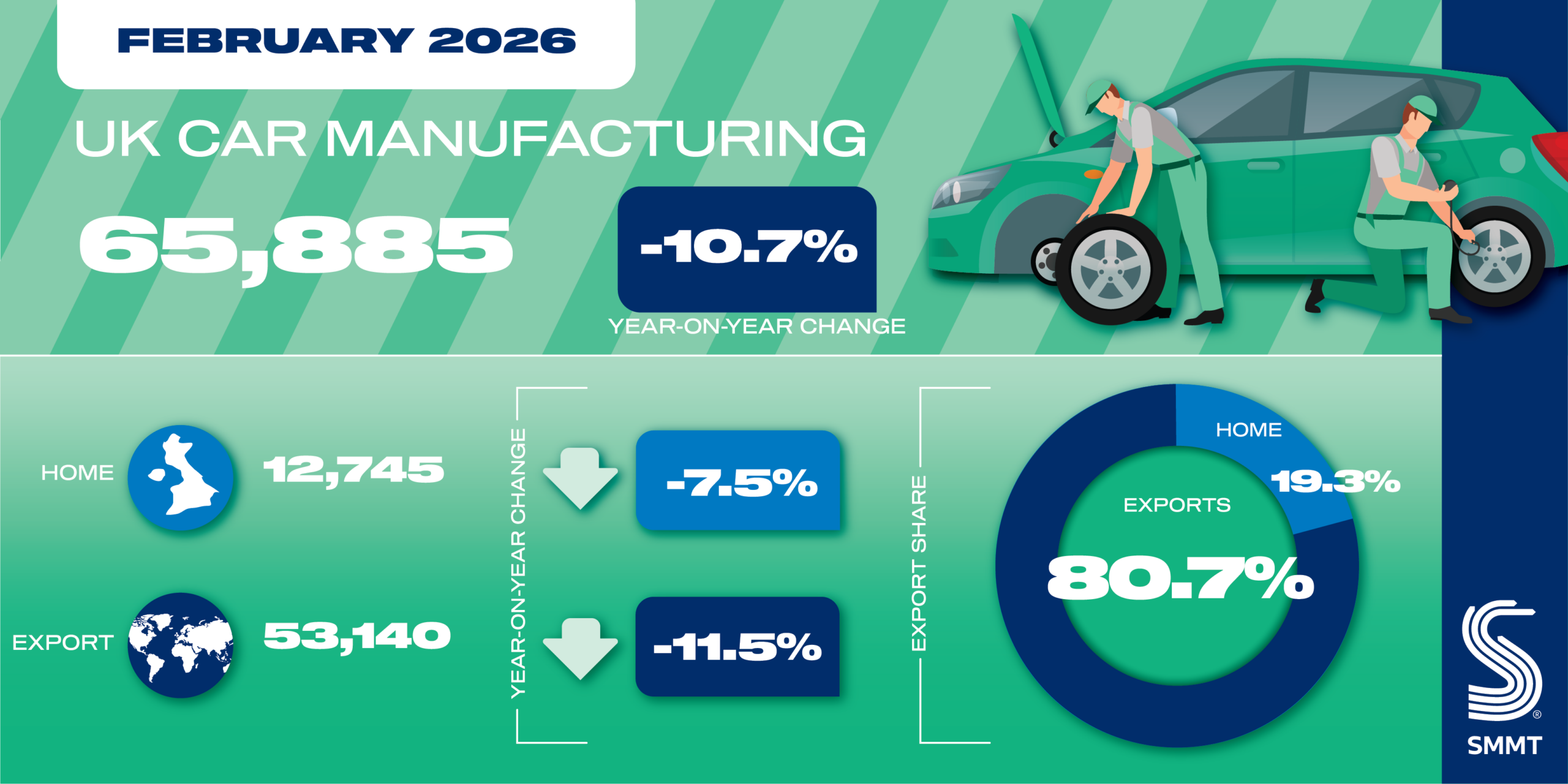
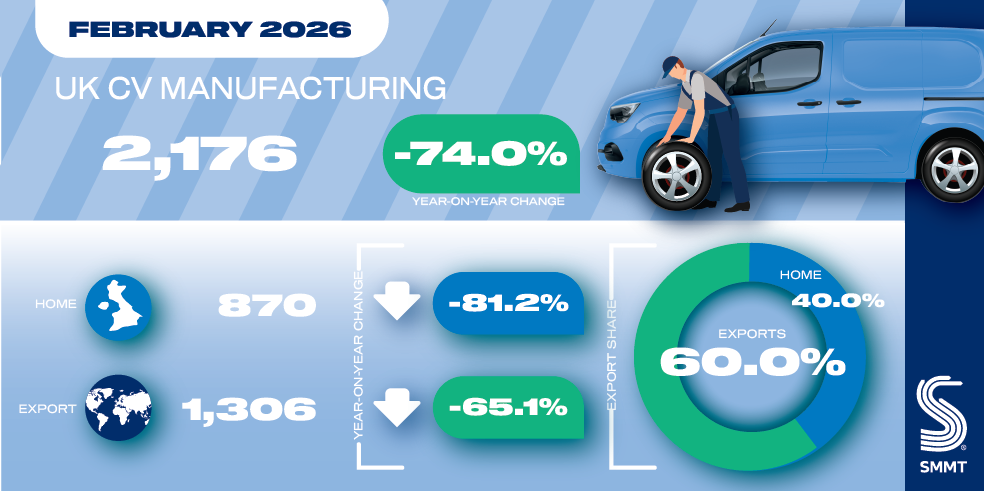
- Car output down -10.7% to 65,885 units, while CV volumes drop -74.0% to 2,176 units.
- Car exports decline -11.5% to 53,140 units with domestic demand down -7.5% to 12,745 units.
File download
UK New Vehicle Manufacturing February 2026
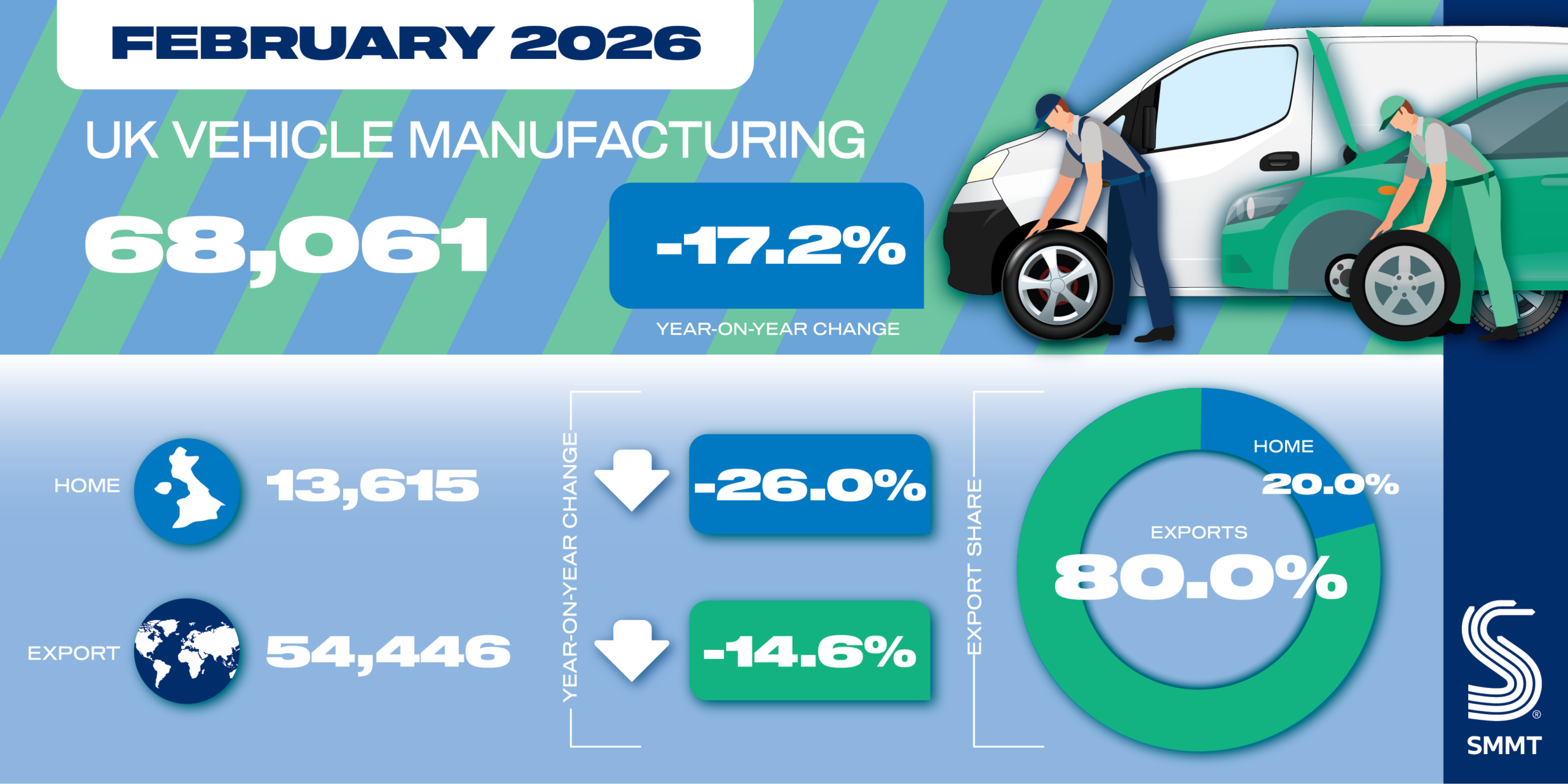
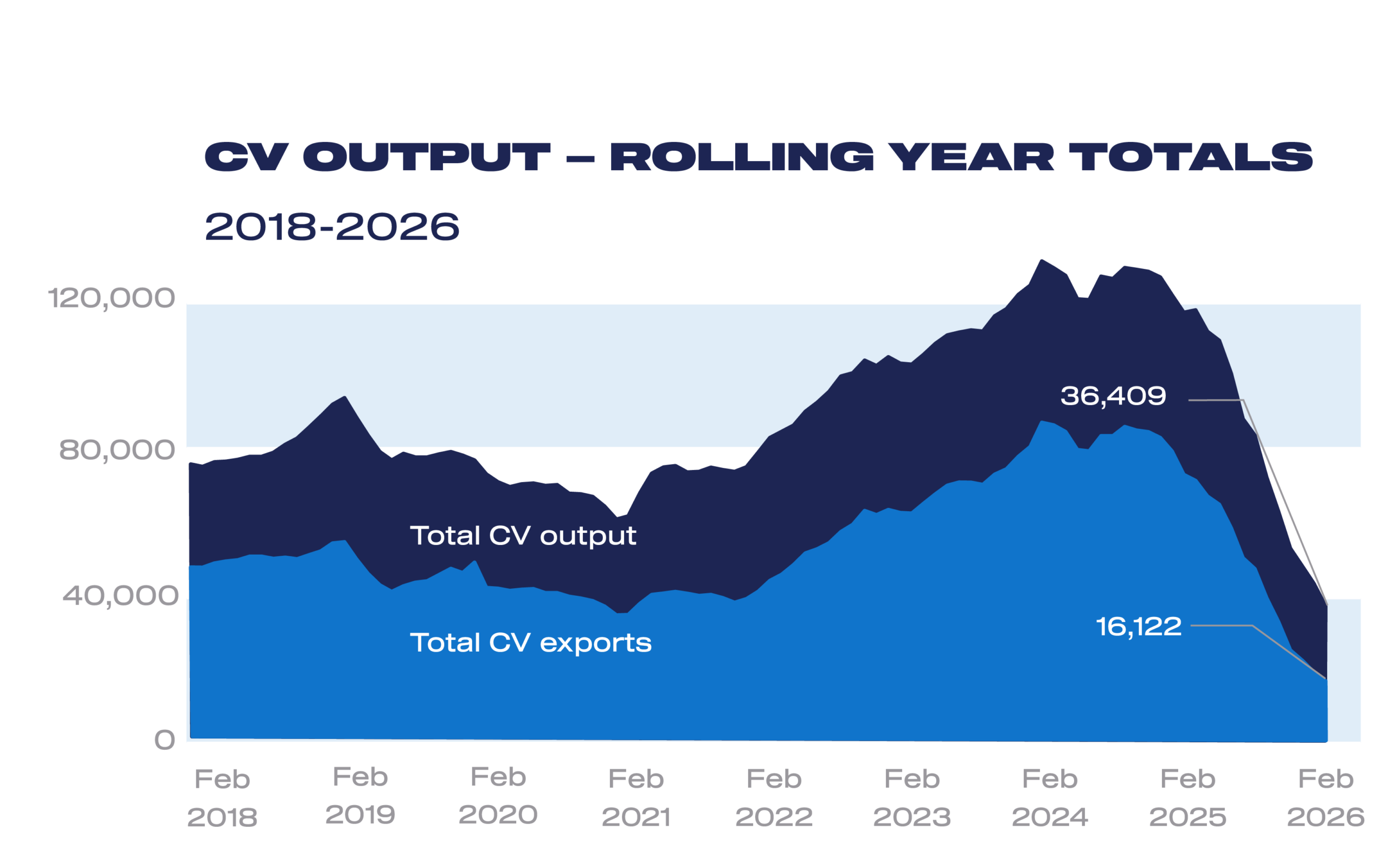
UK vehicle production fell -17.2% in February, with 68,061 units leaving factories, according to the latest figures published today by the Society of Motor Manufacturers and Traders (SMMT). Output comprised 65,885 cars (down -10.7%) and 2,176 commercial vehicles (-74.0%) as export demand in markets outside Europe remained weak, model changeovers impacted output and CV volumes continued to be affected by a major plant restructuring.
Exports of cars and CVs were down -11.5% and -65.1%, to 53,140 and 1,306 units respectively, though production for overseas buyers still accounted for the majority (80.0%) of total vehicle output. The EU remained the largest global market for UK plants, taking 63.6% of car exports and 88.9% of CV shipments, and while car exports to the EU rose 5.3%, demand in the US, China and Japan fell, by -34.3%, -66.4% and -6.8% respectively.
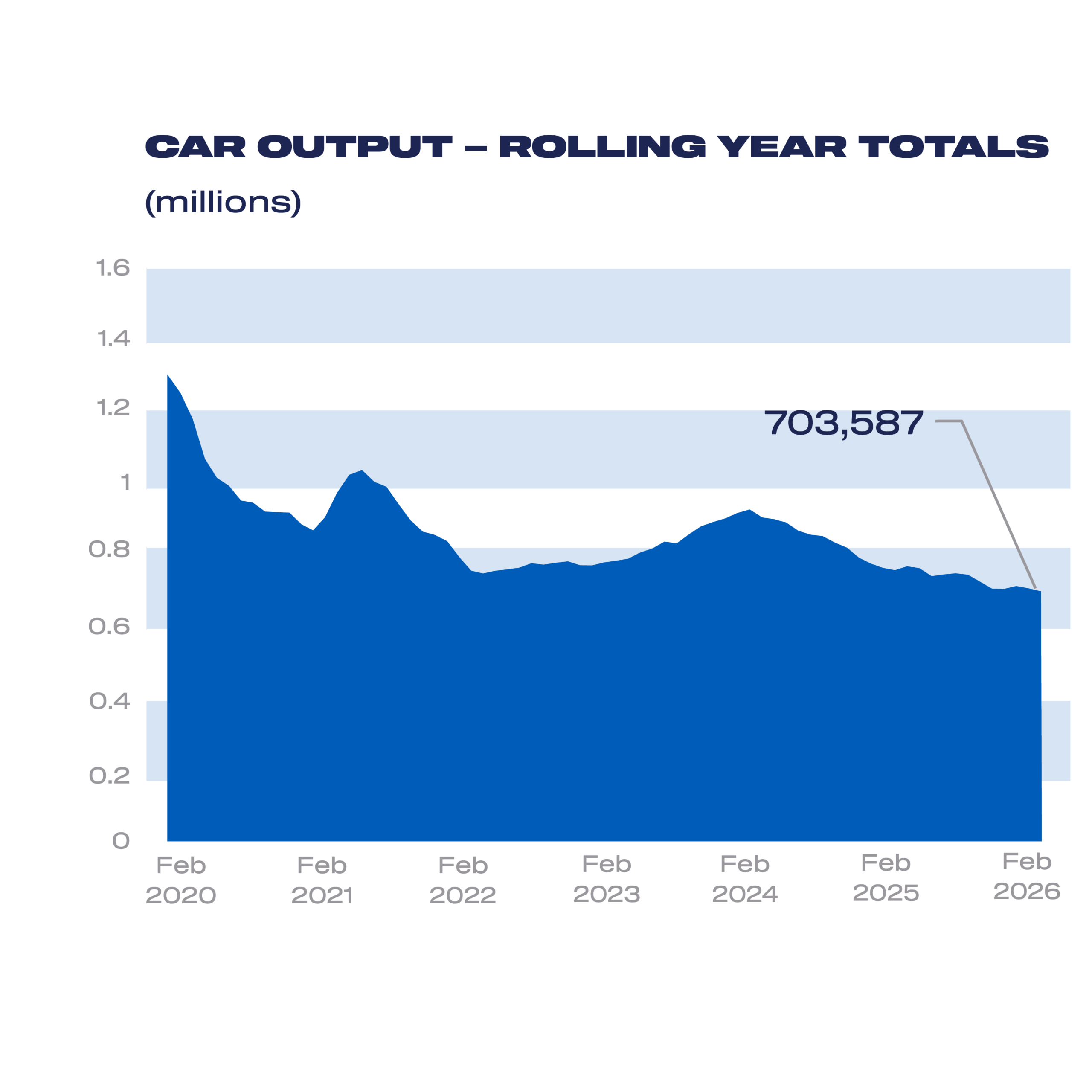
Car output for British buyers was down too, declining -7.5% to 12,745 units while CV production for the UK also fell steeply, by -81.2%, down to just 870 units. Production of battery electric (BEV), plug-in hybrid (PHEV) and hybrid (HEV) cars, meanwhile, fell -2.8% to 26,629 units, although they accounted for an improved 40.4% of car output.1
The news comes amid fresh global turmoil, notably in the Middle East, and with the UK sector facing additional pressure from ‘Made in the EU’ proposals set out in the European Commission’s Industrial Accelerator Act. As drafted, they would discriminate against UK-made vehicles and components – damaging a trading relationship worth almost £70 billion annually and potentially breaching the EU-UK Trade Cooperation Agreement – the Brexit deal – which all parties worked so hard to secure in 2020.
Governments must work together to extend full, trusted partner status to the UK automotive sector to ensure choice and affordability for consumers, particularly of zero emission vehicles, on both sides of the Channel. It would also drive economic growth and security across the UK and Europe, supporting rather than risking jobs and improving industrial competitiveness amid multiple global headwinds.
Mike Hawes, SMMT Chief Executive
Another decline for UK vehicle production and exports is extremely worrying, given these figures pre-date the crisis in the Middle East. While the sector has made efforts to build resilience into its logistics and supply chains post Covid, the conflict adds further strain. Now more than ever we must focus on our industrial competitiveness by driving down energy costs, backing our suppliers, supporting our domestic market and securing free and fair trade with Europe.
Notes to editors
The next release will be published on Thursday 30 April 2026
- BEV, HEV & PHEV share of car output in February 2025 – 37.1%
SMMT Update
Sign up
Sign up to the SMMT Update Newsletter for weekly automotive news and data
"*" indicates required fields