- Amend ‘Made in Europe’ policy to safeguard €80bn EU-UK trade partnership, urges SMMT.
- Both EU and UK economies would lose from damage to each other’s biggest automotive market.
- EU-UK Summit vital opportunity to futureproof European auto manufacturing competitiveness.
The Society of Motor Manufacturers (SMMT) is today calling on the EU to amend its proposed Industrial Accelerator Act (IAA) to keep the UK automotive sector as a trusted partner that ‘makes in Europe’. Granting equivalent treatment to UK-built vehicles, parts and batteries across all automotive-related provisions of the IAA will maintain a long-nurtured, mutually beneficial trading relationship creating economic growth and jobs, supporting industrial transformation and driving decarbonisation.
The call comes as the UK trade body meets with EU representatives in Brussels to highlight the strategic importance of UK Automotive to the wider European industry and economy, amid intense global competition and geopolitical uncertainty. Excluding UK Automotive from the IAA’s ‘Made in Europe’ policy would inflict significant harm, not only on the UK but on EU auto manufacturing capability, disrupting supply chain resilience and undermining the objectives of the IAA.
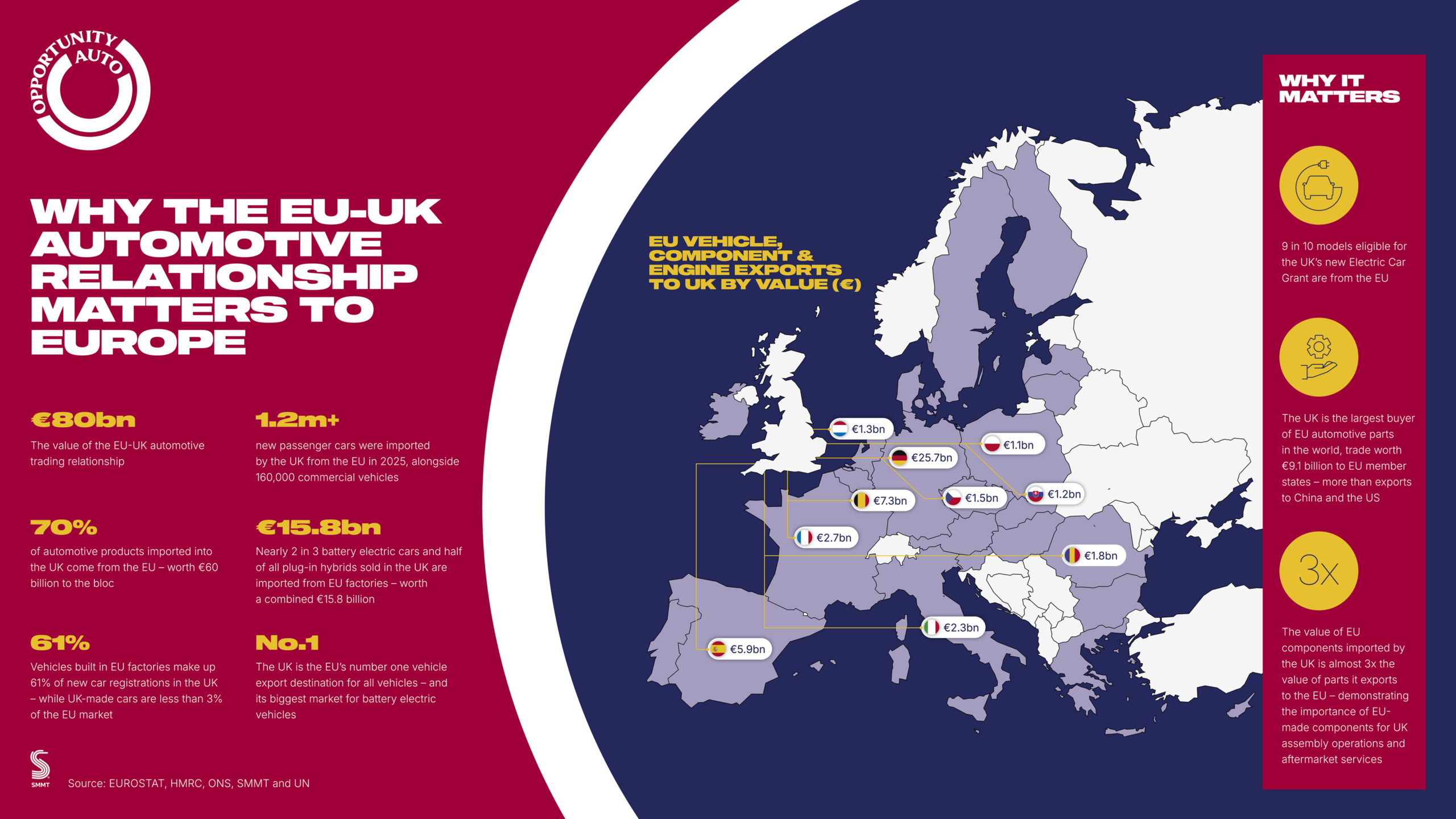
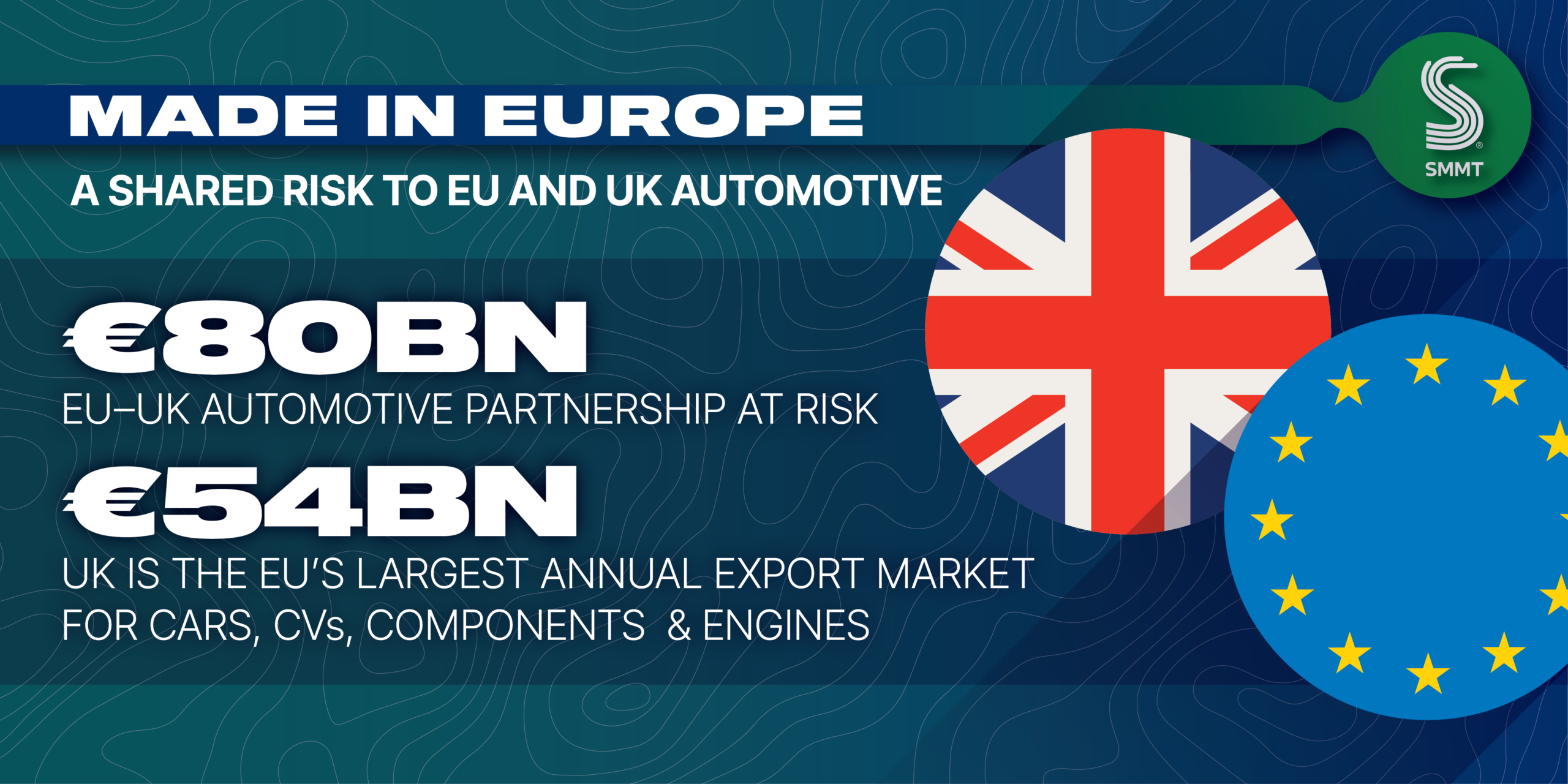
The EU-UK automotive partnership, built over more than 40 years, is valued at €80 billion annually – with the balance of trade favouring the EU. The UK remains the EU’s largest export market for passenger cars – and vice versa – worth an annual €39.7 billion to EU based manufacturers.1 Additionally, the EU sells €9.1 billion worth of typical automotive components to UK Automotive every year – more than to any other global market, including the US and China.2
The ‘Made in Europe’ policy, as drafted, threatens this valuable trade by excluding UK automotive products from incentives afforded to EU-based manufacturers – notably incentives connected to the greening of corporate fleets, which account for around 60% of the EU new car market, and CO2 super credits.3 These provide financial support for companies adopting low-carbon and zero emission vehicle fleets and support manufacturers’ ability to sell in EU markets. Preventing UK access to these incentives would put the sector at a major disadvantage, impacting production volumes which, in turn, would severely constrain EU supply chain demand and mean reduced choice and higher prices for consumers.
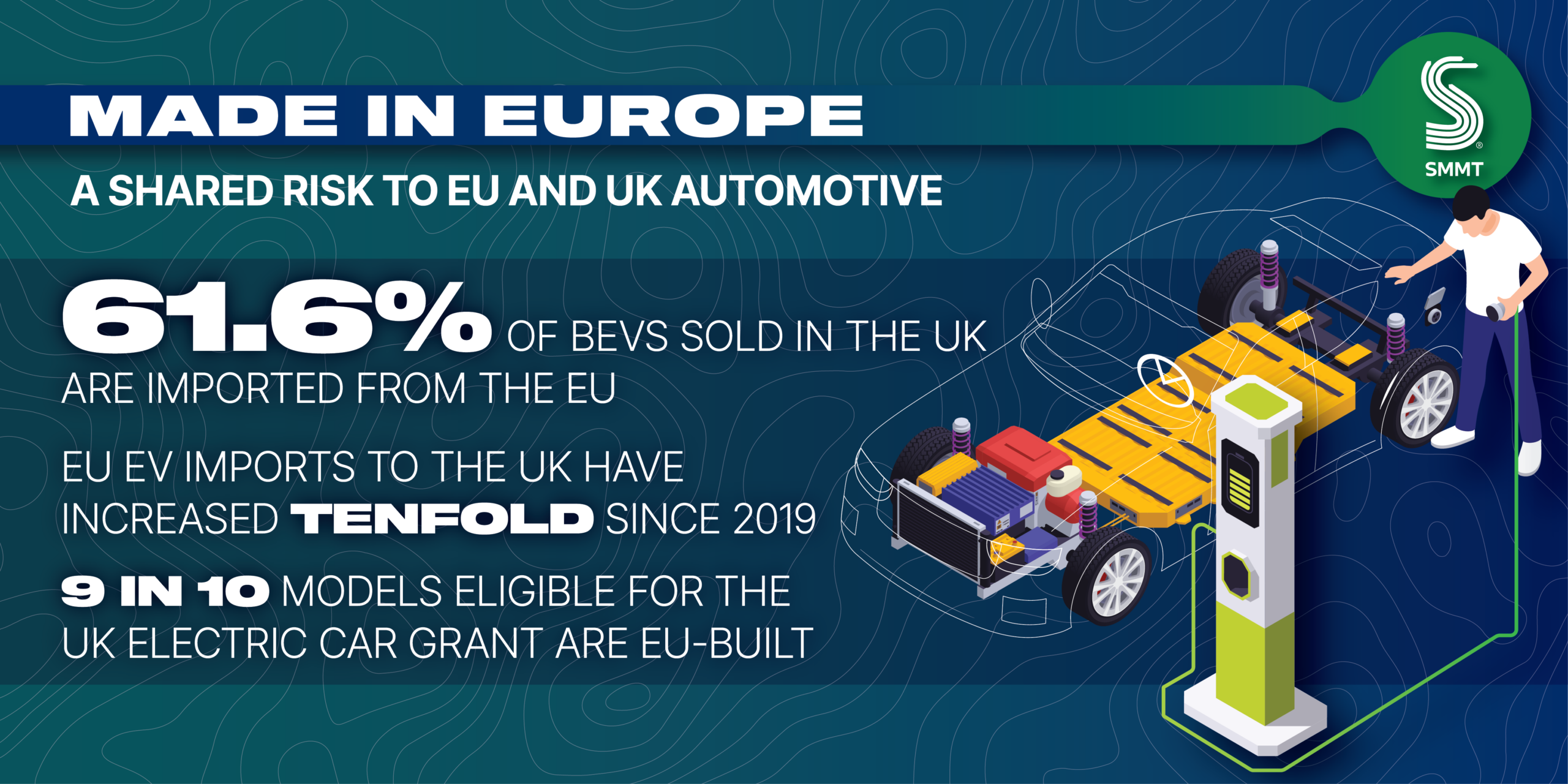
Such a move would damage EV trade at a pivotal stage in the European transition to greener mobility, undermining investment and further compromising industry’s ability to meet regulatory requirements. Despite the upheaval caused by Brexit, EU-UK trade in battery electric vehicles (BEVs) has flourished, underpinned by the tariff-free conditions of the EU-UK Trade & Cooperation Agreement which affords reciprocal market access. The value of EU EV imports to the UK has increased tenfold since 2019, with almost two thirds of BEVs (61.6%) sold in the UK imported from EU plants4 and EU-built BEVs accounting for nine in 10 models eligible for the UK’s Electric Car Grant.5
Brexit put the resilience of our shared industry under enormous stress but manufacturers have overcome those challenges to grow our trade in electrified vehicles alone to record levels. If the Industrial Accelerator Act proceeds as drafted, it threatens to reverse progress, undermining the Trade and Cooperation Agreement all sides worked so hard to deliver and jeopardise our respective competitiveness, damaging to jobs, investment and innovation.
The EU and UK automotive sectors are highly integrated and a closer relationship is now compelled by the increasing uncertainties in the global environment. Instead of weakening our partnership, we must seize the opportunity to deepen collaboration and unlock the full promise of the TCA, ensuring the successful transformation of a globally competitive automotive industry.
SMMT is calling on the EU to include the UK under its ‘Made in Europe’ framework, ensuring UK-built vehicles and components are considered equivalent to EU content across all aspects of the IAA. It should also consider applying similar treatment to other like-minded trade partners. Rather than creating new trade barriers, both sides should build on last year’s Strategic Partnership to deepen industrial cooperation, increase supply chain resilience and strengthen trading relations. The upcoming bilateral summit this summer is a critical opportunity to enhance and protect European automotive manufacturing capability, competitiveness and jobs, in line with international agreements and the EU-UK TCA.
Notes to editors
- Automotive manufacturing trade – EU & UK (ONS – Trade in Goods by industry) – 2025 data
- UN data for 2024
- https://transport.ec.europa.eu/news-events/news/accelerating-transition-zero-emission-corporate-vehicles-2025-12-17_en – https://single-market-economy.ec.europa.eu/publications/industrial-accelerator-act_en
- SMMT Trade Report Unmarked Routes and SMMT registrations data
- https://find-government-grants.service.gov.uk/grants/electric-car-grant-1