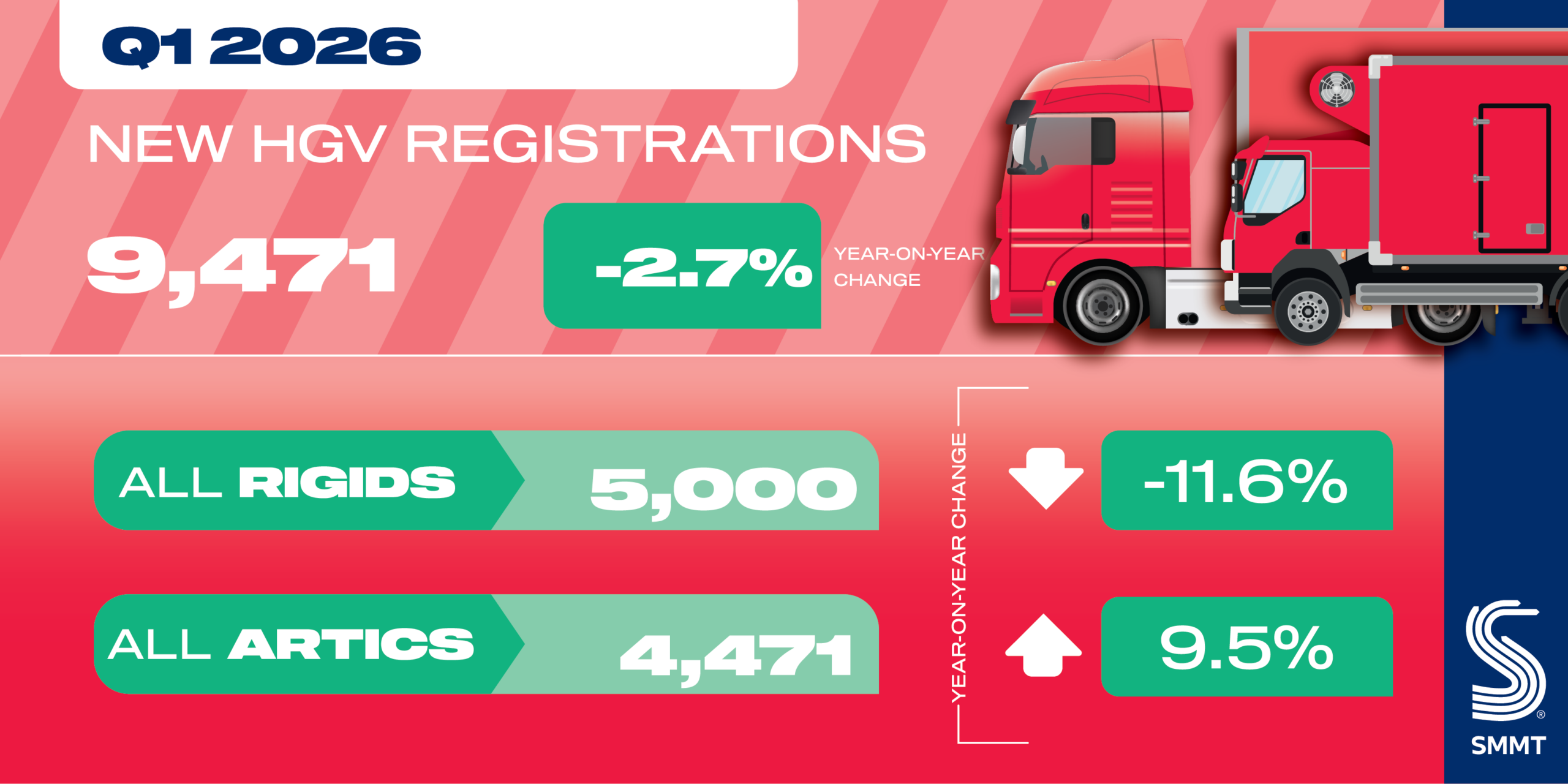
- New heavy goods vehicle registrations down -2.7% to 9,471 units in first three months of 2026.
- Decline driven by lower-volume segments despite growth in tractor, tipper and refuse vehicles.
- Zero emission rollout falls -16.5% to represent less than one percent of the new HGV market.
Data download
New HGV Registrations Q1 2026
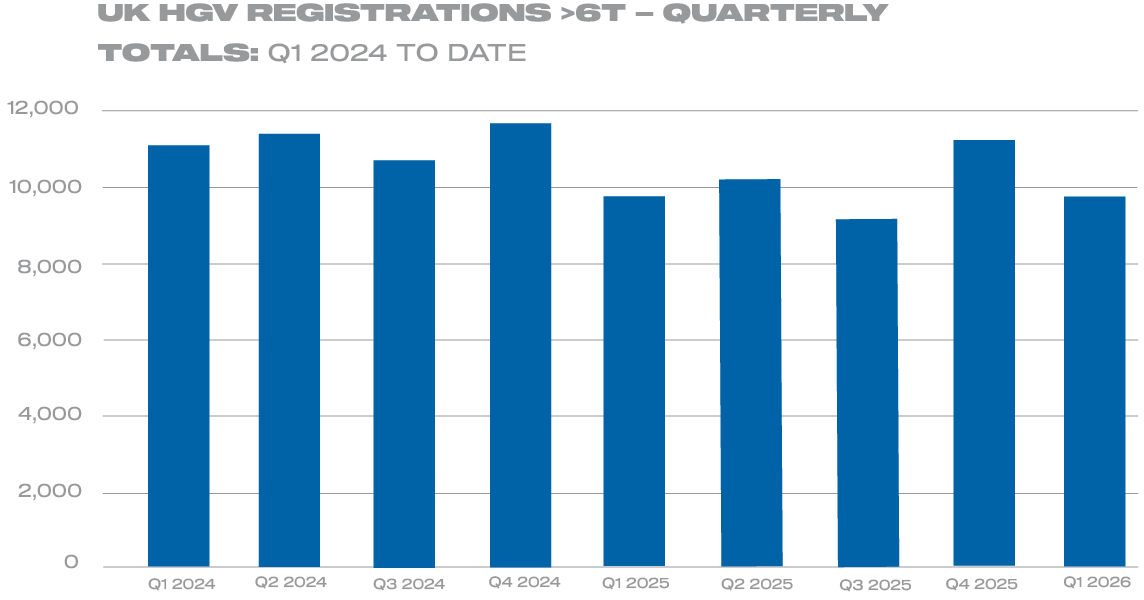
New heavy goods vehicle (HGV) registrations declined by -2.7% in the first quarter of 2026 with 9,471 new trucks joining UK roads, according to the latest data published today by the Society of Motor Manufacturers and Traders (SMMT). The decline comes as fleet renewal continues to normalise following three years of sustained post-pandemic pent up demand,1 although growth is also constrained by the challenging economic backdrop.
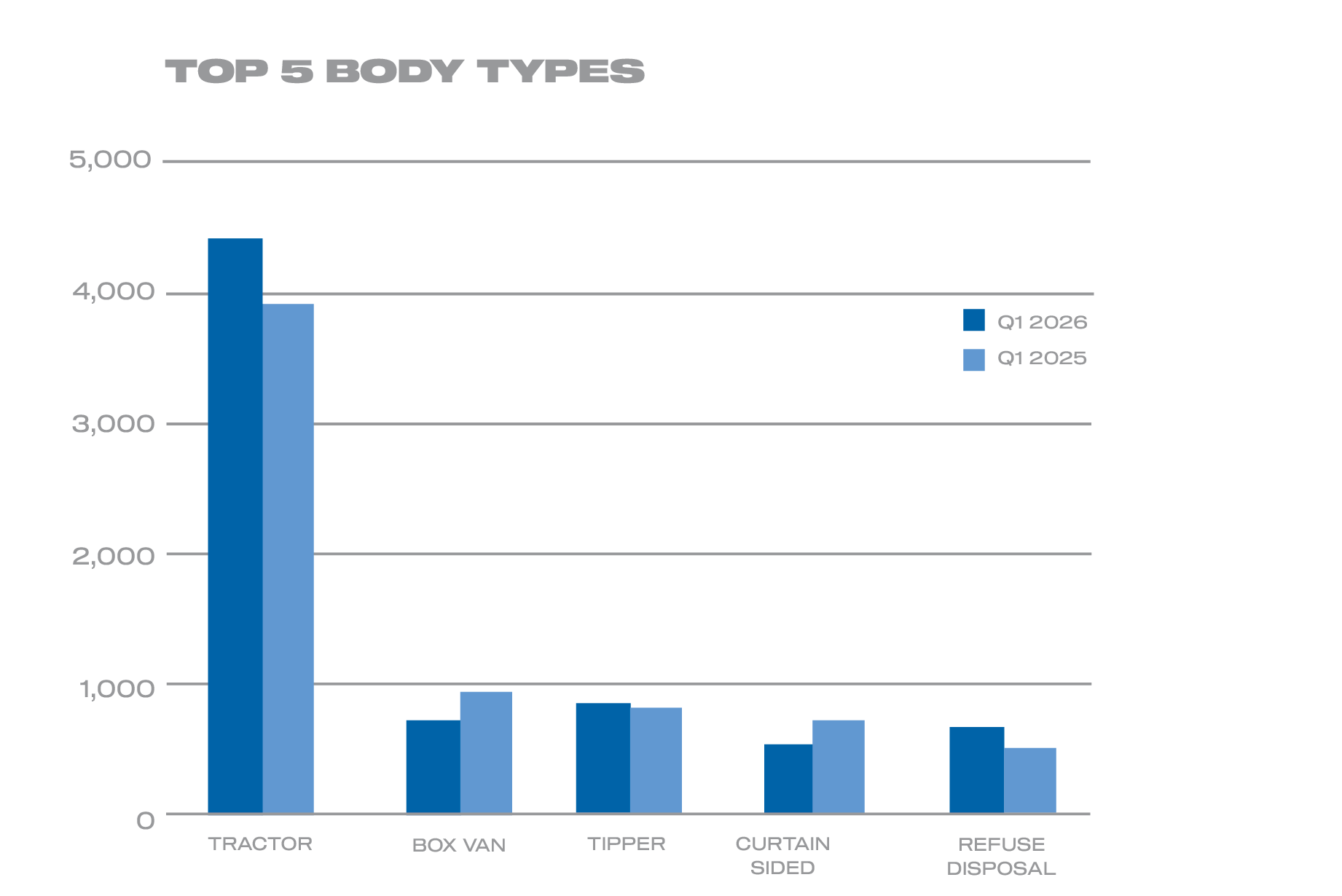
The slight contraction reflects a mixed picture for the overall market, with demand for box vans down -20.1% to 766 units compared with Q1 last year, while registrations of curtain sided trucks fell by -31.6% to 525 units. There was growth, however, in the tractor segment, with deliveries up 9.1% to 4,313 units, representing almost six in 10 (59.2%) of all new HGVs registered. Demand for tippers and refuse disposal vehicles also grew, up by 2.1% and 47.1% respectively to 865 and 765 units.
More concerningly, zero emission HGV demand fell by -16.5% year-on-year from 97 to 81 units – thus representing less than one percent (0.9%) of the overall market. While the decline compares marginal volumes and follows a record year for ZEV uptake in 2025,2 volumes must accelerate substantially if the sector is to decarbonise by the deadlines sought. Manufacturers are delivering ZEV models well ahead of natural demand with more than 20 options currently available, but tight business margins and a paucity of charging infrastructure are restricting operator demand. Costly depot upgrades and long waits for grid connections – potentially up to 15 years for larger projects – are also hampering operator confidence.3
Given ZEVs remain more expensive to build and therefore buy, government funding through the ZEHID programme has been a key driver of ZEV uptake over the past year. The updated Plug-in Truck Grant and Depot Charging Scheme should help support demand in 2026, but every lever must be pulled to boost market confidence. Fast-tracking grid connections for road transport depots is an essential next step, giving such upgrades the same planning priority as data centres, wind farms and solar projects, and reflecting the role the HGV sector has to play in cutting carbon emissions.
A tough economic environment continues to hamper new HGV demand and a return to growth is needed to keep Britain moving while reducing emissions. A weak start to the year for ZEV uptake is particularly concerning, despite impressive model rollout, reflecting the substantial cost and infrastructure challenges facing operators. With government consulting on new regulation to decarbonise the sector, a realistic and long-term approach will be essential, recognising the barriers and the technological solutions necessary for reducing emissions.
Notes to editors
- Full-year new HGV registrations: 2021: +12.9%; 2022: +9.6%; 2023: +13.5%; 2024: -2.7%, 2025: -10.0%.
- New ZEV HGV registrations, full-year 2025: 587 units, up 170.5% to a 1.4% market share.
- DESNZ, 15 April 2025.