- UK vehicle production down -11.6% in July to 63,655 units, driven by weaker exports and summer shutdown timings.
- Car production falls -10.6% while CV output declines -34.4%.
- Electrified model production records first rise of the year with four in 10 cars built either EV or hybrid.
- Sector welcomes ZEV Mandate review, calling for meaningful reform alongside action on energy costs and trade threats to safeguard UK investments.
File download
UK New Vehicle Manufacturing July 2026
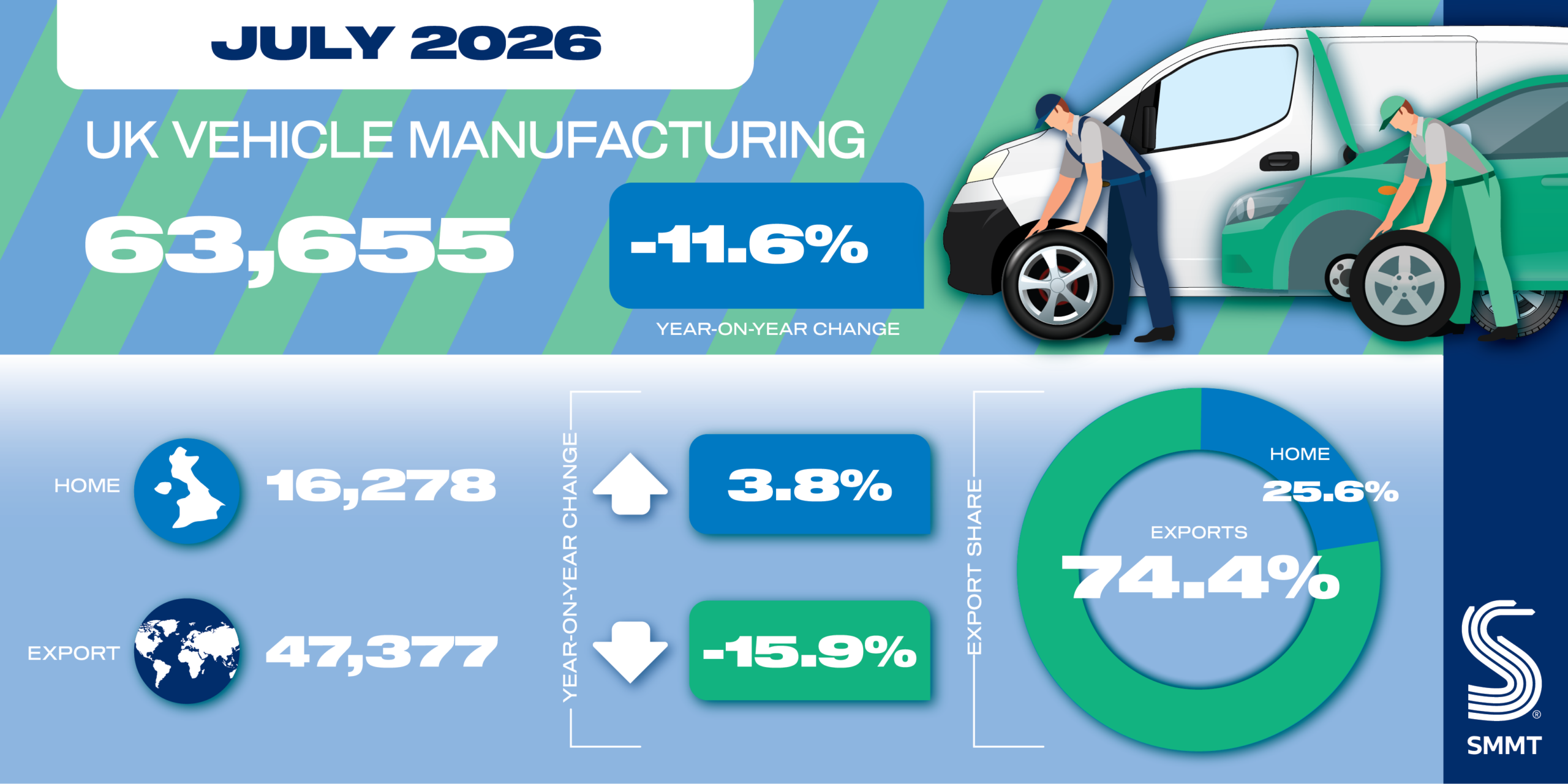
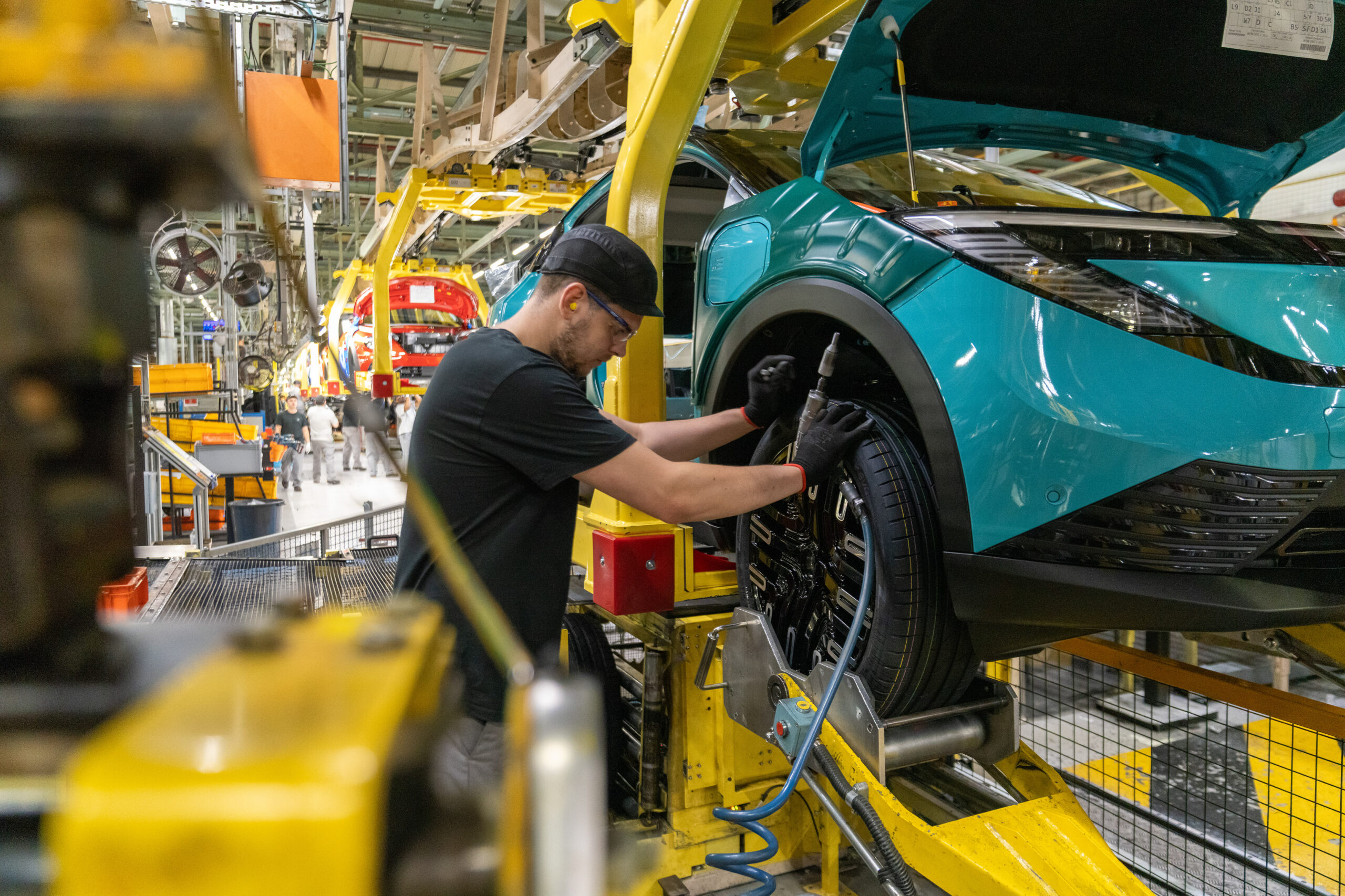
UK vehicle production fell -11.6% in July to 63,655 units, according to the latest figures published today by the Society of Motor Manufacturers and Traders (SMMT). The decline reflects weaker exports, down -15.9% to 47,377 units, as well as earlier scheduling of routine summer maintenance shutdowns at some plants.
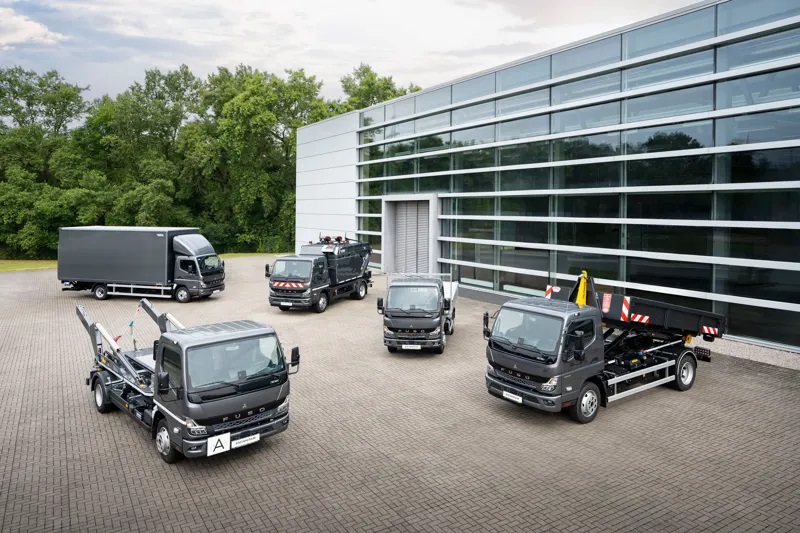
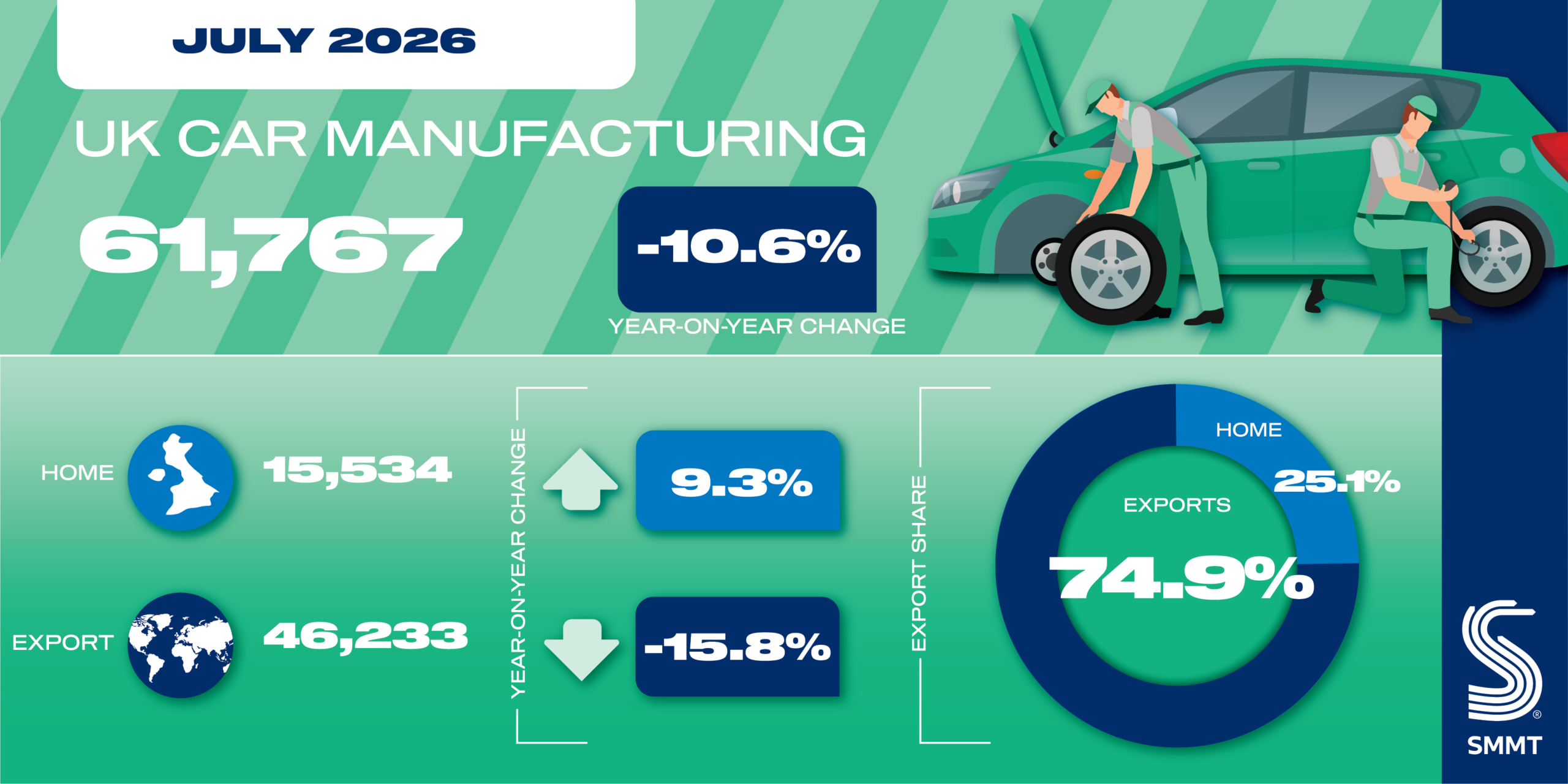
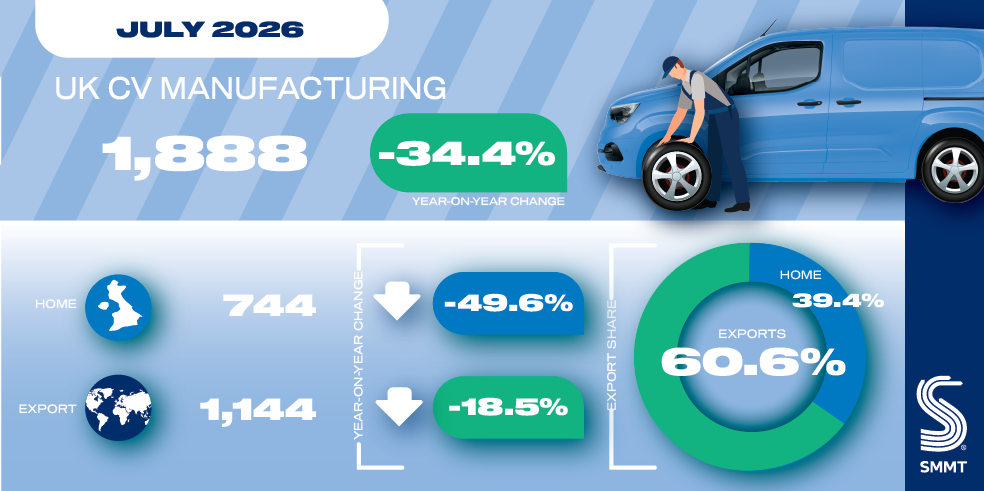
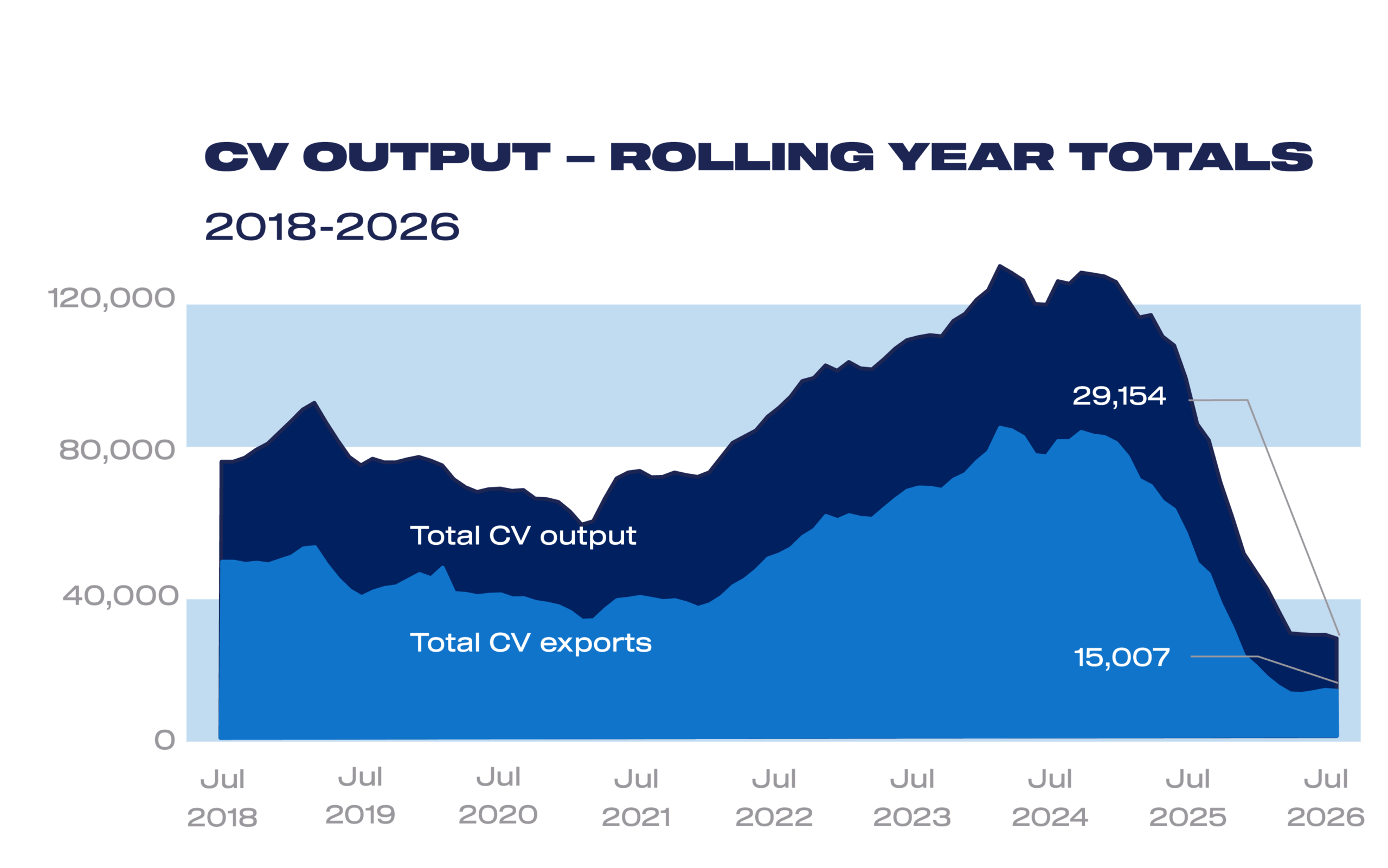
Car production declined -10.6% to 61,767 units as a 9.3% rise in output for UK buyers failed to offset a -15.8% fall in exports. Shipments to all major markets were down, including the EU (-15.2%), the US (-17.7%), Turkey (-18.5%), China (-36.9%) and Japan (-24.4%). Commercial vehicle output also fell sharply, down -34.4% to 1,888 units, with deliveries to UK customers and export markets down -49.6% and -18.5% respectively.
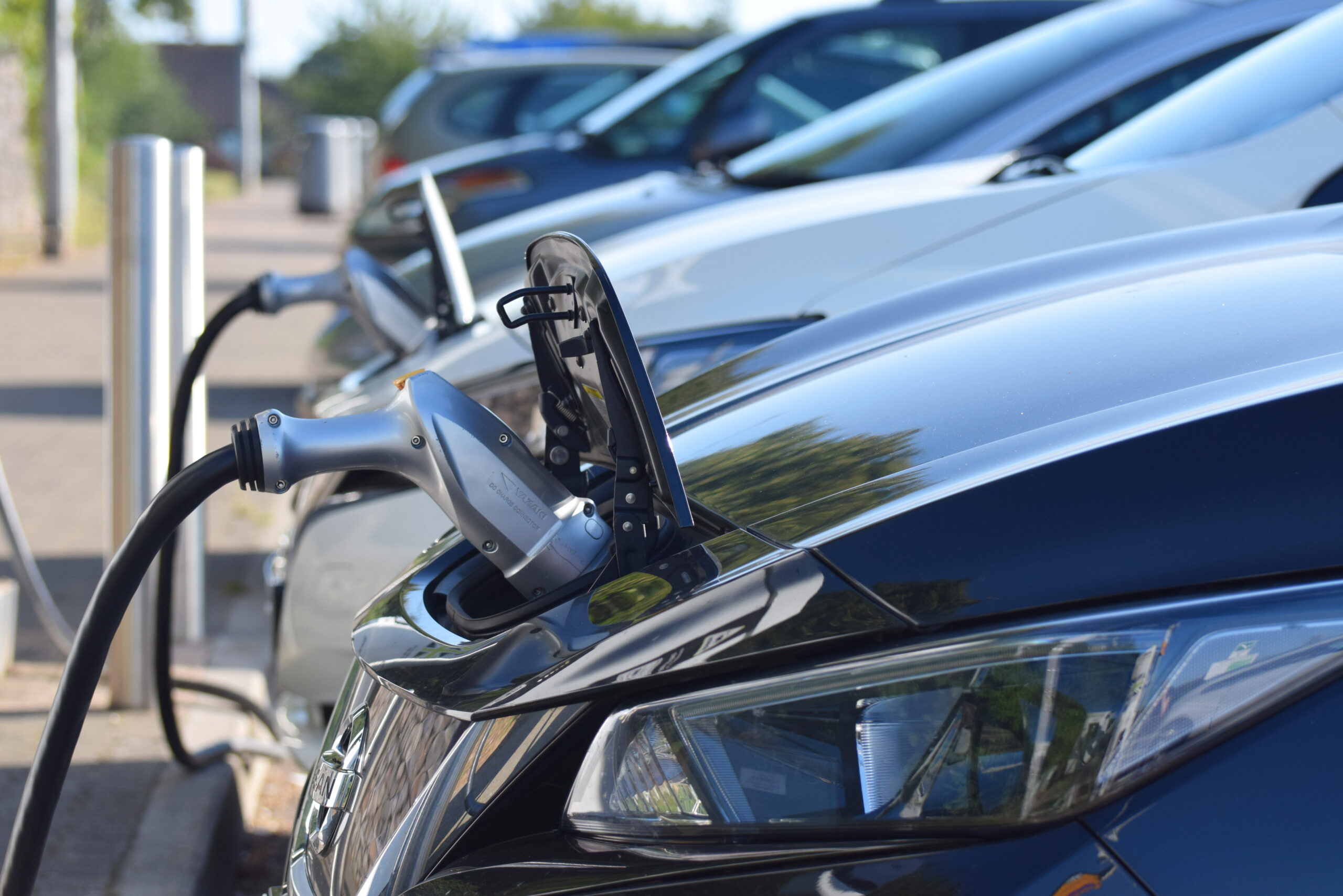
There was more positive news for electrified car production, with output of fully electric and hybrid models recording the first monthly increase of the year, up 6.8% to 25,678 units. Electrified models accounted for more than four in 10 cars built in July, up from around three in 10 a year ago.1
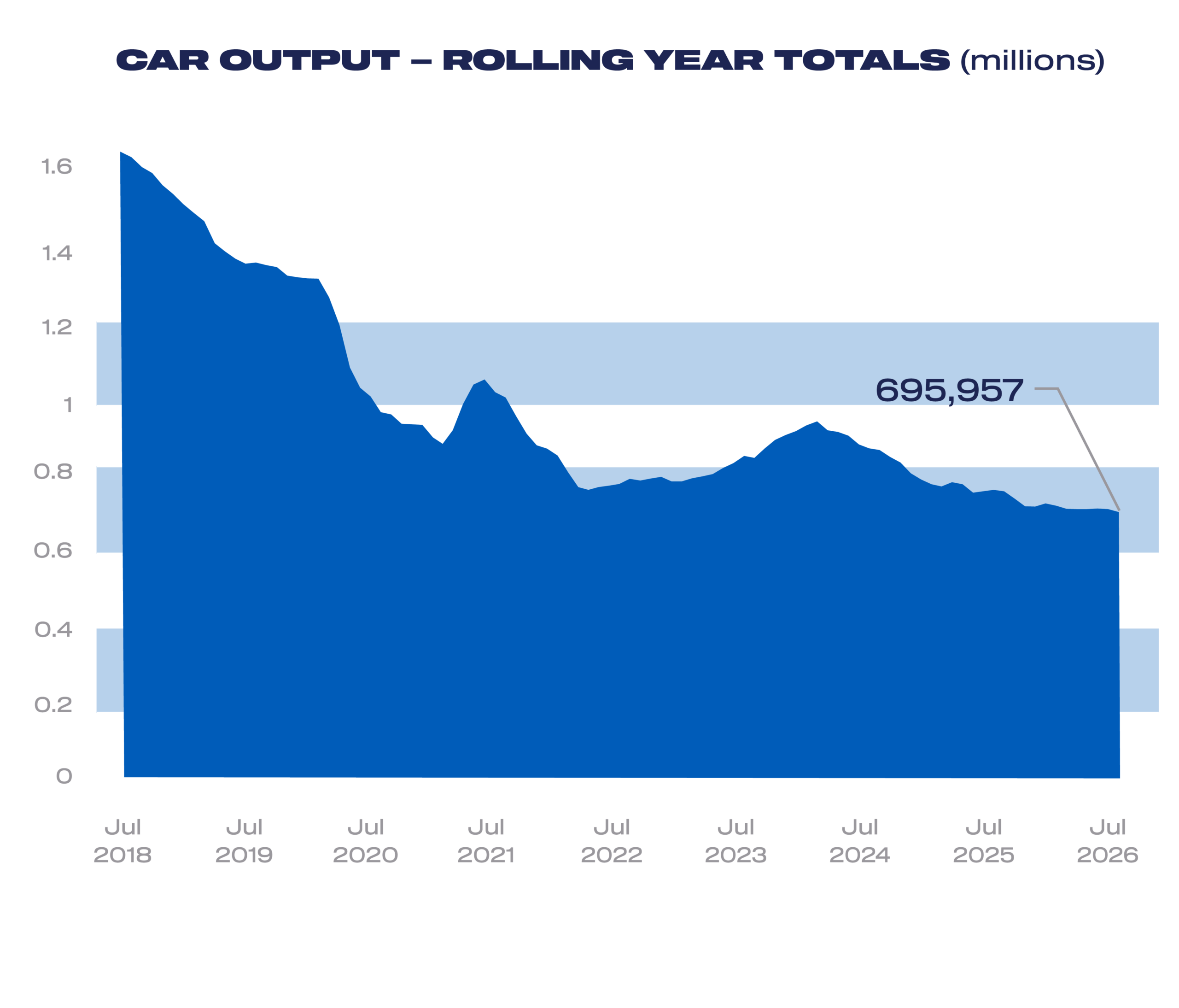
Year to date, UK factories have turned out just under 450,000 cars and CVs, down -8.1% on the same period in 2025, reflecting model changeovers, the closure of a plant last year, and continued trade and investment uncertainty. Even so, the latest independent forecast expects UK car and light vehicle output to remain broadly stable in 2026, at 740,000 units, before growth resumes in 2027.2
Output could still reach one million units by the turn of the decade, but only if the UK addresses its competitiveness and secures fresh model investment. Government’s recently launched ZEV Mandate review is welcome, providing an opportunity to make meaningful reforms to the regulation that, with stronger market enablers, would help reduce the high cost of selling EVs in the UK, which is currently a major deterrent for global investors.
Structural reform of industrial energy costs is also needed as, despite the forthcoming British Industrial Competitiveness Scheme (BICS), they will remain some 60% higher than Europe’s. At the same time, government must address the double threat to UK-EU automotive trade posed by the European Commission’s ‘Made in the EU’ proposals, which could make UK-produced vehicles uncompetitive in European markets, as well as the tougher rules of origin requirements under the EU-UK TCA – the Brexit deal – which come into force in January. Unless urgent action is taken by both sides, there is a serious risk to cross-Channel auto supply chains and an €80 billion-a-year trading relationship.
Mike Hawes, SMMT Chief Executive
July’s figures underline the intense pressure under which UK vehicle manufacturers are currently operating. Although the negative performance is exacerbated by shutdown calendarisation and model changeovers, it is being compounded by weaker overseas demand and fierce global competition.
The rise in electrified vehicle production is encouraging, but long-term success depends on making the UK a more competitive place to make and sell vehicles. Meaningful and urgent reform of the ZEV Mandate, reduction of the UK’s sky-high energy costs and negotiations to safeguard free and fair trade with our largest and closest export market are essential to put UK automotive manufacturing back on a path to growth.
Notes to editors
- 24,042 electrified vehicles made, out of 69,127 total in July 2025
- Independent production outlook produced by AutoAnalysis in July – cars and light vans only
SMMT Update
Sign up
Sign up to the SMMT Update Newsletter for weekly automotive news and data
"*" indicates required fields