Sustainability report case studies 2024
Discover how automotive businesses across the UK are delivering measurable sustainability progress through innovative projects and partnerships.
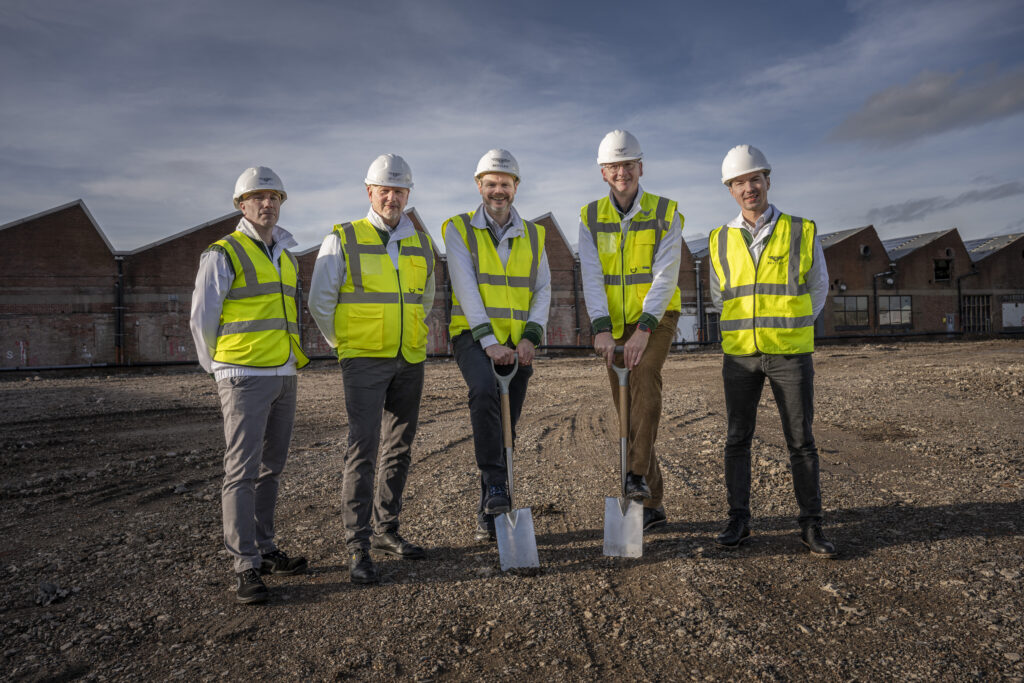
Bentley – Construction begins on Integrated Logistics Centre to support all-electric future
Bentley Motors has officially broken ground on its new Integrated Logistics Centre at its historic Crewe headquarters. Set to be fully operational by mid-2026, the Integrated Logistics Centre will play a vital role in Bentley’s transition to becoming exclusively electric by 2035.
Designed to enhance operational efficiency, flexibility and sustainability, the facility will support the production of all future Bentley battery electric vehicles (BEVs), while reinforcing the brand’s commitment to its Beyond100+ strategy. The 11,620 sqm centre will enable material processing and delivery to assembly lines, introducing advanced kitting and sequencing capabilities to optimise the handling of both small and large parts. By increasing the onsite storage footprint by 35%, Bentley will reduce reliance on external warehousing and transportation.
For the first time in the Volkswagen Group, Bentley will implement a cutting-edge automated storage concept – an innovative storage and retrieval system that enhances process stability and improves material sequencing. The facility has been designed with efficiency and flexibility in mind, to ensure seamless logistics operations, with
direct connectivity to production operations. Inside, a three-story mezzanine will house: a visitor room, canteen, offices, training
rooms, plant equipment, and a viewing platform for operational oversight.
Lotus – Installation of nearly 4,000 solar panels for on-site energy generation
Our 2024 investment in solar energy marks another important milestone in Driving Change towards a more sustainable future. Thousands of new solar panels across rooftops and purpose-built car ports at our Hethel headquarters provide a substantial boost to our on site renewable energy generation. The system is designed to produce a significant proportion of our energy needs, reducing our reliance on renewable electricity from the grid and cutting our carbon emissions.
This initiative is already delivering measurable results. In 2024, Lotus Cars achieved a 14.6% reduction in total Scope 2 CO₂ emissions compared to 2023 – a total reduction of 527 tonnes. The impact of renewable technologies at Hethel has been particularly notable, with CO₂ savings in 2024 being 35 times greater than in 2023.
The installation of these solar panels is a significant step forward in our sustainability strategy. By harnessing the power of the sun, we are reducing our carbon footprint, lowering energy costs, and making meaningful progress towards our environmental goals. It’s a win-win for the planet and for Lotus.
The solar panels are expected to generate thousands of MWh of clean energy annually, providing the majority of energy required for operations in good conditions. This initiative aligns with Lotus’s ESG Charter to becoming a carbon-neutral business and supports the company’s long-term sustainability roadmap.
Toyota Motor Europe (TME) – Toyota Circular Factory
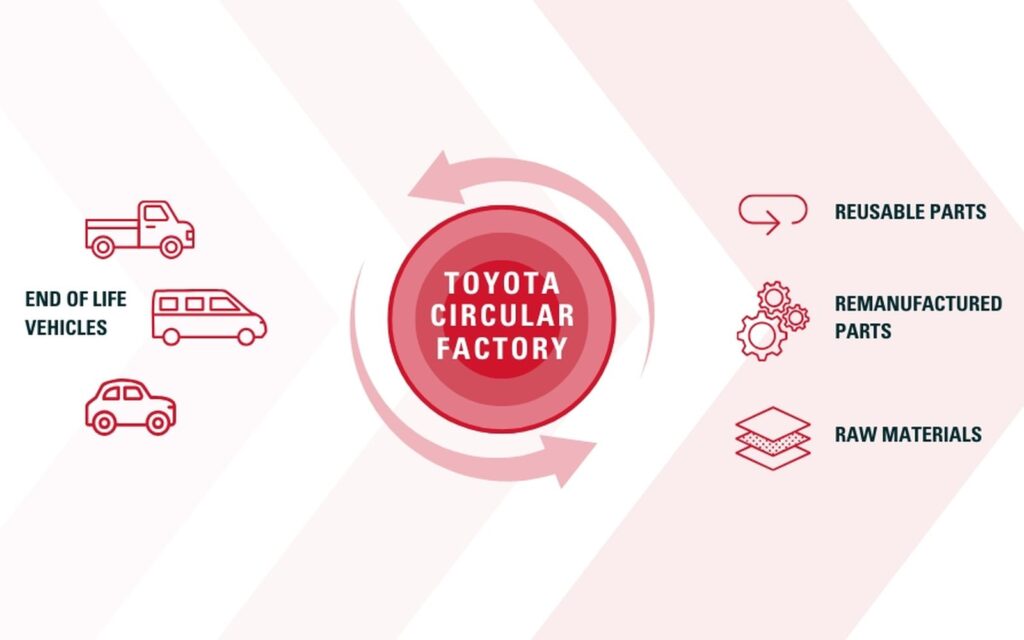
Toyota Motor Europe (TME) has announced the establishment of the Toyota Circular Factory (TCF) to provide careful and systematic processing of vehicles at the end of their life to maximise the environmental benefits of recycling, repurposing and remanufacturing. The first TCF will be at Toyota Manufacturing UK’s Burnaston plant in Derbyshire. Activities will begin during the third quarter of 2025 to develop a centre of excellence for future recycling operations across Europe and worldwide.
TCF processing focuses on three key areas: reusable parts; commodity items that can be remanufactured; and materials that can be recycled. Following a comprehensive validation process, reusable parts will be reintroduced to the market through retailers or distributors. Commodity items such as batteries and wheels will be assessed for their potential remanufacture, repurposing or recycling.
Toyota also intends to recycle raw materials such as copper, aluminium, steel and plastic. These could then replace virgin materials as much as possible in the production of new vehicle parts. The facility is expected to initially recycle around 10,000 vehicles a year in the UK facility, which will give new life to 120,000 parts, recover 300 tonnes of high-purity plastic and 8,200 tonnes of steel, among other materials. With this initiative, Toyota aims to significantly reduce future emissions associated with vehicle and sub-component manufacturing.
This effort aligns with the company’s global and European sustainability objectives and sets a new industry benchmark for responsible recycling and material reuse.
TME is committed to being fully carbon neutral by 2040 and achieving carbon neutrality in all its owned facilities by 2030. By 2035, Toyota plans to have 100% CO2 reduction across its European product line-up.
JLR – Closing the loop with industry first breakthrough using recycled seat foam
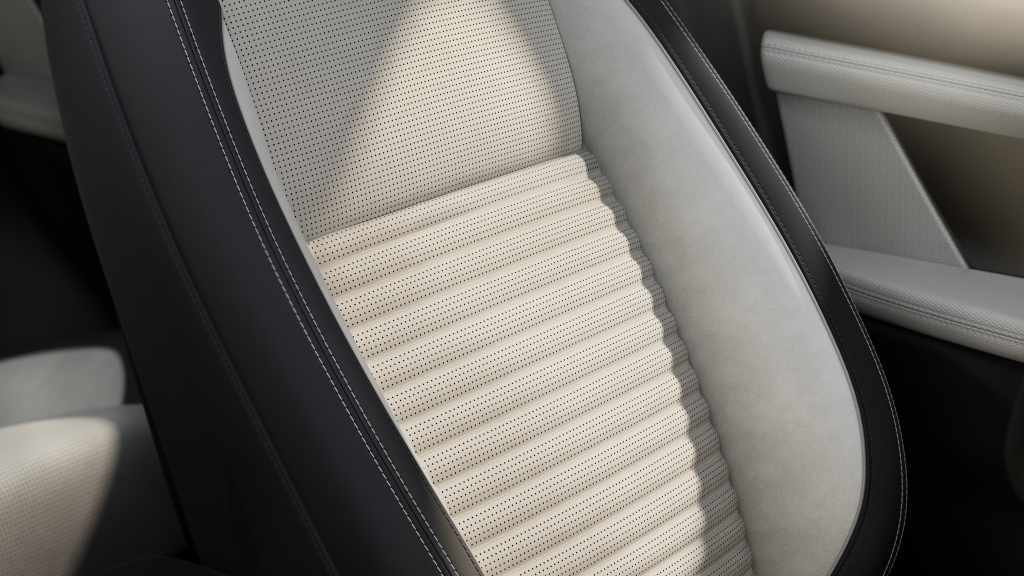
In 2024, JLR made a significant technical breakthrough in the closed-loop recycling of polyurethane seat foam from its used vehicles by successfully reintegrating it back into the
production of new seats. In collaboration with Dow’s MobilityScience™ material innovations and global leader in automotive seating Adient, this was the first time closed-loop seat
foam content had been successfully used in automotive production. Luxury vehicle manufacturer JLR has been putting the material through its full production process with testing at scale in pre-production vehicles set for 2025.
Polyurethane foams are known to be challenging when it comes to recycling and are designed for durability, meaning they end up in landfill and can remain in the environment for several generations. By creating a closed-loop supply chain, JLR will be able to reduce emissions, eliminate waste and enable a secure supply of low carbon seat foam for its vehicles.
The recycled foam will be one element to a new ‘circular seat’ that it is estimated will half CO2e emissions impact while maintaining impossible. JLR’s Circularity Lab aims to high performance, avoiding more than 44kg of CO2e per seat, the equivalent of charging almost three thousand smartphones.
The breakthrough is a result of ongoing research and testing at JLR’s Circularity Lab in Gaydon, which aims to reduce waste and boost the recyclability of its luxury vehicles.
Historically, vehicles have been designed with limited consideration for how easy it is to take them apart and separate materials once they reach end of life. The use of mixed materials
that are difficult to separate, fixing methods and adhesives can make the challenge of reducing waste and recycling for reuse almost troubleshoot these challenges by bringing
together cross disciplinary squads comprising sustainability, engineering, procurement and design.
The Circularity Lab supports JLR’s Reimagine strategy which aims to set new benchmarks in environmental, societal and community impact for business. Central to this is its ambitious vision for circular economy, which aims to achieve a more resource efficient economy through the elimination of waste and repeated circulation of products and materials.
BMW UK – Recharge in Nature – supporting EV travel and conservation in National Parks
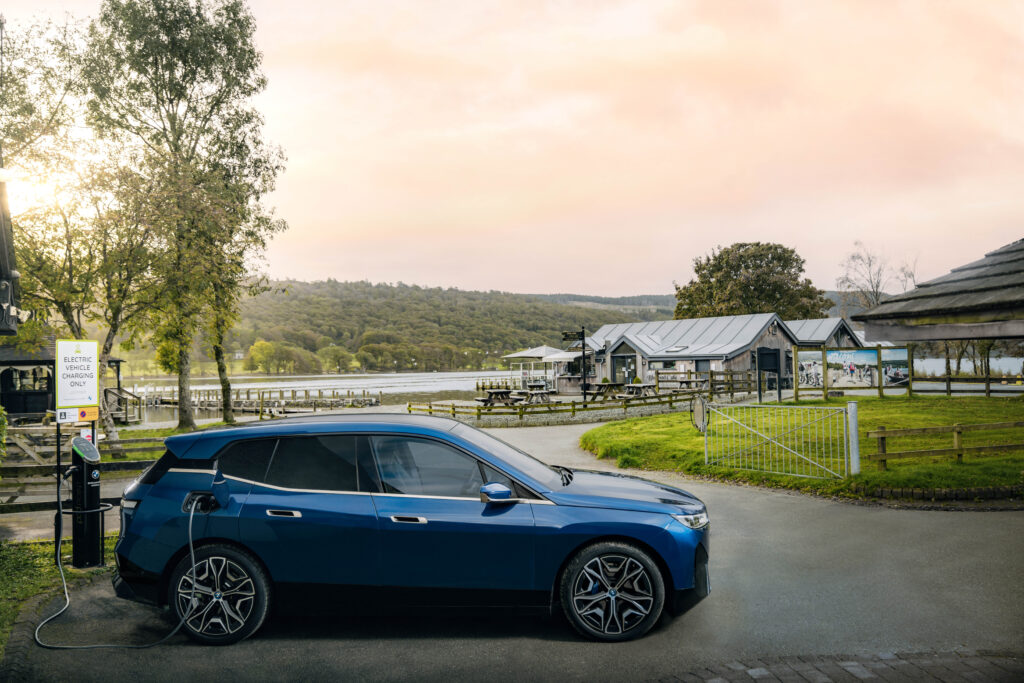
“Recharge in Nature” is BMW UK’s partnership with the UK’s National Parks to expand EV charging and fund nature restoration. With £1million in funding and 135 charge points across all 15 National Parks from 2022-2025, BMW UK is making ‘tail pipe’ emission-free travel easier for park visitors and communities while supporting biodiversity, nature restoration and leaving a
lasting legacy in the UK’s wildest landscapes.
With 90% of the 100 million annual visits made by car, expanding the parks’ limited charging network is more important than ever. Pod Point data shows the new chargers are already helping to reduce emissions, saving more than 42 tonnes of CO2 from EV journeys that would otherwise have required petrol or diesel.
These additional charging points also support rural communities, where reliance on cars is higher. Through Recharge in Nature, BMW is helping to restore habitats, protect wildlife, and help nature thrive in the UK’s most treasured landscapes. In the South Downs, dew ponds are being revived, including vital habitats for frogs, toads, dragonflies, and hedgehogs, after
70% were lost to drier summers. In Eryri (Snowdonia), vital natural flood defences are also being restored to protect land and communities. In the North York Moors, young volunteers have contributed 3,000 hours, gaining skills, confidence, and a pathway into conservation. In Dartmoor, funding for a Youth Engagement Ranger has helped 1,329 young people, many with limited outdoor access, experience the National Park.
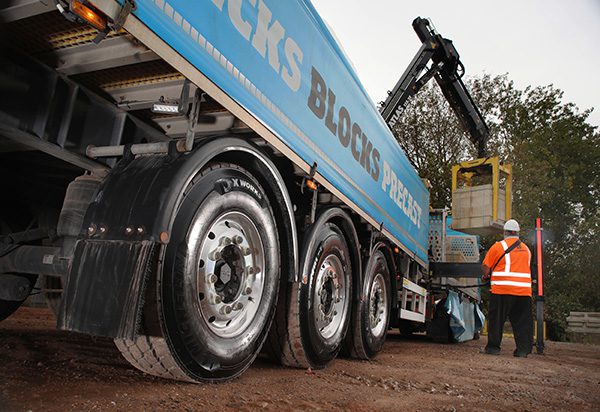
Michelin’s multi-life tyre policy will help reduce costs and environmental impact.
Michelin – Partnership with Forterra to place tyres at the centre of sustainability drive
Michelin’s excellent products and cutting-edge data analysis proved to be an irresistible combination for building materials manufacturer Forterra which, in 2024, chose the tyre specialist as its sole supplier. Following a competitive tender, Michelin was awarded the contract to fit products from its X Multi and X Works tyre ranges to the operator’s predominately Volvo truck fleet to help reduce fuel costs, mitigate its environmental impact and improve uptime.
What made Michelin’s offer so attractive was its ability to analyse Forterra’s fleet performance to ensure it was running as efficiently as possible. Forterra is initially trialling the versatile MICHELIN X Multi tyre across its fleet. This will likely be the mainstay, however, the nature of its work, which includes delivering to builders’ merchants as well as off-road driving on building sites, means the robust MICHELIN X Works tyre will be fitted in certain use cases based on the trial data.
For Forterra, another key motivator behind its decision to select Michelin as its sole provider was the opportunity to adopt the tyre manufacturer’s multi-life policy, which will help to minimise the total cost of ownership and environmental impact further. The policy means that once a new set of tyres has reached the end of its first life, they are regrooved and re-readed as MICHELIN Remix tyres. Once the Remix tyres are worn, the business sends the casing back to Michelin to be retreaded again to produce Encore tyres – extracting the maximum performance from Operating from each casing.
Operating from 13 locations nationwide, Forterra produces some 500 million bricks a year, which it transports via 143 trucks (both rigids with drawbars and tractor units) and 153 predominately drawbar trailers, the vast majority of which feature mechanical offload systems.
Stellantis UK – Empowering youth through education
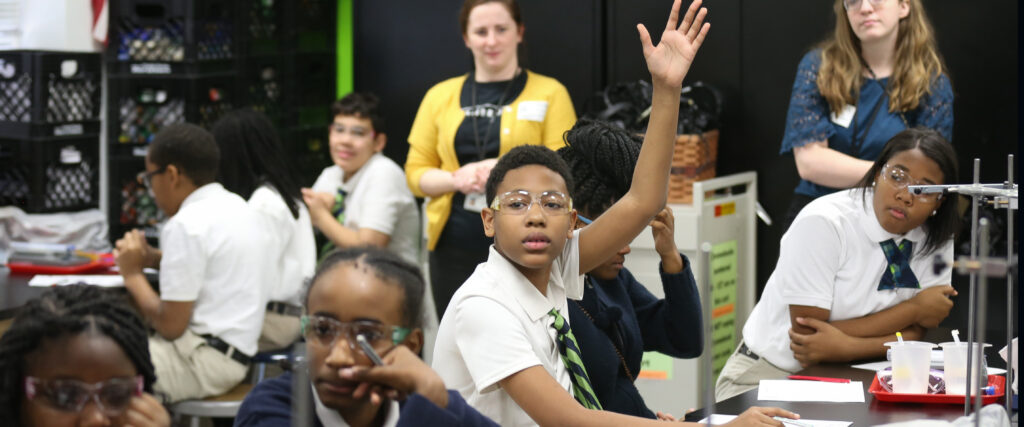
Stellantis UK believes education is the foundation of progress. Our mission is to champion quality education for younger generations facing economic and social challenges, empowering them to shape their future and achieve their dreams.
Inspired by the United Nations Sustainable Development Goals for Quality Education and Gender Equality, the Stellantis UK Philanthropy project is dedicated to investing in transformative
programmes that will make a collective, positive and lasting impact, demonstrating our unwavering commitment in making a meaningful difference for our people, our communities, and our planet.
In the communities where we operate in the UK, we are working directly with local and regional charities to identify community needs. Together we co-build innovative and scalable educational projects with the aim of making a difference in the lives of youth and communities, today and for generations to come. Successful projects in 2024 include the Children’s Literacy Charity, STEMworks and Cheshire Wildlife Trust where £500,000 have already been granted with other exciting projects already in the development stage for 2025.
MINI – Big Love
MINI is built on Big Love. Big Love is an openminded optimism, it’s about appreciating what we have in common and celebrating all that makes us different. MINI has been incredibly proud to partner with community champions up and down the country, and seeing the MINI community turn up to help in the name of Big Love has made all the difference. Whether this is at a national MINI UK level or with one of our retailers across the country.
One retailer, Sandal MINI, partnered with Wakefield Pride and celebrated diversity and inclusion in the summer sunshine. Armed with two rainbow liveried MINI Convertibles and 200 bucket hats, they raised £50,000 for the Pride charity who help fund initiatives for equality and inclusivity.
At a national level, MINI UK partnered with #SheInspiresMe Car Boot sale in 2024 based at Selfridges in London. Luxury brands, designers, celebrities and fashion and beauty icons filled 32 boots with past-season, vintage and pre-loved luxury fashion, all at exceptional prices. This was circular fashion at its best! The 2024 #SheInspiresMe Car Boot Sale raised more than £370,000, with 100% of this going towards Women International’s work supporting women survivors of war.
Even the home of MINI, Plant Oxford, was part of the 2024 Big Love effort. Partnering with the Oxfordshire based Sobell House Hospice’s OxTrail. This initiative saw local artists paint
sculptures of Oxen, which would be placed at local landmarks. Plant Oxford took these sculptures and applied a protective clearcoat, similar to the MINIs. This initiative raised more
than £155,000, all going to the support of the hospice which provides vital end of life care to its residents.
Aston Martin – Children’s hospices support
Aston Martin supports our local communities and charities in multiple ways to maximise our positive impact, going beyond our economic contribution through supporting jobs both directly and indirectly. In 2024, we supported local charities and projects, through the launch of our employee partner charities, where we have partnered with three charities each linked to our main site locations. Our employees chose Birmingham Children’s Hospital, Tŷ Hafan Children’s Hospice and Willen Hospice to support.
Throughout the year, colleagues delivered fundraising events and supported the charities, including collating over 50 packs for parents who find themselves suddenly in hospital supporting their children, collecting clothing for sale at the charity’s shops, as well as taking a DBX ‘doodle car’ to Birmingham Children’s Hospital with the Aston Martin Aramco Formula One® Team.
So far, employees have raised more than £6,500 for the employee partner charities. Other good causes our employees raised money for through the year included Crisis Support Poland, Save the Children, MacMillan Cancer Support, Bobby Moore Cancer Awareness, as well as Alzheimer’s UK, which saw 42 colleagues raise £27,500 through completing the London Landmarks Half Marathon.
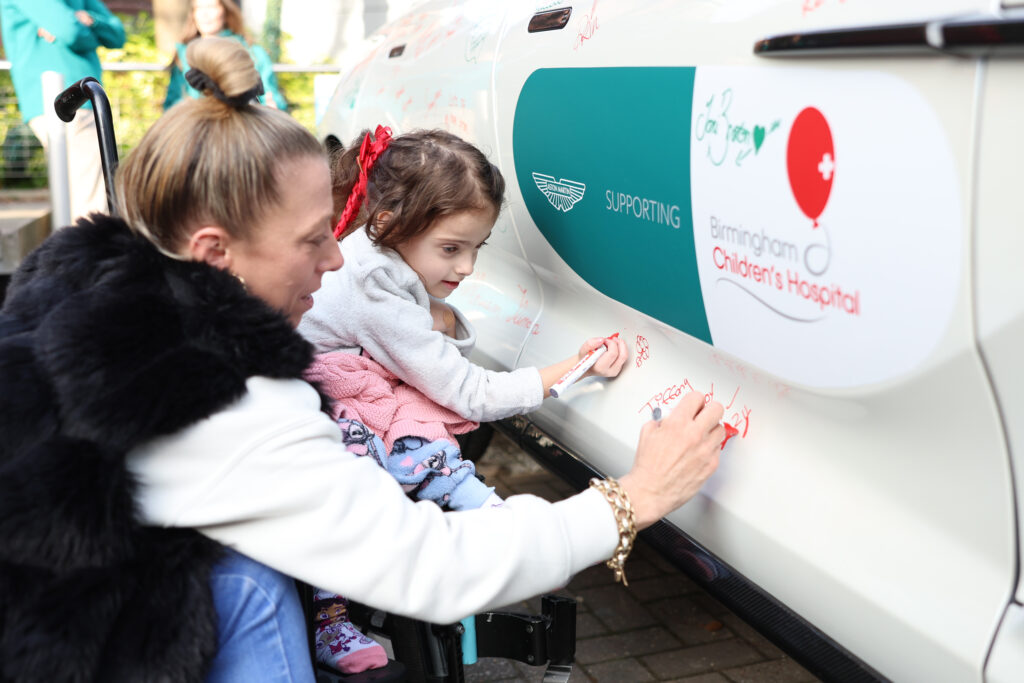
Make a Mark Tour visit to Birmingham Children’s Hospital
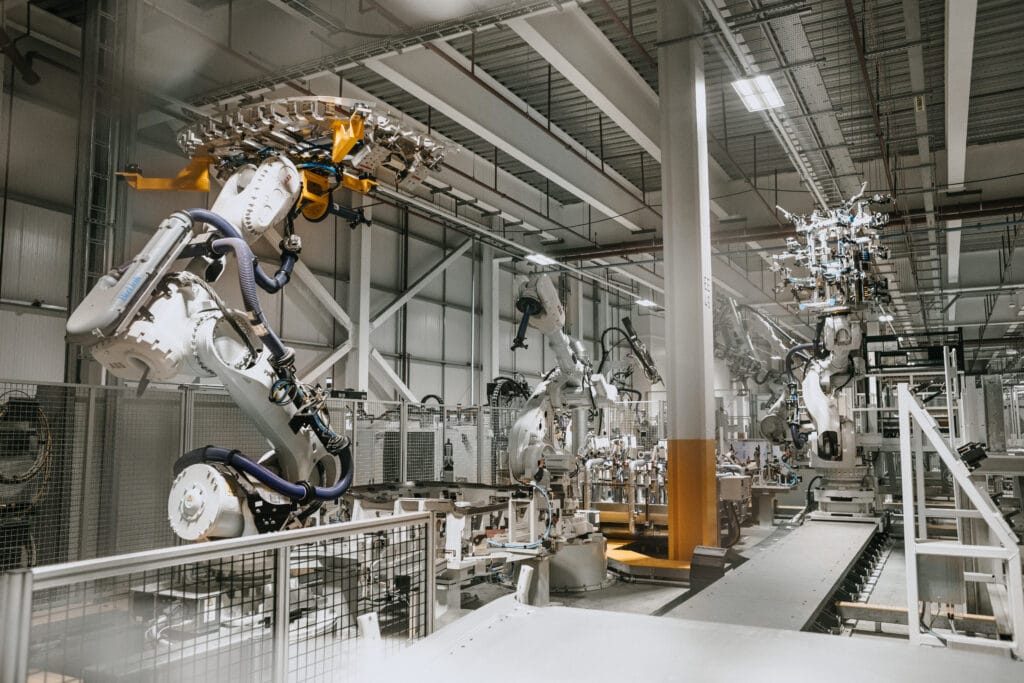
JLR – £500 million investment to create EV factory of the future in Merseyside
In September 2024, JLR announced a £500 million investment to transform its historic Halewood facility to support the parallel production of electric vehicles, alongside existing combustion and hybrid models. Originally built in 1963 to produce the Ford Anglia, Halewood is being transformed for the electric era.
With £250 million already invested, the transformation so far has involved over one million hours of construction work over the last 12 months. The site has been extended by 32,364 sqm to produce JLR’s medium sized electric luxury SUVs on the new Electric Modular Architecture (EMA) platform.
The historic plant has been fitted with technology including new EV build lines, 750 autonomous robots, ADAS calibration rigs, laser alignment technology for perfect part fitment and the latest cloud based digital plant management systems to oversee production, creating the ‘factory of the future’.
This investment is part of JLR’s commitment to its Reimagine strategy, which will see JLR electrify all its brands by 2030, with the aim of achieving carbon net zero across our supply chain, products, and operations by 2039. Electrification is central to this strategy and Halewood has an exciting future producing ICE, PHEV and BEV models side by side before eventually becoming JLR’s first all-electric production facility.