Bridge strikes involving commercial vehicles are a largely avoidable hazard that disrupt journeys, cost money and put both operators and drivers at risk.
According to Network Rail, there are about 1,800 of these strikes every year, which result in more than 120 days of delays for rail passengers and a cost of £23m to the UK taxpayer.
The majority of these incidents involve high-sided vehicles and can be prevented through careful route planning and awareness of vehicle dimensions and bridge clearances.
In addition, with the right technology installed in the cab – backed by a broader commitment to safety culture – fleets now have the tools to stop them before they happen.
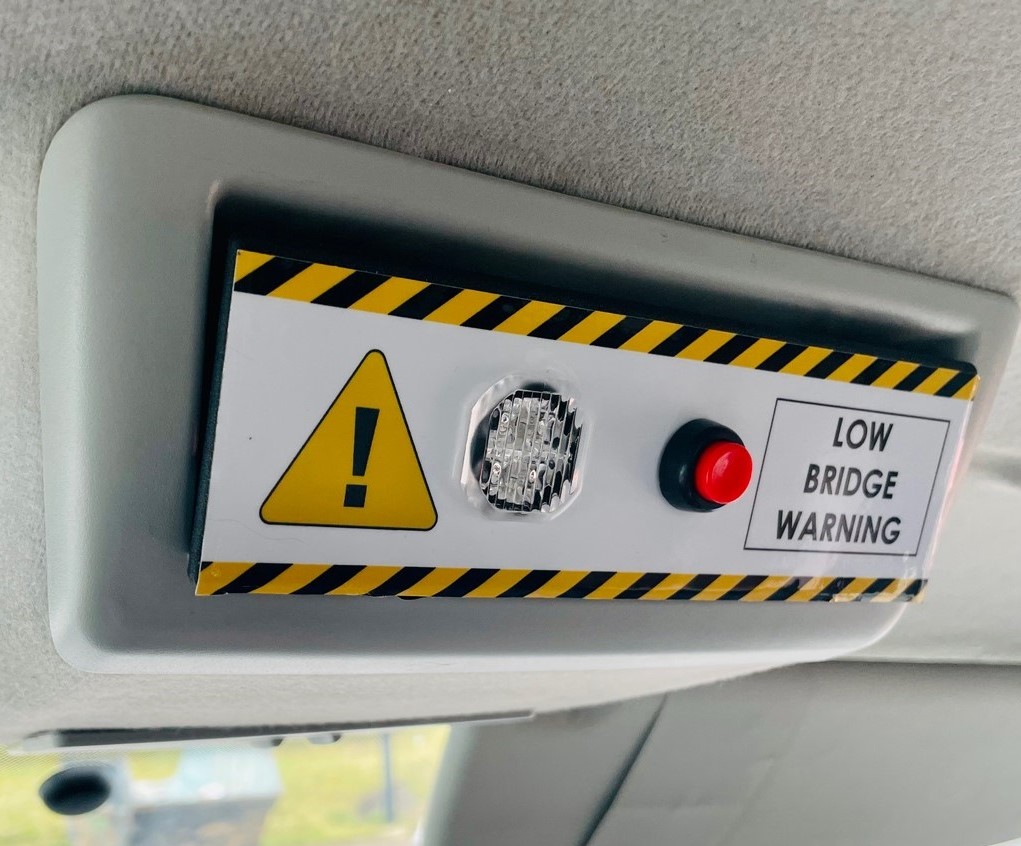
For example, Durite’s Low Bridge Detection System utilises Smart AI-powered camera technology to detect and alert over-height vehicles to the presence of low bridges and also reads safety height signage.
High Accuracy 10Hz GPS, paired with the UK low bridge database provides precise location-based alerts.
With the use of the vehicle’s trailer and cargo heights, the system provides accurate warnings and alerts to the driver via the connected R-Watch Display within the vehicle – giving the driver ample time to choose an alternative route.
Durite said GPS-only systems can be ineffective in rural areas and built-up cities where large buildings lead to interference and signal loss.
John Nobbs, UK Sales Manager for Durite said: “In the UK, heavy goods vehicle bridge strikes are a significant problem – they cause delays, disruptions and potentially high cost to the operator and the rail and road networks.
“With up to five bridge strikes recorded each day in the UK, we recognised the need to produce an advanced detection system which can significantly reduce the risk of collision for commercial vehicle operators.”
Meanwhile, fleet CCTV and telematics provider Centrad has launched a camera-based system branded CenBridge which uses AI with advanced geolocation technology to deliver real-time alerts when a low bridge is detected, warning drivers from 50 metres or more.
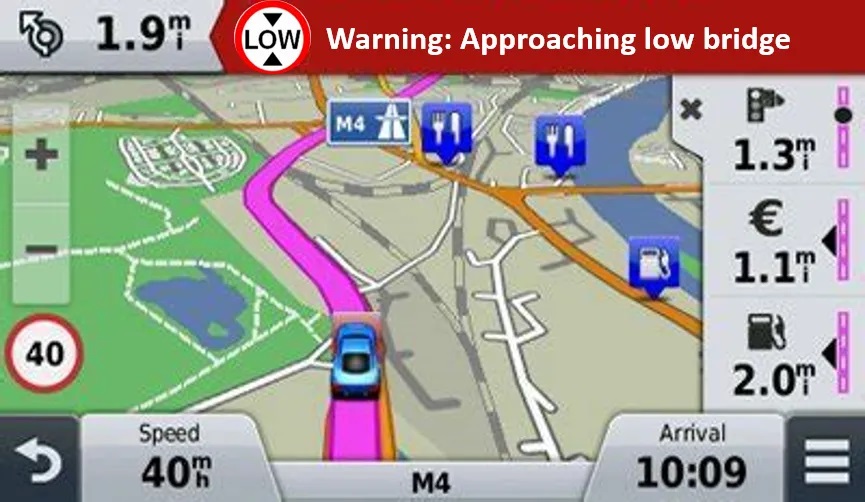
Centrad said CenBridge eliminates false positives by deploying a “deep-learning” trained on a wide range of UK bridge data, including sites without signage and algorithm with complex approaches such as harsh turns or low light.
It uses a database with more than 2,000 mapped low bridges and provides both audio and optional visual alerts when vehicles enter geofenced zones.
The CenBridge system also continuously updates its algorithm remotely and is designed to function reliably even in environments with poor GPS signal by integrating AI with precise geolocation data.
Geoff Cross, Managing Director of Centrad, said: “Research indicates that 43% of drivers admit they do not measure their vehicle’s height before setting off, while 52% acknowledge neglecting to account for low bridges when planning their routes.
“Even with policies, procedures, and systems in place, along with extensive training provided by the operator, mistakes can still happen.
“By offering real-time alerts and precise location-based warnings, CenBridge gives drivers an additional safety net to avoid low bridges, essentially acting as a second set of eyes for drivers while they’re out on the road, preventing bridge strikes before they occur.”
According to Exeros, its Bridge Strike Detection (BSD) system combines AI camera vision and GPS to read bridge height signs and only warn about genuine risks.
Its system uses RFID sensors to automatically detect vehicle height and compare it against bridge clearance in real time, removing the need for guesswork around trailer swaps, variable loads, or unfamiliar routes.
Also, Exeros VideMatics captures every collision and near-miss event, giving managers high-definition footage for investigations and coaching.
The Exeros Bridge Strike Warning System automatically records a short clip during events, uploading it along with GPS location, journey context, and vehicle data.
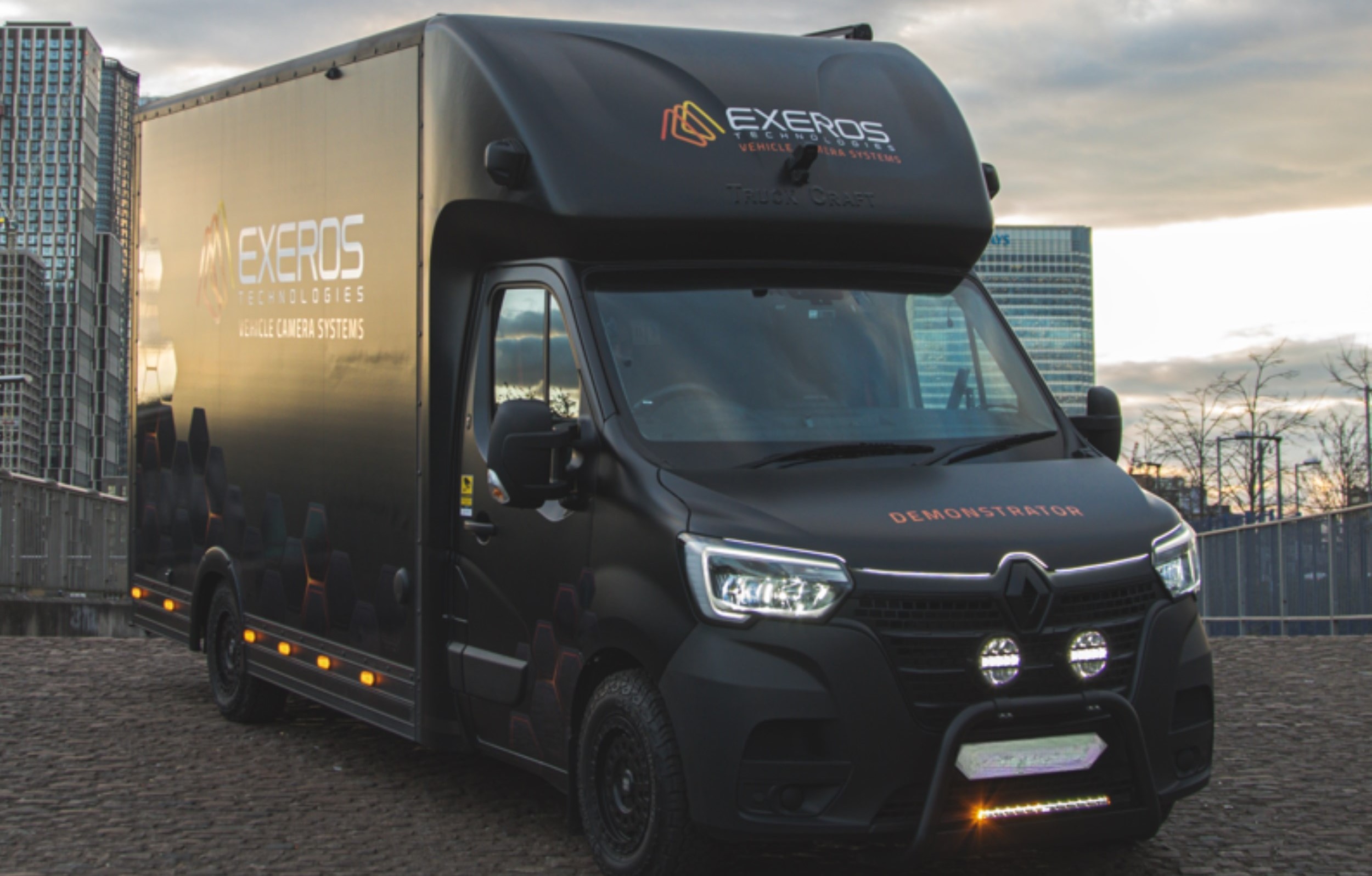
Joe Williams, COO and Co-founder of Exeros Technologies said when coaching drivers on bridge strikes, showing them near misses or collisions from your own fleet is significantly more impactful than standardised training.
He added: “The low bridge recognition system adds another layer of safety by using a three-tier detection process to accurately identify, alert, and warn drivers of low bridges before an incident can occur.
“Our BSD solution uses smart cameras to read road signs, measure bridges, check vehicle height, and alert the driver if necessary.
“It also makes a short recording for incident review. It helps drivers avoid potentially career-ending collisions and saves fleets from repair bills that can easily reach six figures.”
A bridge strike by a commercial vehicle can lead to a public inquiry, operator licence suspension or revocation, and driver disqualification
Built into Samsara dash cams and Vehicle Gateways, the Samsara Low Bridge Strike Alerting Solution uses GPS and mapping data to detect upcoming low bridges, cross-checks against the vehicle’s set height, and delivers real-time audio notifications to the driver in time to re-route away from the bridge effectively.
Samsara said its technology gives drivers an extra layer of protection and means that they don’t have to constantly think about vehicle height because the technology is doing that for them.
Lee Bedingfield, the Head of Fleet Compliance at Sysco GB – part of the world’s largest food service company – has been working closely with Samsara to develop the technology.
He said: “Any technology that helps a driver ‘reset’ for a second is worth trying.
“That nudge can be the difference in avoiding a bridge strike. Not only are we protecting the business and the brand, but we’re also protecting the driver’s vocational licence.”
Proper route planning, effective training for drivers and managers, and ensuring every vehicle in the fleet has its running height recorded and readily available is key to reducing the number of bridge strikes. However, more needs to be done to drive down incident figures, and the wider adoption of low-bridge detection technology can play an important role