- New bus, coach and minibus market falls -50.6% in Q2 with 1,465 units joining UK roads.
- Minibus sector drives decline, with -70.9% drop in registrations almost halving market share.
- Zero emission bus deliveries fall -37.0% but market share grows to more than a quarter (26.5%).
Data download
Bus & Coach Q2 registations
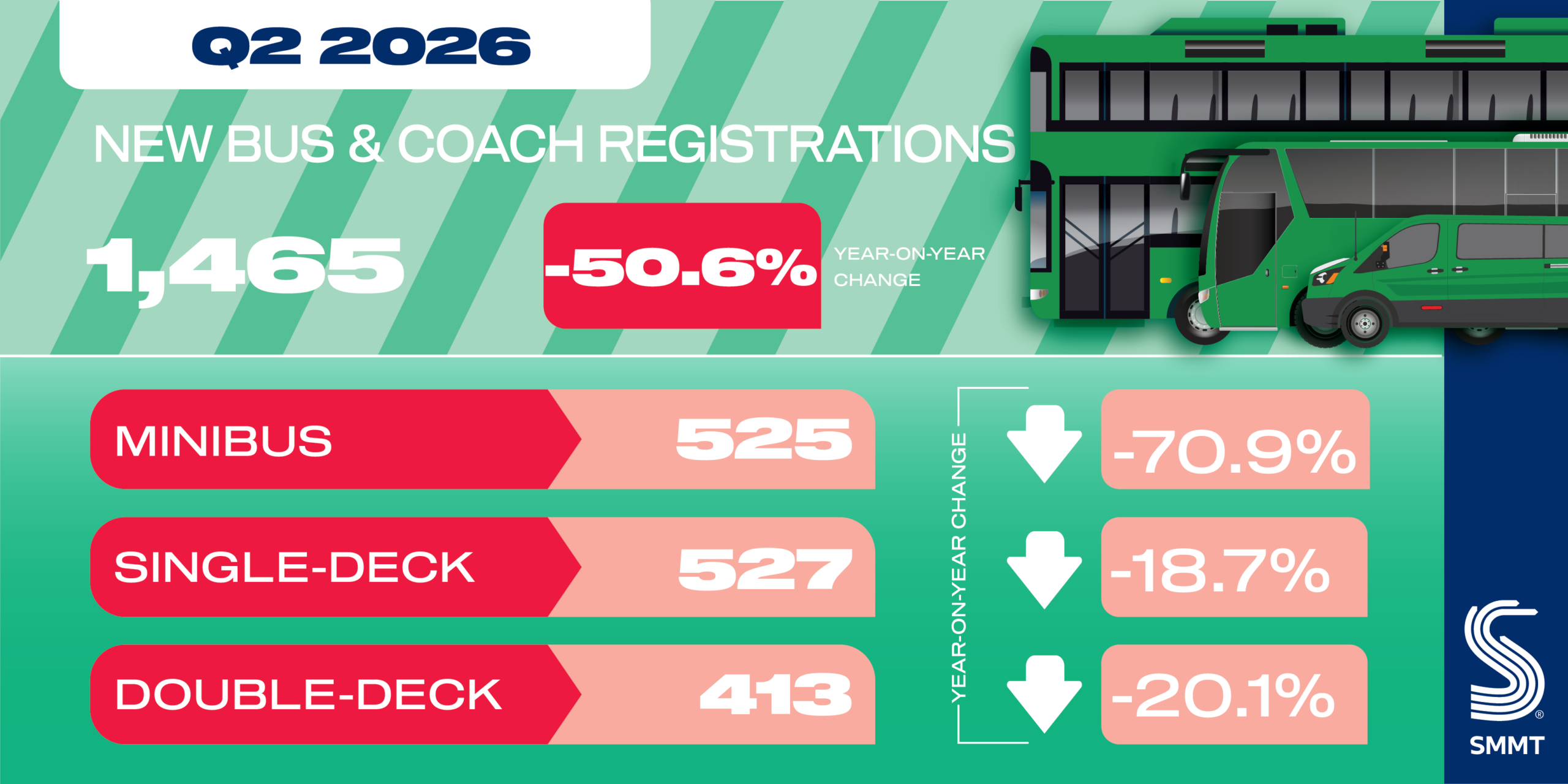
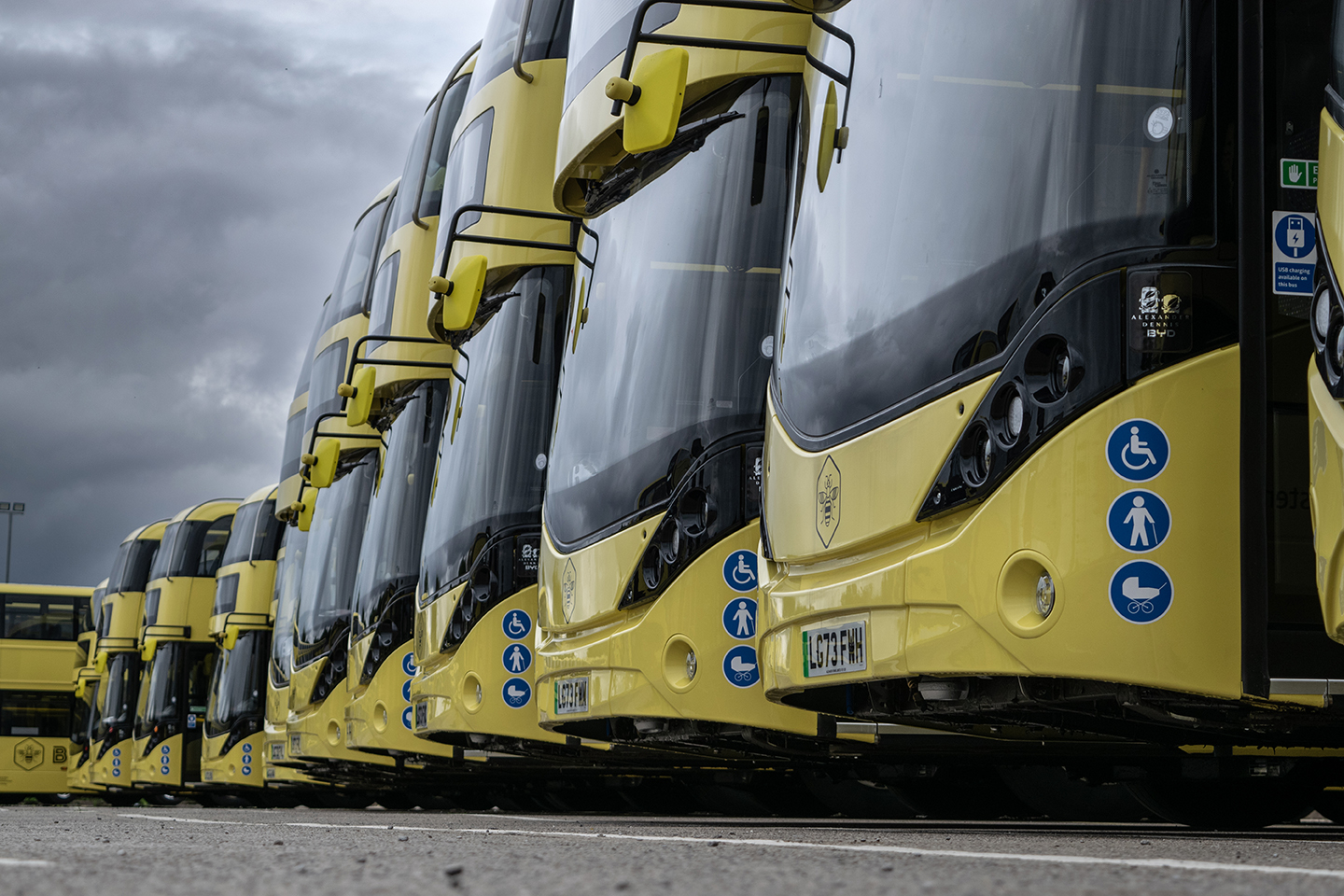
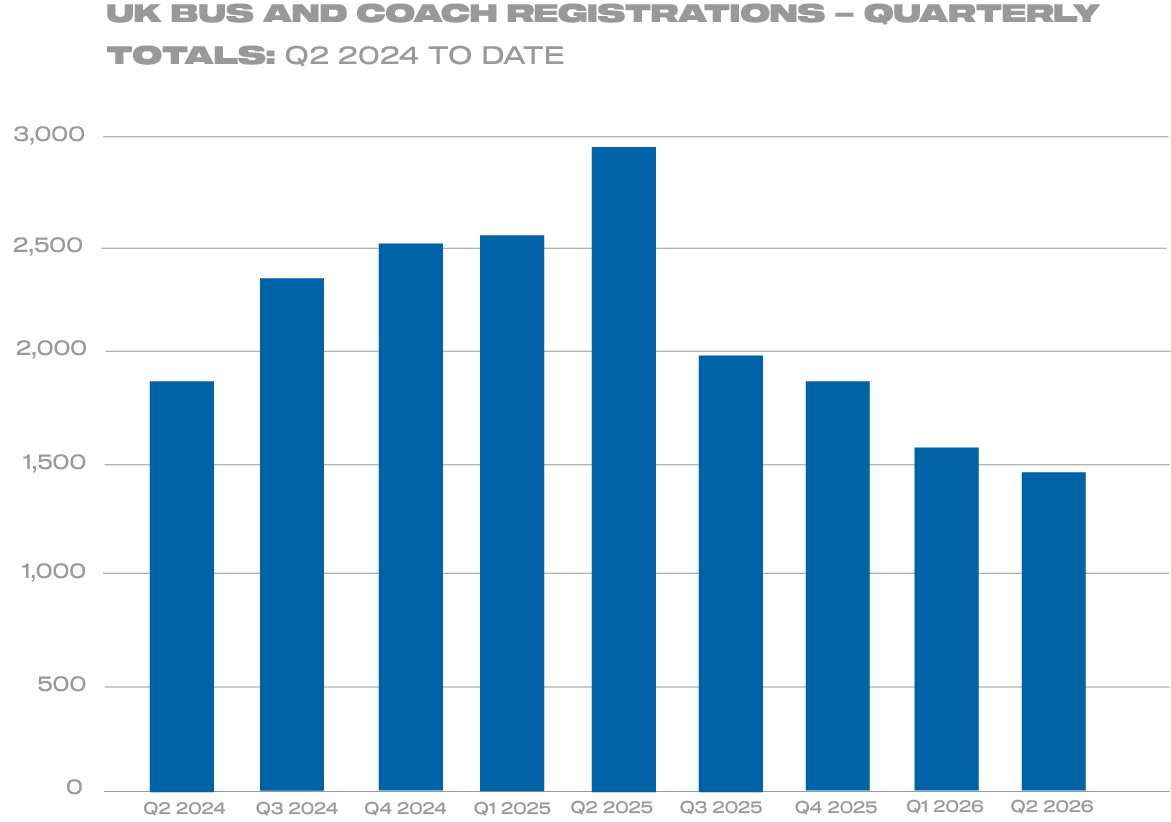
The UK’s new bus, coach and minibus market fell by -50.6% to 1,465 units in the second quarter of 2026 as demand continued to normalise after two strong years of fleet renewal, according to new data published today by the Society of Motor Manufacturers and Traders (SMMT).
The fourth consecutive quarterly decline was primarily due to a -70.9% fall in minibus registrations, from 1,803 units to 525, causing market share to drop to 35.8% – a steep decline on last year’s Q2 share of 60.7% when registrations were up 99.7%. Smaller declines were recorded in double-decker registrations, down -20.1% to 413 units and single-deckers, down -18.7% to 527 units.
Wales was the only region to record growth in the quarter, up 138% to 119 units, due in part to increased investment from the Welsh Government in public transport, particularly the cross-country TrawsCymru bus network.1 England remained the largest market despite volumes falling -49.9% to 1,190 vehicles. Scotland recorded the largest decline of -71.9% to 141 units, followed by Northern Ireland which saw a fall of -64.1% to 14 units.
Zero emission bus registrations fell -37.0% to 388 units, less than the overall market meaning market share increased to more than a quarter (26.5%), up from a fifth (20.8%) in the same period last year. Across the first half of the year, zero emission vehicles accounted for nearly a third (32.1%) of the market, underlining the continued momentum driving the sector’s transition to greener transport.
Government’s vision for buses, and the publication of a long-term zero emission bus order pipeline, demonstrates the important role buses play in delivering cleaner, more accessible public transport. While demand is down following two years of significant growth from a variety of investments, including the ZEBRA fund, sustained support remains critical to maintain fleet renewal. This is particularly the case for local authorities and operators who face higher transition costs, as well as those serving rural communities where infrastructure deployment can prove more challenging.
Stimulating investment in fleet renewal will help drive the shift to cleaner public transport across the nation, bringing benefits for in terms of carbon emissions, air quality and local community mobility. However, further action is needed to accelerate grid connections and depot upgrades to ensure operators have the infrastructure required to deploy zero emission buses efficiently.
While bus registrations continue to decline, this remains something of a normalisation after two exceptionally strong years of investment. Zero emission buses continue to outperform the wider market, however, resulting in an increasing share and helping provide green mobility across the country. Manufacturers have invested heavily into these new technologies, and continued government support can drive up the fleet renewal needed to ensure the UK benefits from a cleaner bus network.