Commercial Vehicle Units (CVUs) are police teams operated by forces across the country which ensure that heavy and large goods vehicles travel and operate safely.
These units are dedicated to ensuring that truck and van traffic in the UK, on busy motorway networks or smaller local roads, adheres to the highest standards.
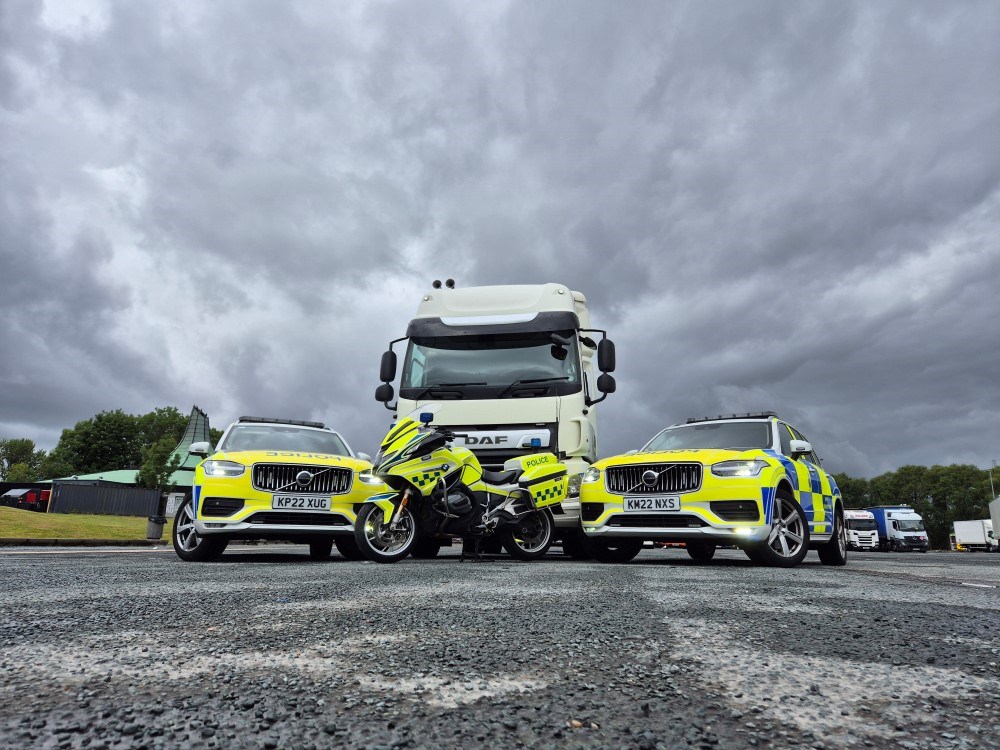
CVUs operate their own cars, vans, HGVs and motorbikes equipped with the latest technology for carrying out proactive checks on all commercial vehicles, making sure those that are not safe are removed from the roads.
Officers from these units typically hold qualifications as HGV vehicle examiners, transport managers and dangerous goods safety advisers, enabling them to identify mechanical defects, enforce weight regulations and check load safety.
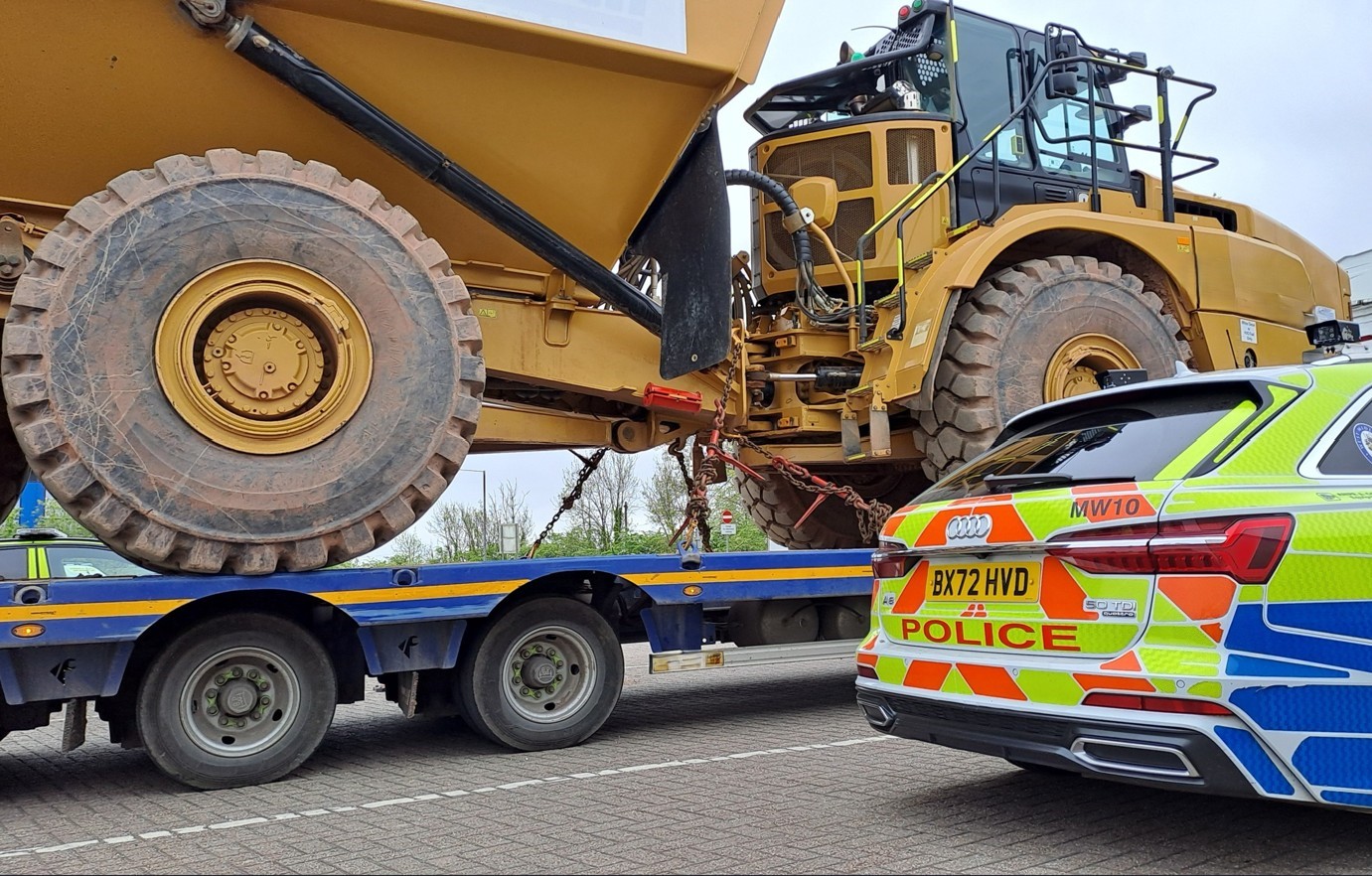
CVUs regularly carry out checks on overweight vehicles, tachographs and driving hours, insecure or dangerous loads, and vehicle conditions.
They also deal with traffic offences such as drink and drug driving, speeding, mobile phone use, not wearing a seatbelt and careless driving – as well as uninsured vehicles.
For example, Cheshire Constabulary’s CVU team works closely with partners, including the Driver and Vehicle Standards Agency (DVSA), National Highways, Immigration Enforcement, Driver & Vehicle Licensing Agency (DVLA), National Vehicle Crime Intelligence Service (NaVCIS), the Health & Safety Executive (HSE) and other regional CVUs.
As part of the Department for Transport (DfT) Road Safety Strategy, Cheshire’s CVU officers deliver ‘Toolbox Talks’ to transport managers and drivers at HGV and LGV depots, giving them the opportunity to speak to police in a familiar setting.
The team has also taken part in Operation Tramline alongside National Highways and various UK police forces, using unmarked, elevated HGVs to covertly spot and record dangerous driving.
In May, Cheshire CVU took part in the national Operation Chemical deployment, positioning themselves on motorways and key routes across the county to ensure that vehicles transporting substances that could pose a serious risk to the public are doing so safely.
The unit also runs tachograph, driver hours, and dangerous goods training courses, meaning all specialist training is now delivered in-force by its own officers.
PC Aidy Sharrock, of the Constabulary’s Commercial Vehicle Unit, said: “Cheshire is home to several busy motorways that connect us to major cities like Manchester and Liverpool.
“This also means that a great number of motorists are regularly carrying loads and cargo of all kinds in our county.
“It is for exactly this reason that the CVU regularly deploys onto Cheshire’s road network alongside our community partner groups to ensure those carrying heavy, long, and often dangerous goods are doing so safely and legally – taking action against those who do not.”
In May, officers from the West Midlands Police dedicated CVU were joined by West Midlands Police roads policing colleagues, as well as police colleagues from forces that work along the M6 corridor – from Cumbria down to Warwickshire – to carry out a major road safety operation.
Together, they worked with partner agencies like the DVSA and National Highways, for a day of action targeting illegal and unsafe commercial vehicles.
During the operation, 47 vehicles were brought onto the DVSA site in Staffordshire.
Of those, 18 were immediately prohibited from the roads due to serious safety issues, while four had no insurance.
Officers also dealt with 26 load security issues, where goods that vehicles were carrying were not secured properly, 12 weight offences, and 10 abnormal loads with various safety breaches.
Tyre offences, tachograph issues, and seatbelt offences were also all dealt with.
Supt Jack Hadley, Head of the Roads Policing Unit at West Midlands Police, said: “This joint approach to working – both with other forces, regulatory organisations, and partners – is vital to our mission of making the roads safer for everyone and reducing the number of fatalities and serious injuries.
“Focusing on commercial vehicles, and making sure they’re complying with the law, is incredibly important given their size and nature of the loads they’re carrying, as we want to minimise the impact of them being involved in a collision.”
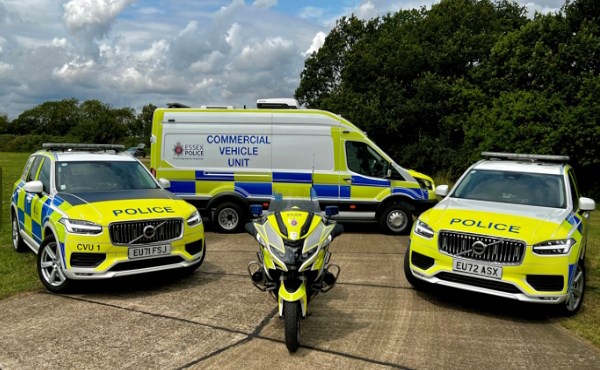
Meanwhile, Essex Police’s CVU, which is part of the wider roads policing team, regularly conducts operations at service stations and roadside checkpoints.
Checks include verifying driver hours, as well as inspecting vehicles for defects and safety compliance.
Officers also issue visibility aids to help drivers see blind spots, educate them on safe loading and legal weight limits as well as check for correct documents held for the driver and the vehicle.
Their work forms part of Essex Police’s commitment to Vision Zero, the ambition to eliminate road deaths in Essex by 2040 or sooner.
Sergeant Jason Dearsley, who leads the CVU, said: “Through targeted patrols, roadside checks, and industry engagement, the Commercial Vehicle Unit ensures compliance and promotes safer roads for all.
“Commercial drivers are often a hard-to-reach community because of their work commitments, that’s why we go to them, and meet them at service stations where we can check on their welfare and listen to their concerns.
“During our conversations we highlight the importance of keeping safe through taking regular breaks, getting sufficient rest and ensuring their vehicles are safe to drive.”
During a two-week period during January and February, the specialist CVU in Suffolk worked alongside DVSA traffic and vehicle examiners, at sites across the county.
In a campaign led by the National Police Chiefs’ Council (NPCC), officers worked to tackle road safety offences and intercept illegal working and organised immigration crime.
Tim Passmore, Suffolk’s Police and Crime Commissioner, said: “Since its creation from the council tax precept investment, the Commercial Vehicle Unit has had some excellent results which show just how valuable the team is.
“I fully appreciate the expertise this team brings and the difference it makes. Keeping our roads free-flowing and reducing the number of collisions has a massive impact on the county’s economy.”
CVUs have a pivotal role in enforcing regulations, improving road safety, and tackling issues related to commercial vehicles, including freight and immigration crime.
Their part in educating operators on safe practices should also not be underestimated.