New transport innovations are giving firefighters the equipment they need to save lives and property more safely, effectively and efficiently than ever – but it is down to top commercial vehicle manufacturers and design specialists to drive the change.
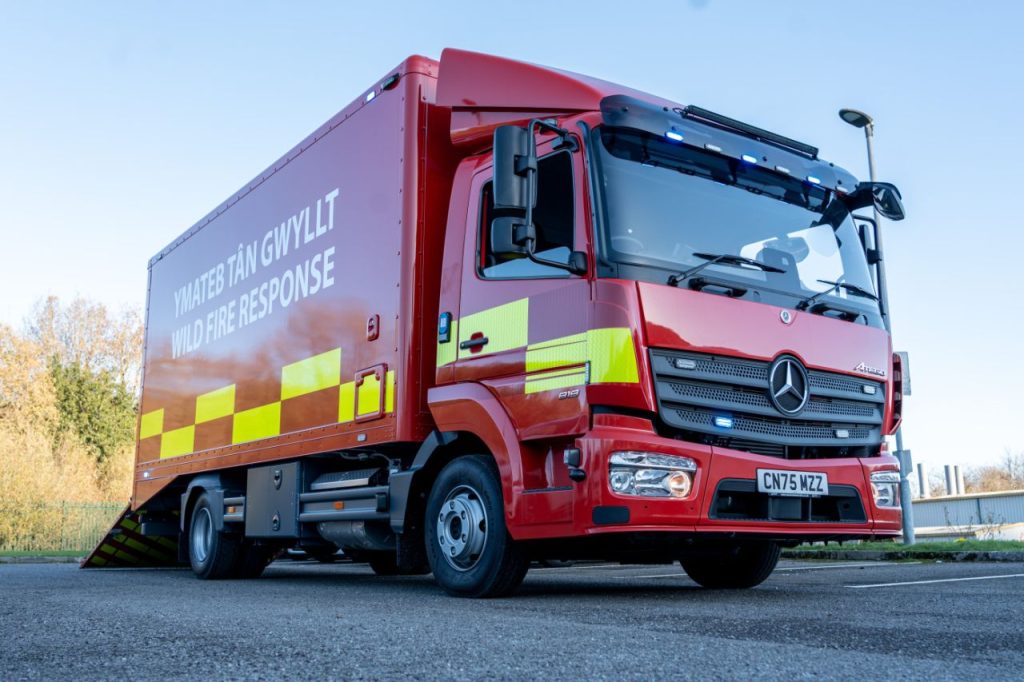
For example, South Wales Fire and Rescue Service (SWFRS) has been able to introduce four new welfare and wildfire response vehicles to its fleet, aimed at improving crew safety and support during prolonged incidents.
Utilising a Mercedes-Benz Atego truck supplied by Euro Commercials Cardiff, the vehicles were custom-built by body company Neath Coach Builders, with emergency warning systems installed by Elite of Bridgend to meet the unique demands of prolonged emergency operations.
Designed to transport the service’s wildfire response vehicles – Can-Am 6×6 all-terrain units – the fleet of four have replaced Land Rover/trailer combinations.
The new design, which supports firefighters working long hours on the ground, comes with toilet facilities, as well as a microwave and a fridge to ensure that crews can rest and recover while remaining close to the incident scene.
Engineers from the SWFRS fleet and engineering department are responsible for maintaining a fleet of more than 480 emergency vehicles, each undergoing four services a year, ensuring they are operationally ready at all times. .
They also ensure that critical equipment – from water bowsers and aerial ladder platforms to specialised rescue vehicles – are maintained to high standards.
With more than 450 vehicles in operation across the service, the engineering team provides 24/7 support, 365 days a year, to keep front-line crews mobile and mission ready.
Lee McCarthy, General Manager of Neath Coachbuilders, said: “It’s a privilege to work on a project that strengthens the safety and wellbeing of firefighters.
“Our team put immense pride into this build, and its completion is a testament to the craftsmanship and collaboration behind it.”
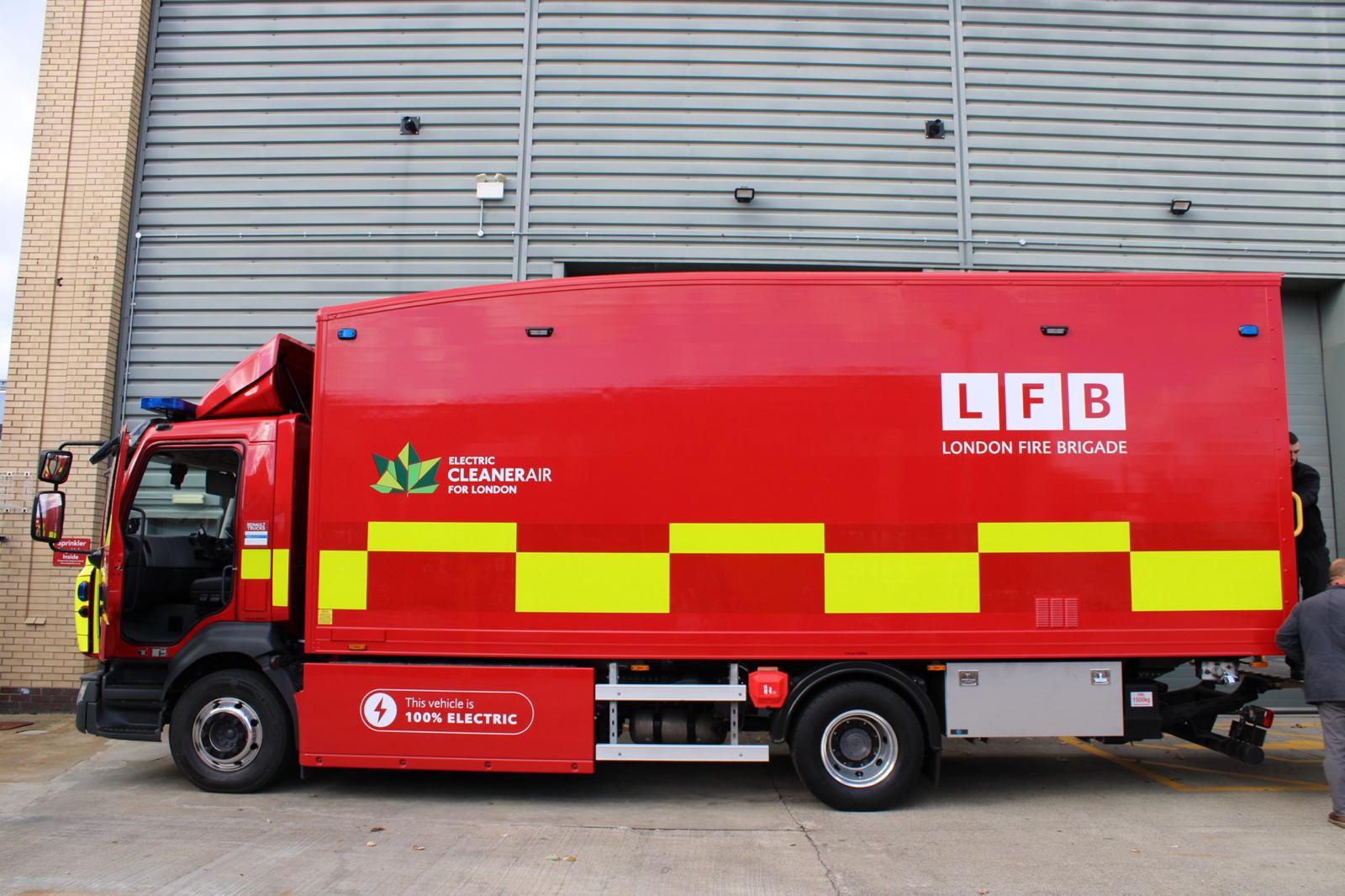
Meanwhile, London Fire Brigade has rolled out its first fully electric large goods vehicles (LGVs) which are being used to deliver essential equipment across the capital and respond to incidents.
Following successful trials over the past two years at the brigade’s Operational Support Centre (OSC), the two 16-tonne Renault Trucks E-Tech D electricHGVs have replaced older diesel trucks that have served London for more than two decades.
The new LGVs are equipped with telematics equipment that provides real-time data on performance and efficiency.
This information helps the brigade assess how the EVs perform in operational environments and informs future expansion of its zero-emission fleet.
Alongside this, eight Volvo XC40 electric cars have been introduced across the brigade’s training centres in Ruislip, Beckton and Croydon, replacing the hybrid and petrol cars previously used.
These vehicles are used by instructors to teach and refresh the blue-light driving skills of senior officers.
The transition to EVs forms a key part of the brigade’s Carbon Net Zero strategy and supports the Mayor of London’s target of achieving a zero-carbon city by 2030.
London Fire Brigade has also developed a Zero Emission Pumping Appliance (ZEPA1), which is currently being trialled at Hammersmith Fire Station.
In addition, the brigade operates a fully electric car fleet, has cut CO₂ emissions by 59 per cent since 1990, and generates more than ten per cent of its energy on-site from renewable sources.
Carlos Rodrigues, Renault Trucks Europe Senior Vice President, said: “We are proud to support London Fire Brigade on its journey towards a zero-emissions future.
“The Renault Trucks E-Tech D vehicles demonstrate that electric technology can deliver the performance, reliability and capability required for demanding public service roles.
“This rollout reflects our shared commitment to reducing emissions and creating a cleaner, more sustainable future for London.”
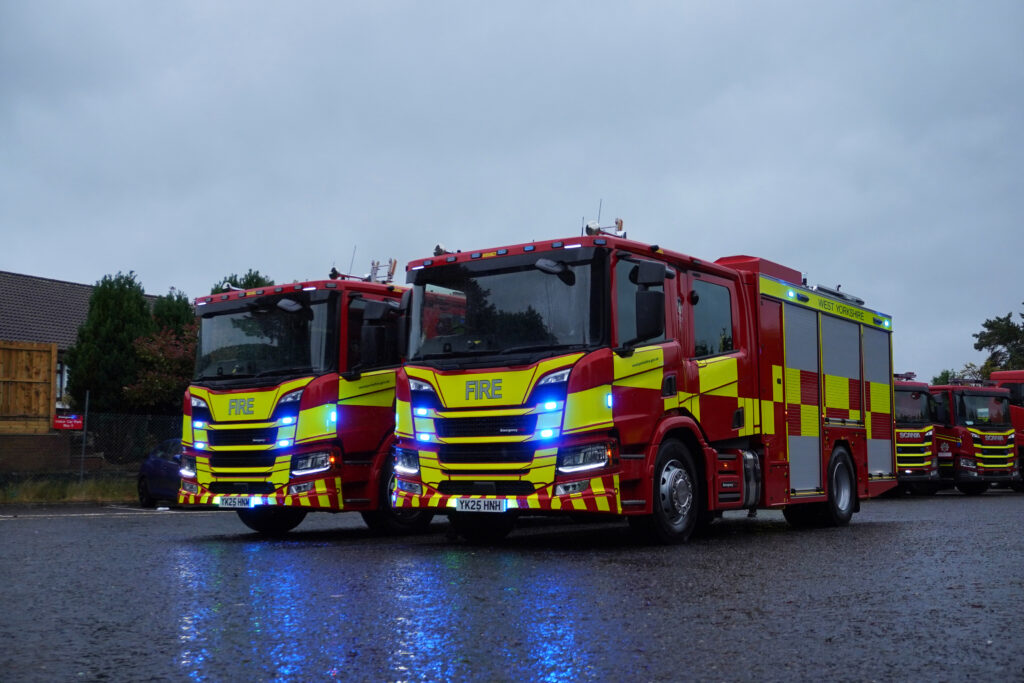
Also, Ayrshire-based fire and rescue vehicle manufacturer Emergency One recently completed a major build of 52 vehicles for West Yorkshire Fire and Rescue Service (WYFRS).
This saw on average one appliance delivered each week, with each truck delivered on schedule and to the highest standards of build quality.
The specification includes several enhanced operational features, including a 2500-litre water tank, making the vehicles adaptable to a wide range of fire and rescue scenarios.
Vehicles in the mainly Scania fleet also feature a power beam ladder gantry, which automatically lowers ladders to a safe working height.
This is a vital safety improvement, particularly given the increased body height from additional locker space and increased water tank capacity.
Brian Girvan, Production Director at Emergency One, said: “Delivering 52 appliances in this kind of schedule is a real achievement, and it’s a testament to the commitment of our build and support teams.
“More importantly, we’re proud to deliver vehicles that not only meet the operational needs of West Yorkshire but also help enhance firefighter safety and support cleaner, more modern working environments.”
West Sussex Fire & Rescue Service has taken delivery of two new 18 tonne Volvo Water Carriers which were custom built for the service by Emergency One.
Each vehicle has the capacity to carry 9,000 litres of water and can deliver water directly to an incident via its own hoses and hose reel.
The water carriers are also equipped with two inflatable dams, which can store 10,000 litres of water and be used to provide a continuous supply of water.
Water carriers offer additional resilience when responding to emergencies in areas of low water pressure, and support large incidents where a higher volume of water is required.
Councillor Duncan Crow, Cabinet Member for Community Support, Fire and Rescue, said: “This is a significant investment from West Sussex County Council to modernise our fleet and replace the current vehicles which have reached the end of their operational lives.
“These new vehicles offer greater operational resilience to help keep people living and working in West Sussex safe.”
The investment in new fire engines and trucks by fire authorities around the country demonstrates an admirable commitment to providing crews with modern and safe appliances.