Military spending is currently rising significantly in all regions around the globe – driven by growing geopolitical tensions, conflicts and perceived security threats.
In this uncertain climate, the opportunity to produce sophisticated military versions of civilian commercial vehicles has become an increasingly important business area for commercial vehicle manufacturers, converters and suppliers in the UK and the rest of western Europe.
For example, Daimler Truck has set a target of generating €1 billion in defence-related revenue by 2028 as it accelerates its military vehicle programmes.
With the launch of its new global brand – Daimler Truck Defence – the company is bringing together defence activities under one unified identity and aligning the business for sustained international growth.
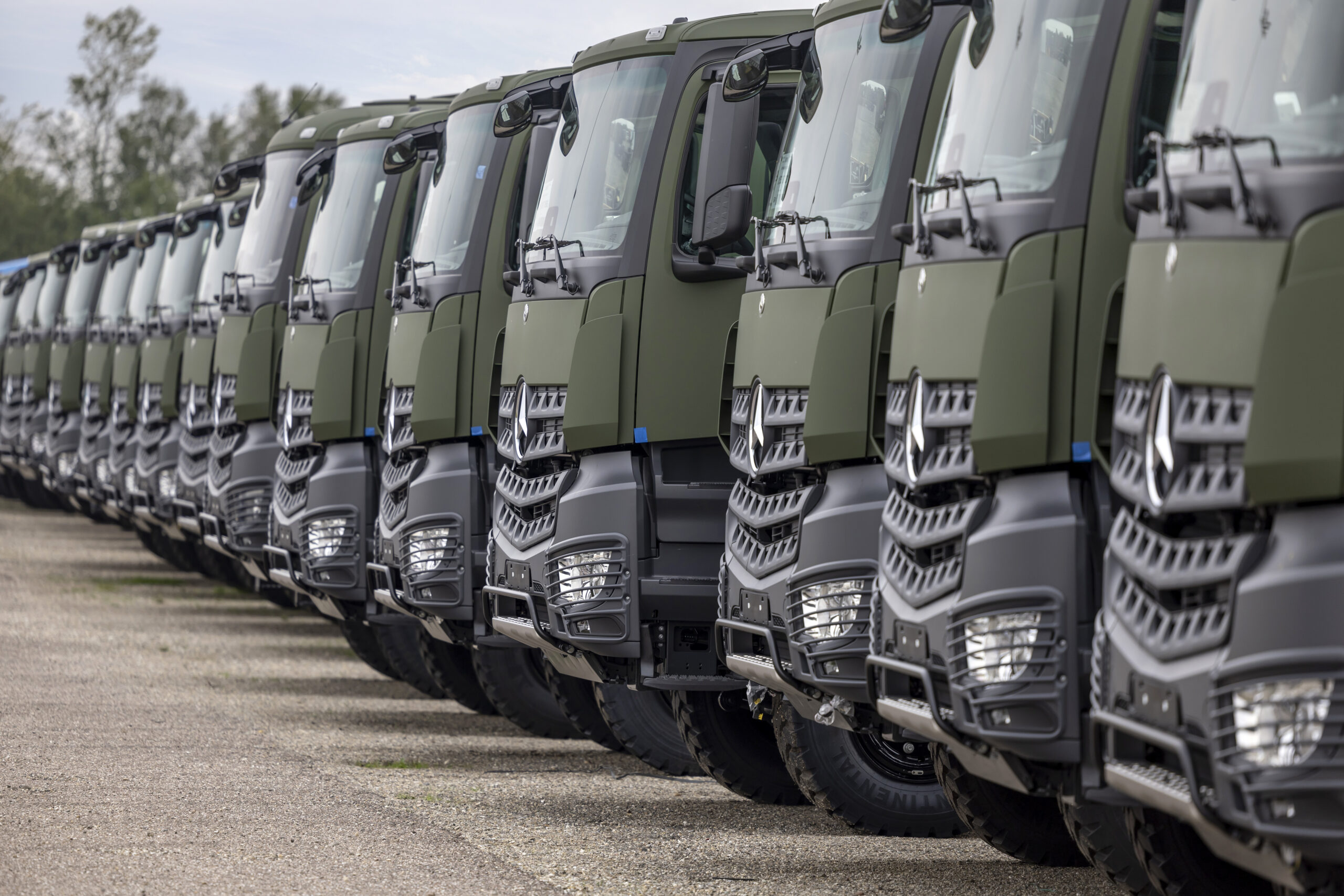
Daimler Truck builds a range of Unimog, Zetros and Arocs vehicles equipped with diverse mission systems and specialist configurations developed in cooperation with industry partners.
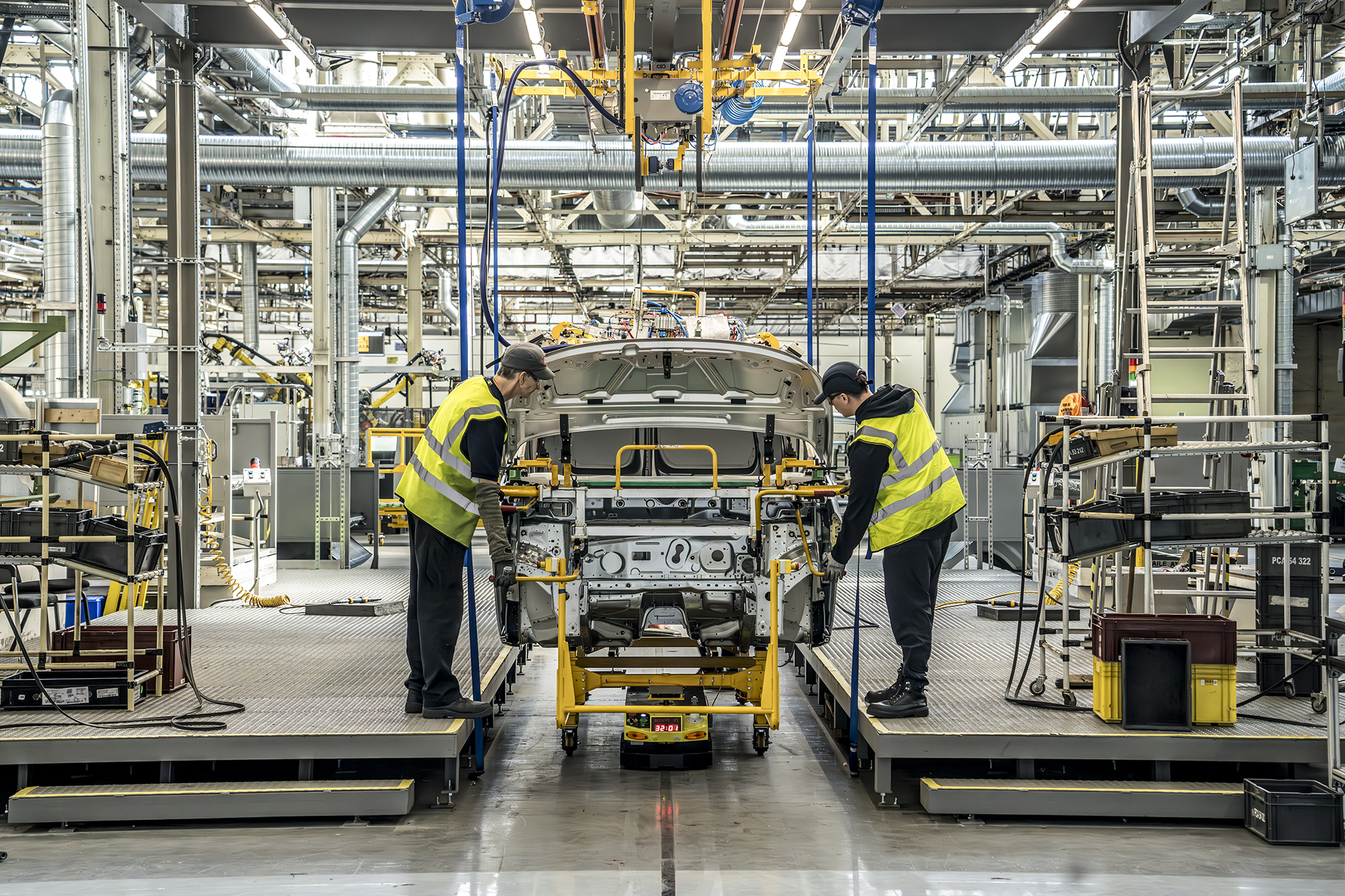
About 1,000 employees are currently engaged in the company’s defence business, and at its plants in Wörth am Rhein, Germany, and Molsheim, France, military variants can be integrated into existing production lines.
The company also offers local assembly of militarised Mercedes-Benz trucks in customer countries.
Recent contract awards include a major order from the German army for military logistics vehicles, a contract with the Canadian Armed Forces in cooperation with General Dynamics Land Systems covering at least 1,500 logistics trucks, and a framework agreement with the French Armed Forces in partnership with Arquus for 7,000 trucks based on the Zetros platform.
The future portfolio aims to offer an even broader range of solutions, from light utility vehicles to heavy tactical logistics platforms equipped for mission-specific requirements.
Dennis Kinzelmann, CEO Daimler Truck Defence said that for military personnel in the field, reliability, readiness and support are “mission-critical.”
He added: “Demand for reliable military mobility is growing worldwide.
“With our global manufacturing network, resilient supply chains, strong partnerships and expanded product portfolio, we can deliver military vehicles and mobility solutions quickly, at scale and with high standards.
“Through Daimler Truck Defence, we are bringing together the full strength of our global brands and capabilities under one global brand.
“Our ambition is clear: to become one of the leading providers of military mobility solutions through our global technology and production network.”
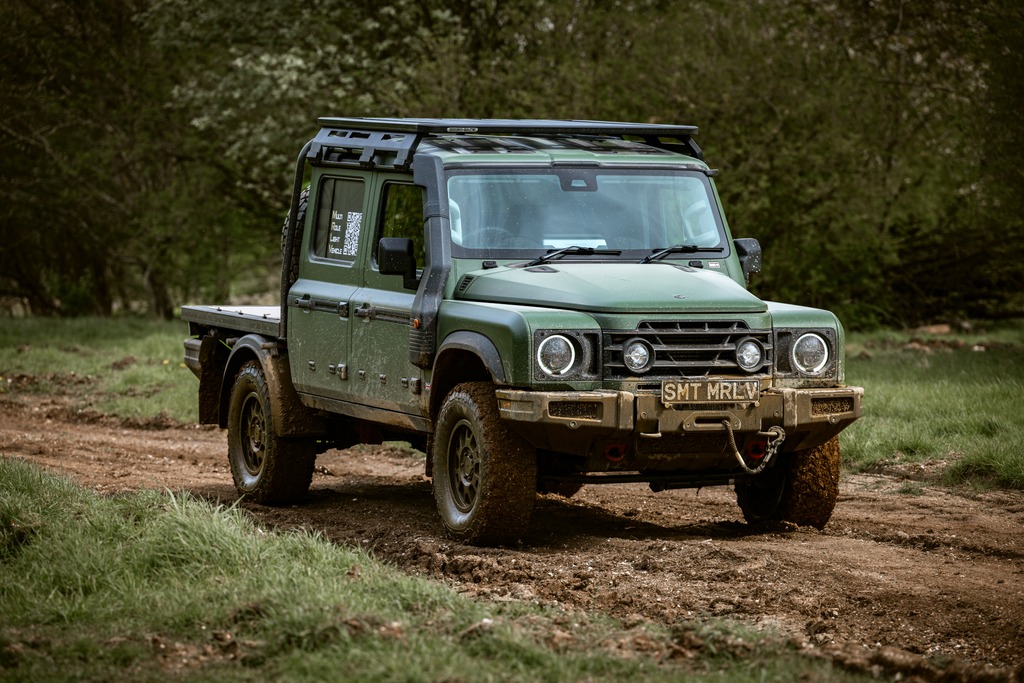
Meanwhile Ineos Automotive, SMT Defence and NMS UK have joined forces to form Team Grenadier, a collaboration dedicated to delivering a range of vehicles ideal for the Ministry of Defence (MoD),
The project is based on the 4×4 Ineos Grenadier platform which is already proven in demanding operational environments through its use by fire, police and rescue services around the world.
Its ladder-frame chassis, permanent four-wheel drive, heavy-duty beam axles and high payload capacity, provide a robust baseline for military adaptation across multiple roles and operating environments.
The vehicle therefore offers cross-country mobility, durability and straightforward maintenance, making it ideally suited to long-term military service.
Mike Whittington,Chief Commercial Officer, Ineos Automotive said: “A defining advantage of the industrial collaboration is its British ownership, onshore assembly and local supply chain.
“It brings strategic benefits in operational independence and resilience with security and regulatory alignment – delivering on the MoD’s core objectives.
“Grenadier’s unrivalled capability and inherent strength provide an obvious starting point for mission-critical transport.”
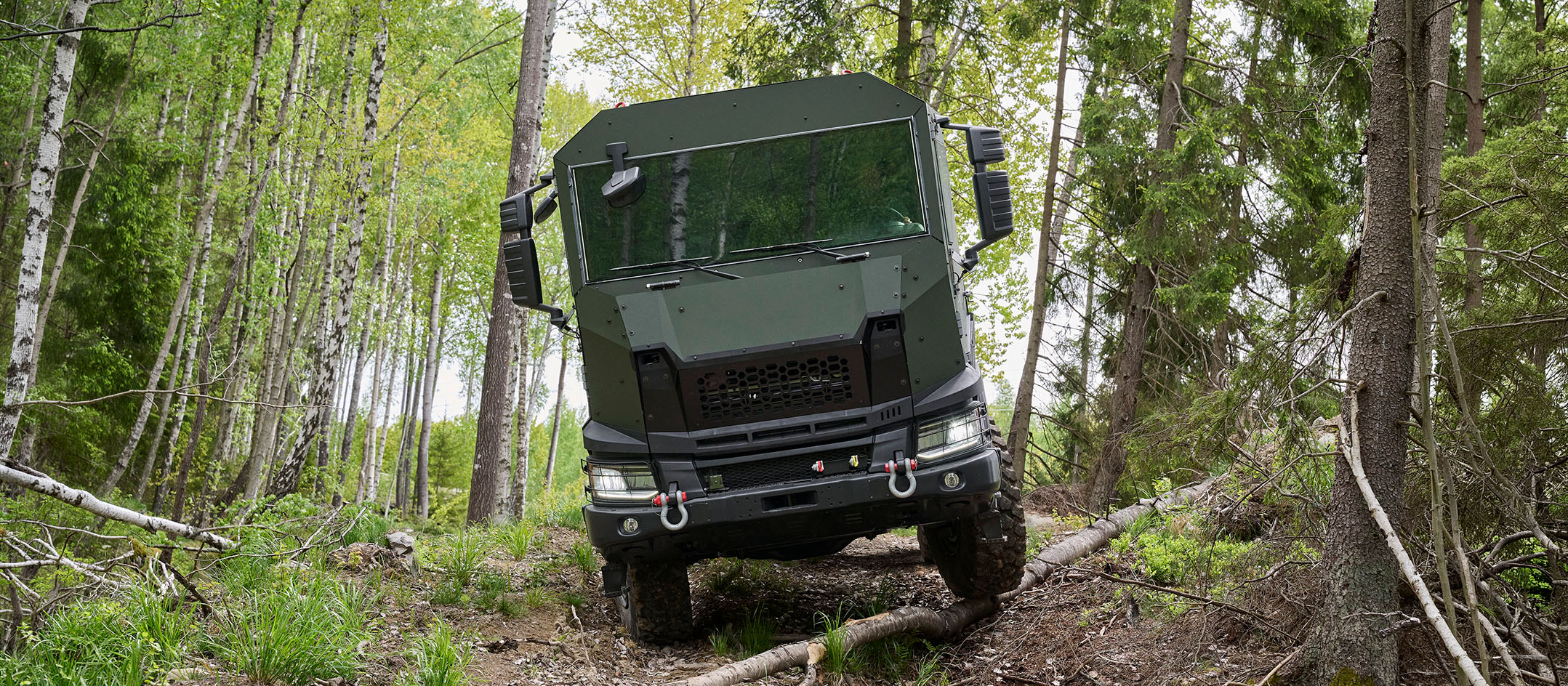
Scania has supplied defence vehicles and power solutions for more than a century and today supports several NATO and allied nations.
The manufacturer recently expanded its defence portfolio with the launch of a new modular Protected Cab, bringing enhanced crew protection to Scania’s established modular vehicle platform without requiring a move to a separate chassis or bespoke system.
It has been developed for missions where crews must operate safely and effectively in challenging terrain, harsh weather and continuous operations.
The cab offers ballistic and blast protection while maintaining visibility, ergonomics and the familiar Scania driving environment.
Protection levels can be configured to suit different mission profiles, and the design supports the integration of mission‑specific equipment, communication systems and specialist bodywork.
Its modular design also means the same vehicle architecture can be adapted for training, deployment and operational readiness, helping customers maximise fleet flexibility.
The Protected Cab, which is available on 4×4, 6×6 and 8×8 configurations, is manufactured in Sweden and integrated directly into Scania’s standard production flow, assembled alongside other defence variants.
By using common components, driver interfaces and service structures, operators benefit from established parts availability, maintenance processes and global support networks throughout the vehicle’s service life.
Stefano Fedel, Head of Scania Commercial, said: “Defence logistics and transport resilience are becoming increasingly important for armed forces and societies across Europe and beyond.
“With the Protected Cab, Scania combines protection and operational capability with the modularity, reliability and support systems already proven across our global transport ecosystem.”
In strategic collaboration with Toyota, global defence company Babcock has developed a new generation of off-road vehicles based on the Toyota Land Cruiser and Hilux platforms.
These Babcock general logistics vehicles undergo significant military‑specific modifications by its teams in the West Midlands to prepare them for the demands of operational service.
Central to the vehicle build is the involvement of a network of UK-based small component suppliers.
The move is also linked to the recent decision by the Ministry of Defence (MOD) to retire its longstanding Land Rover fleet after 70 years of service.
Chris Spicer, Managing Director for its Engineering and Systems Integration Business, said: “The Army’s Land Rover has earned its retirement – and with the general logistics vehicle, we’re building on its legacy with a product which will provide soldiers with a tough, reliable and practical platform to support a wide range of mission-critical tasks.
“We’re ensuring soldiers have a vehicle suited to modern operational requirements and by working with the UK’s brightest SMEs, we’re creating and sustaining high quality jobs within our supply chain and contributing to the UK’s defence dividend.”
Defence is expected to be a major driver of economic growth in the years ahead, with the development of military vehicles also providing an opportunity to retain and create high quality jobs and develop new technologies.