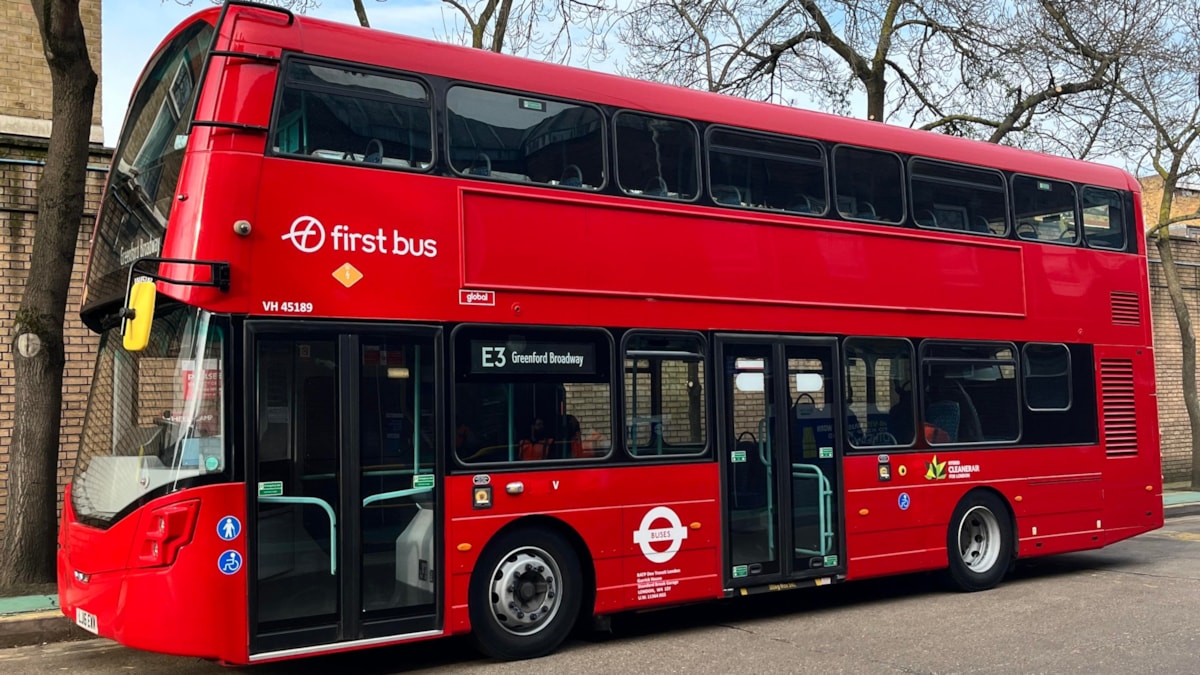
Transport for London (TfL) has revealed details of phase two of its Bus Safety Standard which sets out requirements for buses entering service in the capital between 2027 and 2033.
The work follows the introduction of the Bus Safety Standard in 2018 and is part of TfL’s Vision Zero target for no one to be killed on, or by, a bus by 2030, and to eliminate all deaths and serious injuries from its transport network by 2041.
This latest version of the standard is based on four key principles: safe driving, crash avoidance, crash protection, and post-crash safety.
Technology to combat driver fatigue and distraction will also be introduced for buses entering service in 2027. Already trialled on 400 buses, the system will provide visual, audio and touch alerts if it detects the driver is fatigued or distracted.
Part of the first set of requirements to be introduced is a redesigned driver cab, with improved comfort, inclusivity and security.
By 2030, a new Moving-Off Information System will intervene to prevent the bus pulling away if a pedestrian or cyclist is immediately in front.
Also due to be introduced in 2030 is the Advanced Emergency Braking system, which will be enhanced to extend protection for turning scenarios.
Meanwhile, new acceleration suppression technology is designed to help stop drivers accidentally pressing too hard on the accelerator pedal.
Buses entering service in 2030 will also be required to have bridge-strike prevention measures.
Lorna Murphy, TfL’s Director of Buses, said: “We continue to put safety at the heart of everything we do on London’s bus network and are determined to meet our Vision Zero goal of eliminating death and serious injury across all forms of transport.”