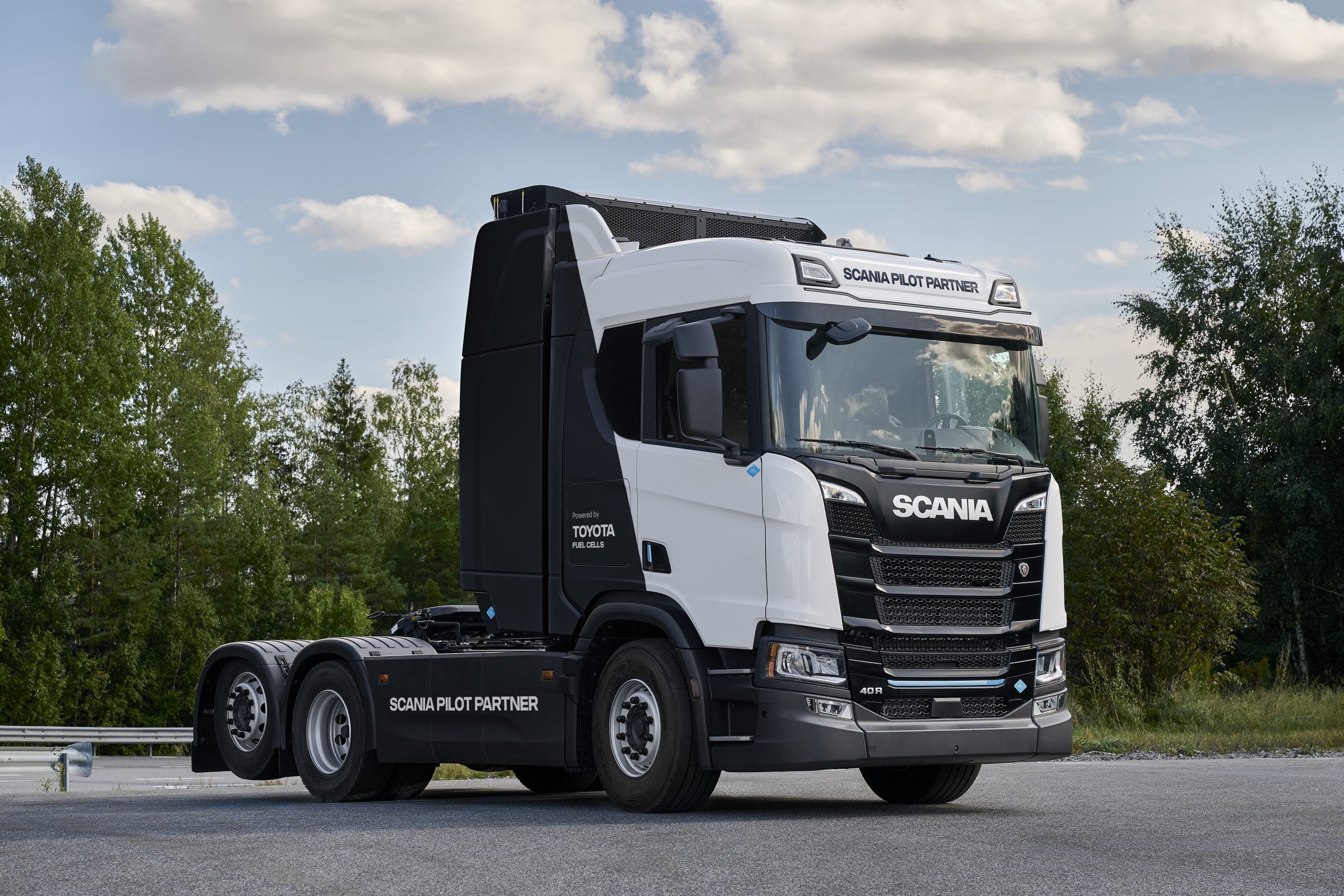
Toyota and Scania have formed a partnership to develop hydrogen fuel cell systems in heavy-duty vehicles, and gather data on their technical performance, operational efficiency and total cost of ownership.
Under the partnership, Toyota will supply its latest, third-generation fuel cell system, which delivers 300kW of power in a compact design, for 40 HGVs in Scania’s Pilot Partner programme.
This programme brings Scania together with selected customers to evaluate a wide range of sustainable transport technologies – including the hydrogen fuel cell system – under real operating conditions.
The first vehicle is due to begin operating in early 2027.
Hiroki Nakajima, Executive Vice President, Toyota Motor Corporation, said: “We believe heavy-duty transport is key to building hydrogen demand and infrastructure.
“Furthermore, we believe hydrogen is the right solution for demanding heavy-duty applications, where long range, high utilisation and operational efficiency are essential.”
Sara Forsberg, Chief Technology Officer, Scania, said: “Through our Pilot Partner programme, we work with selected customers to test new technologies in actual use cases, learn from their experience and develop our solutions further.
“This collaboration will give us valuable insights into the opportunities and challenges associated with hydrogen fuel cell technology in heavy-duty transport.”
Meanwhile, truck manufacturers, energy companies and technology suppliers are teaming up in Germany in an effort to accelerate the commercialisation of hydrogen-powered trucks.
Daimler Truck, Volvo Group, Toyota Motor Corporation, Bosch, Air Liquide, TotalEnergies, Teal Mobility and MB Energy are among the companies involved in the initiative, which aims to create an integrated hydrogen ecosystem for heavy-duty transport.