Artificial intelligence (AI) technology has the potential to transform operations for transport companies, their employees and customers, with many currently investigating the latest products or adopting them.
Operators have been aware of the potential of AI to improve planning, safety, fleet management and efficiency for a while, but there are now a range of systems available on the market, ready to be integrated within their businesses.
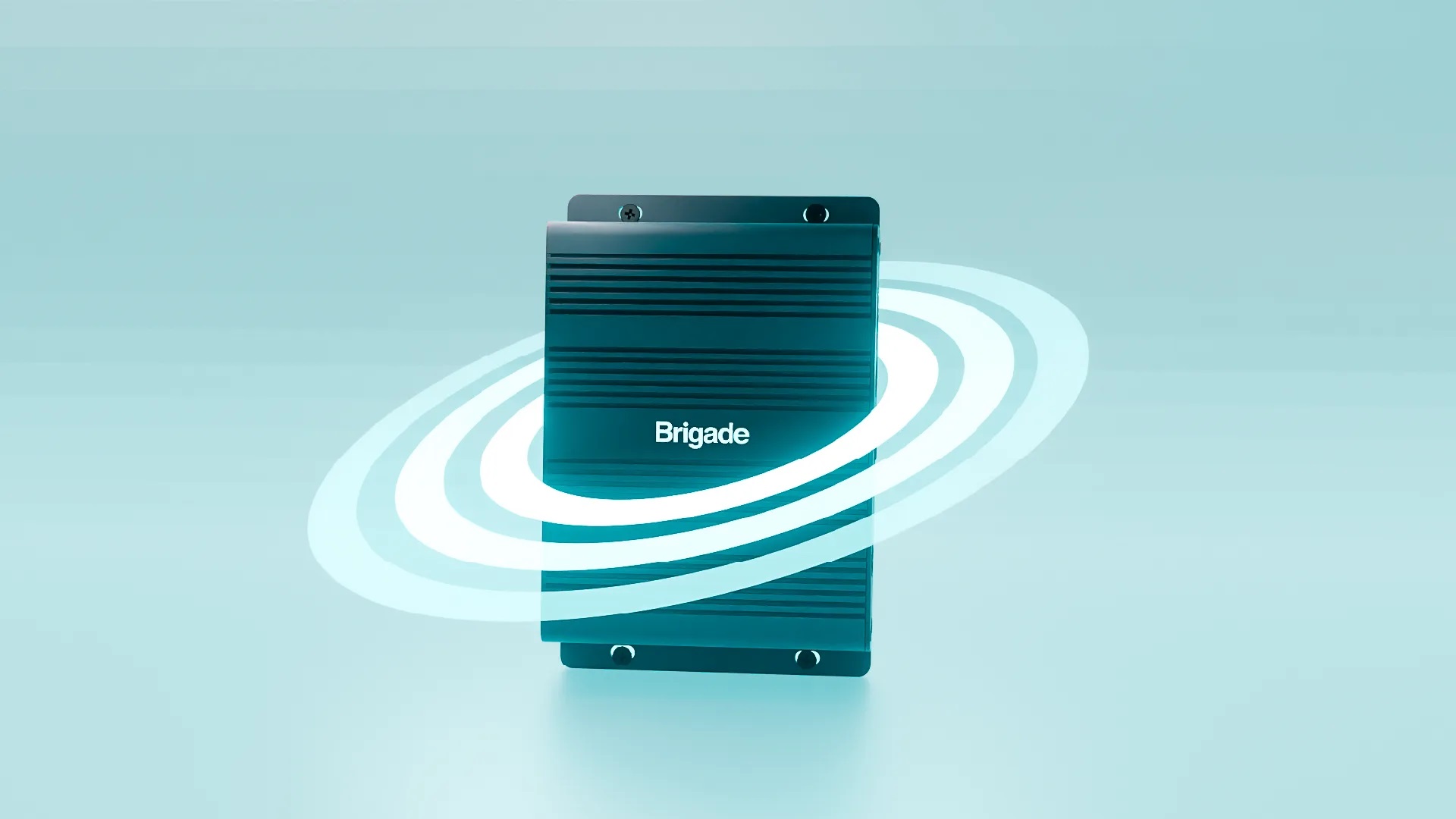
For example, Brigade Electronics offers the AI Human Form Recognition (HFR) Box, an adapter unit which bridges the gap between traditional camera technology and AI safety systems.
According to the firm, it transforms existing vehicle camera systems into intelligent pedestrian detection solutions without the need to replace existing hardware.
Originally designed for vehicles working on building sites, the AI HFR Box is installed between a vehicle’s camera and monitor and uses software to process video and identify the presence of vulnerable road users (VRUs), such as pedestrians and workers, triggering visual and audible notifications.
The system is plug-and-play and supports both composite video baseband signal (CVBS) and analogue high definition (AHD) signals, maintaining compatibility across a broad range of older, as well as modern fleets.
It has multiple camera input to support wider field coverage, ideal for larger vehicles or high-risk zones.
With the AI HFR Box, minimal installation time and no system reconfiguration mean vehicles can be upgraded without lengthy downtime.
There is also broad market suitability, with the system applicable across construction, waste, municipal, road haulage and other commercial sectors.
Robert Timms, Product Manager at Brigade Electronics, said: “The AI HFR Box is a unique solution which turns any commercial vehicle’s standard camera system into an intelligent human form recognition detection tool.
“It is a significant step forward in vehicle safety which is affordable, sustainable and efficient.”
Meanwhile, Brigade’s Backeye 360 AI camera system with HFR is a 360-degree high-definition four-camera system enhanced by artificial intelligence technology to identify humans and effectively eliminate all blind spots.
Providing a comprehensive view of the surrounding area of a vehicle in a single image, Backeye 360 AI audibly and visually alerts the driver when a person is detected using artificial intelligence.
Timms added: “Backeye 360 AI uses four strategically positioned cameras to capture a complete view around the vehicle. Advanced image processing stitches these images together to create a single bird’s-eye view displayed on the monitor.
“At the same time, embedded artificial intelligence analyses the camera feeds and identifies human forms within predefined detection zones. When a person is recognised, the system highlights them on-screen and alerts the driver.
“This combination of visibility and intelligent detection helps drivers make more informed decisions during manoeuvring, reversing and low-speed operation.”
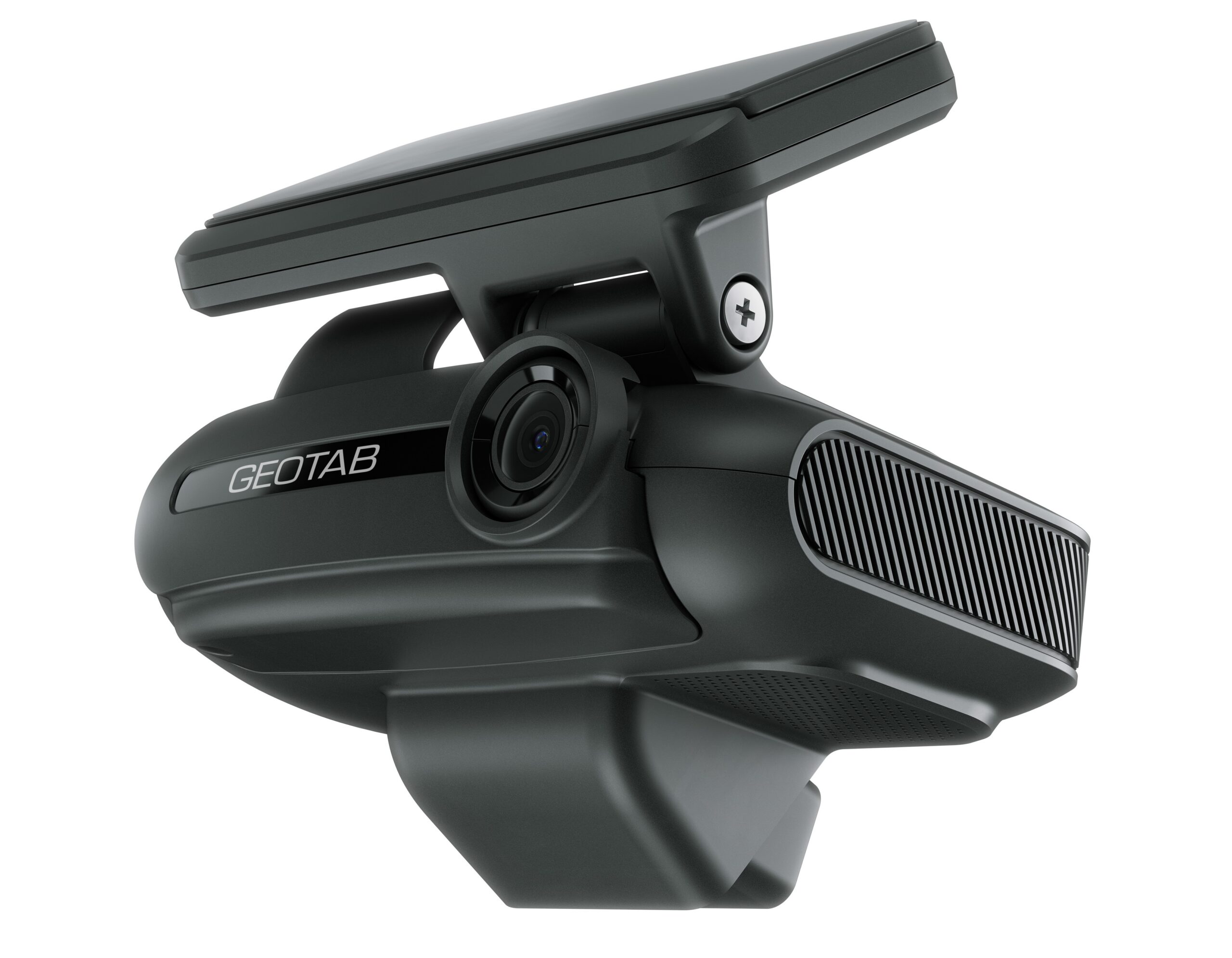
Meanwhile, Geotab has launched the Go Focus Pro, a new AI-powered dash cam designed to provide 360-degree visibility and predictive risk detection for commercial fleets.
The Go Focus Pro integrates directly with the MyGeotab platform and supports up to five weatherproof auxiliary cameras, enabling full coverage of the vehicle, cargo area, blind spots and the trailer.
It uses predictive AI models to detect hazards including forward-collision risks, traffic-light violations and vulnerable road users in blind spots.
Also, in-cab audio alerts allow drivers to self-correct in real time, while managers can assign and track coaching sessions through the platform.
Extra features include an automated driver score to identify repeat risky behaviours, Smart Sequence event filtering to reduce administrative review time, AI-based driver assignment using Radio Frequency Identification (RFID), Near Field Communication (NFC) or facial recognition, and a zero-latency live feed to assist with low-speed manoeuvres such as reversing and docking.
Geotab said the Go Focus Pro operates through a fully AI-driven pipeline without systematic human video review.
Claude Hochreutiner, Principal Video Programme Manager at Geotab, said: “Go Focus Pro brings real-time intelligence into the cab, giving drivers greater awareness and confidence while enabling fleets to take a more proactive approach to safety.”
Also, Samsara has launched a Smart Compliance platform that enables a proactive approach to tachograph compliance, helping organisations manage critical elements of driver safety and regulatory workflows in one place.
Samsara said its platform eliminates the need for fragmented, legacy systems by seamlessly consolidating AI-based safety, telematics, and comprehensive compliance into a single experience.
This includes in-cab alerts, with real-time warnings to help drivers avoid errors and stay safe before an incident occurs.
There is also a centralised dashboard which means organisations can manage everything from tacho downloads to infringement resolution in one central location, increasing speed and accuracy.
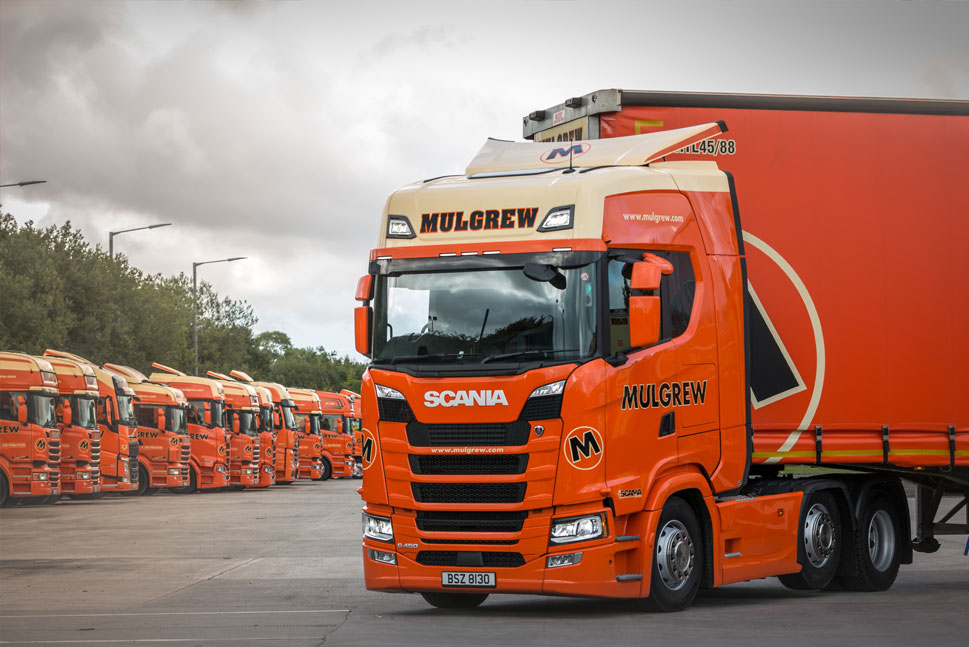
UK-Irish operator Mulgrew Haulage has used the Samsara system to cut driver hour infringements by 20% and unsafe driving by 72%.
Praveen Murugesan, VP of Engineering EMEA said: “Our customers’ operations in Europe are some of the most complex in the world, and there is a huge opportunity to use AI to spot risks and avoid infringements.
“Smart Compliance takes the guesswork out of compliance by automating the toil that office teams grapple with every day.”
In response to the problem of vehicle theft, Iveco has introduced Stolen Vehicle Assistance, which integrates automated detection technologies based on artificial intelligence and geofencing.
Powered by Targa Telematics, virtual geographic boundaries can be defined, unusual movements can be detected, and once a theft is confirmed, recovery procedures can be activated without delay.
The service is also supported by AI assistants, capable of analysing vehicle data and operational context, correlating events and suggesting the most effective actions for operators to take.
Following a validated alert, a 24/7 the Iveco Security Centre immediately coordinates with the relevant authorities, manages vehicle tracking and supports the recovery process.
This end-to-end approach reduces response times, increases recovery rates – up to 90% – and helps limit the operational and insurance-related consequences of theft.
Spain served as the trailblazer for the service, which has now been deployed across all European countries.
Alberto Buttiglieri, Product Manager for Safety and Security Services at Iveco said: “With Stolen Vehicle Assistance, we help customers react quickly when a theft occurs and recover their vehicle as fast as possible.
“By combining factory fitted connectivity, AI driven detection and a 24/7 Security Centre, we turn alerts into coordinated recovery actions that keep vehicles available and businesses running.”