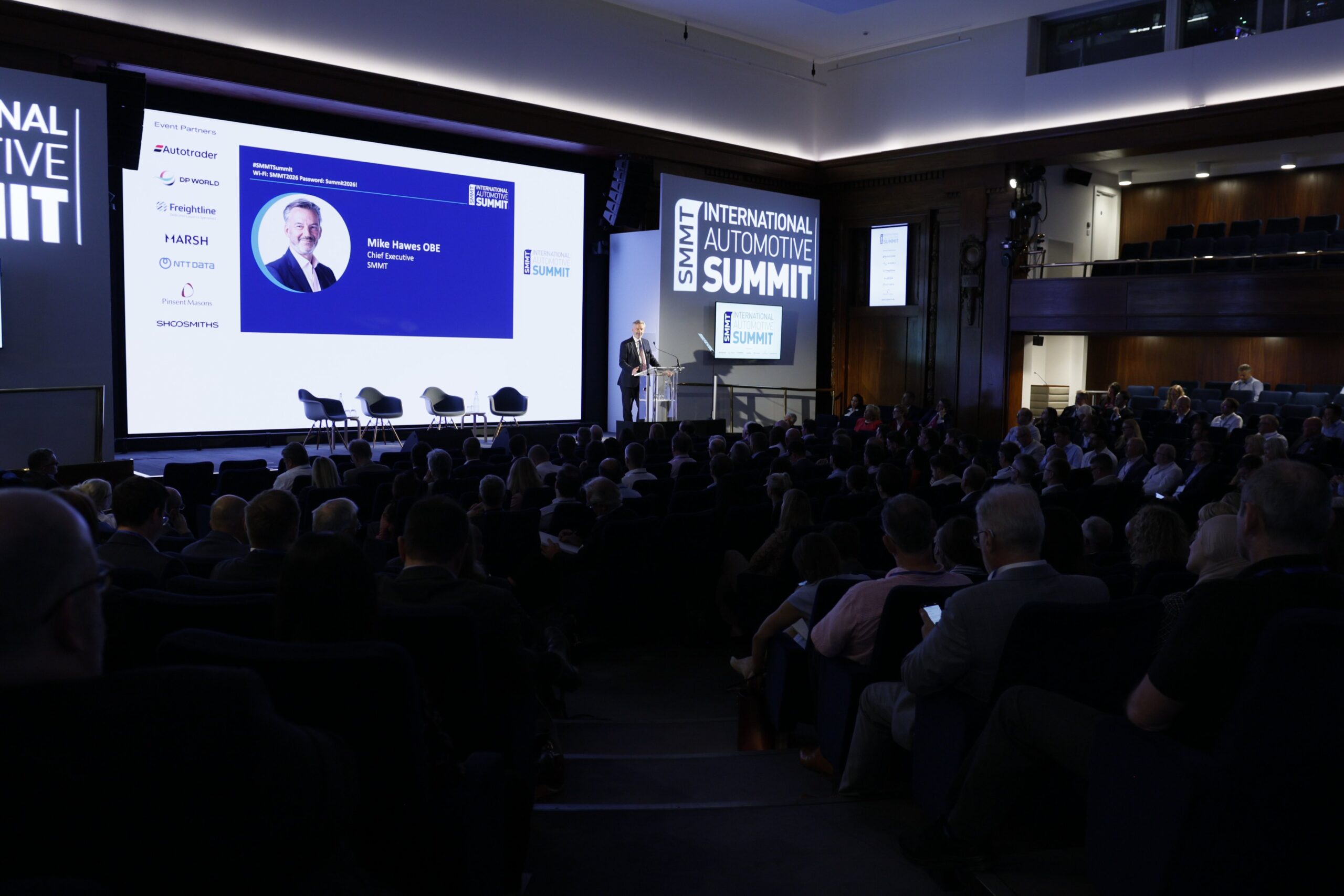
SMMT’s annual International Automotive Summit, held this week, gathered industry leaders, policymakers, and supply chain experts to address the challenges and opportunities facing the automotive industry.
Key debates at the event at the IET in London covered the urgent action needed to support a sector under pressure from mounting costs, global protectionism and rising risk of disinvestment.
The conference heard three major issues need to be addressed urgently: reform of the Zero Emission Vehicles (ZEV) Mandate, securing fair UK-EU trade, and the need to cut the underlying energy and business costs that shape investment decisions.
With regards to the ZEV mandate, manufacturers outlined their commitment to decarbonisation and net zero, having invested billions of pounds in new zero emission technology and models.
However, regulation is running ahead of natural market demand, forcing companies to subsidise the market at unsustainable levels, undermining residual values and weakening the UK as both a market and a manufacturing base.
The pressure is expected to increase sharply from January 2027, when annual market sales targets for battery electric vans rises to 34%, before climbing again to 46% in 2028.
Current market share for battery electric vans is 9.5%.
Speaking at the Summit, Mike Hawes, SMMT Chief Executive, said the ZEV mandate, in its current form, is costing jobs, profitability and creating significant risk to UK investment.
He added: “It needs to be reviewed – urgently. Not abandoned, but amended to reflect reality.
“Reforming the ZEV Mandate is not about weakening ambition; it is about making the transition achievable, protecting investment and ensuring the UK remains a place where automotive businesses can build, sell, export and grow.
“The window for action is closing, which means we cannot wait for lengthy discussions.”
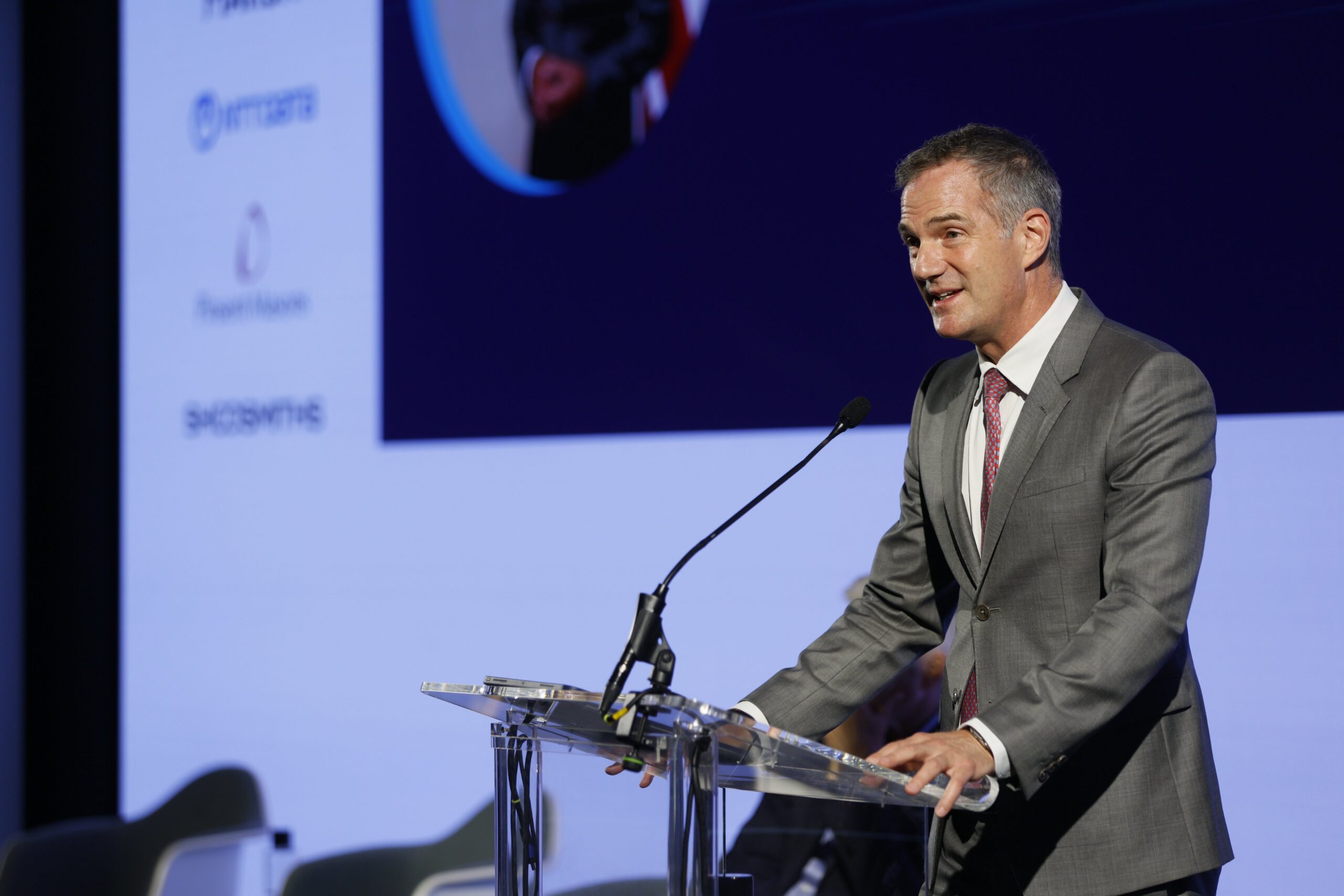
Peter Kyle MP, Secretary of State for Business and Trade – and President of the Board of Trade – told the conference that a review of the current ZEV mandate will be completed as soon as he can possibly manage it.
“The consultation on the ZEV mandate has to be balanced, acceptable, affordable, and effective for the British automotive industry and to the UK wider economy”, he said.
“Make no mistake, we are committed to the EV transition and the creation of world-leading EV manufacturing ecosystems here in the UK.”
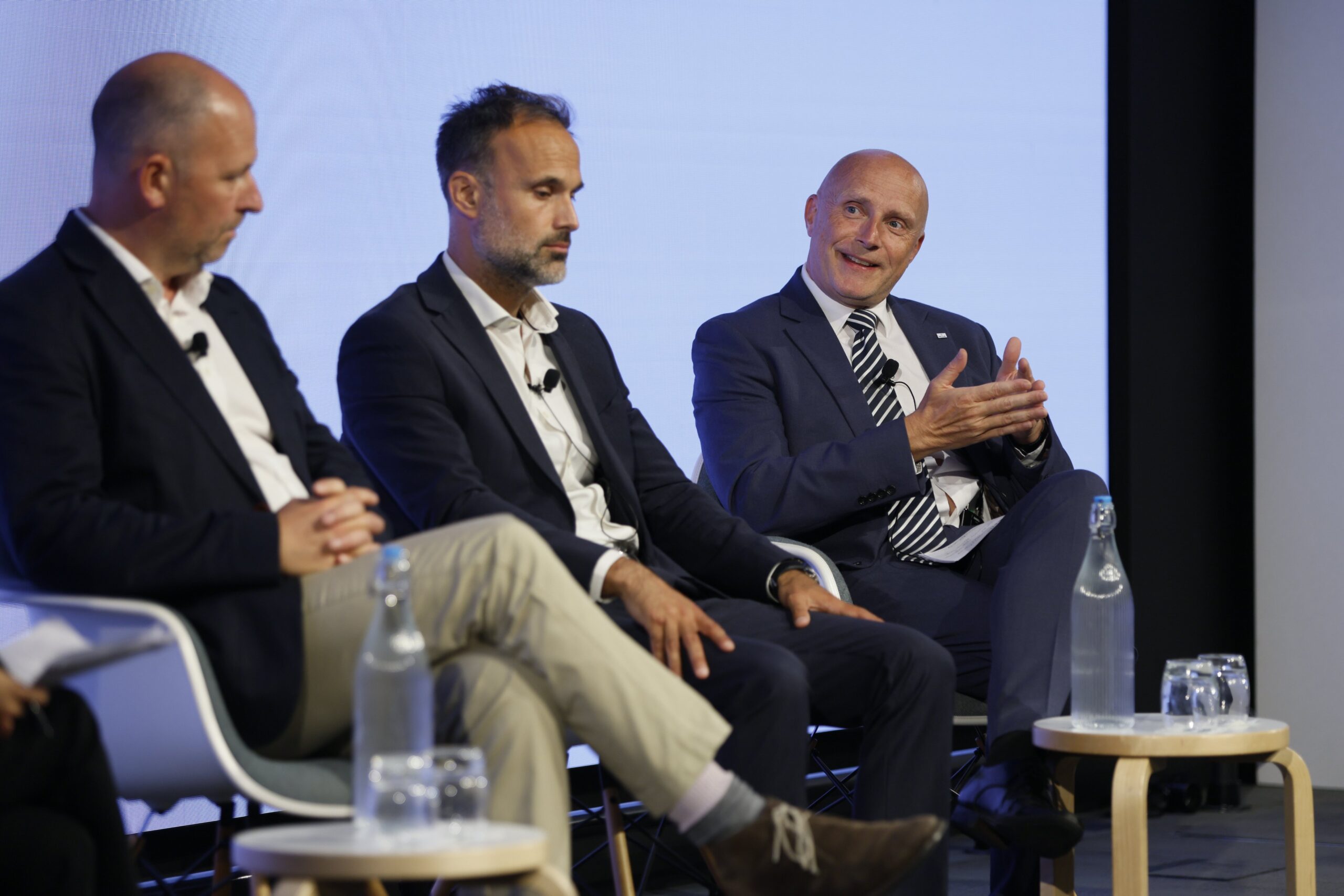
An expert panel at the event also considered what measures might help fuel both the market as a whole as well as ZEV take up
David Hammersley, Head of F&I and Compliance, National Franchised Dealers Association, told attendees that the trajectory of demand for EVs has not kept pace with the keenness of the automotive industry for the transition.
He added: “As an industry, we’ve spent our whole lives chasing targets, but consumers don’t buy targets, they buy what they can afford.”
Renault offers a range of electric vans including the new Trafic E-Tech which is built on a dedicated skateboard platform.
Adam Wood, Managing Director Renault brand UK and Country Head, said it is “common sense” to review the speed of the ZEV mandate trajectory to make sure it is sustainable for the whole industry.
“We’re not debating, the destination, it’s more that speed and how we get there”, he added.
Those attending the summit heard how progress in the sector has been made, including £4 billion of DRIVE35 funding and action on industrial electricity costs through the British Industrial Competitiveness Scheme (BICS)
There have also been important trade deals with the US, India and the Gulf Cooperation Council countries, more grants to incentivise EV take-up, as well as regulation to support self-driving vehicles.
A panel on AI, automated vehicles and global technology discussed how the pace of change is reshaping the automotive market.
US-based company Waymo is looking to introduce its driverless taxis for hire on London’s roads and is trialling vehicles with trained human safety drivers behind the wheel.
Michael Holland, Chief of Staff – Product & Strategy, Wayve said: “Our approach is simple: learn from real-world data and build systems that generalise across environments.
“We’ve shown you can train in one geography and achieve the same performance in another. The goal is proving we’re safer than a careful human driver – that’s the bar.
“Self-driving technology has the potential to open up mobility to millions more people.”
Meanwhile Agratas, Tata Group’s global battery business, is currently building a £4 billiion gigafactory at the Gravity enterprise zone between Puriton and Woolavington in Somerset.
Construction on the factory has begun, and the factory is expected to begin operating in late-2027.
Karthik Selvan, Chief Procurement Officer, Agratas told the summit: “We are not here just to make factories to provide battery capacity. We are here to build capabilities in clean energy.
“We have two labs, Oxford and Bangalore. What really differentiates our approach is how we integrate this capability into execution”
Leyland Trucks operates from one of Europe’s most advanced truck assembly facilities at its assembly plant in Lancashire.
Employing about 1,300 people, it manufactures a range of DAF vehicles, exporting around 40% worldwide.
From January 2027, tougher rules of origin under the EU-UK Trade and Cooperation Agreement could trigger a 10% tariff on some 70% of battery electric and plug-in hybrid models traded across the channel.
Phil Jones, Managing Director of Leyland Trucks, said: “Regulatory certainty is vital for UK manufacturers who export into the EU market.
“At the same time government incentives are an important part of getting operators to make the switch to electric trucks.
“However, some operators are also finding it hard to get connections for electric infrastructure in their depots, so that is another issue which needs to be addressed.”
Hawes said the government’s Modern Industrial Strategy had laid important foundations for the sector but warned that swift policy action is now needed to ensure that it can deliver on growth, decarbonisation and investment ambitions.
He added: “UK Automotive can drive growth, innovation and net zero, but only if the right decisions are taken now.
“The Industrial Strategy sets out a plan, but delivery is now what matters. We need open trade with Europe, competitive conditions at home, and a realistic route to grow zero emission vehicle uptake.”