
- UK auto makers increase on-site renewables generation by more than a third in one year.
- Record 80.4GWh generated by British manufacturing plants – enough to power 32,000 homes and cut 14,000 tonnes of carbon.
- Progress extends across the sector with growth in zero-emission model production, waste reuse and recycling, and apprenticeship rollout.
- Further gains depend on faster grid connections, simpler planning and cheaper low-carbon energy, as sector invests in greener factories for greener vehicles.
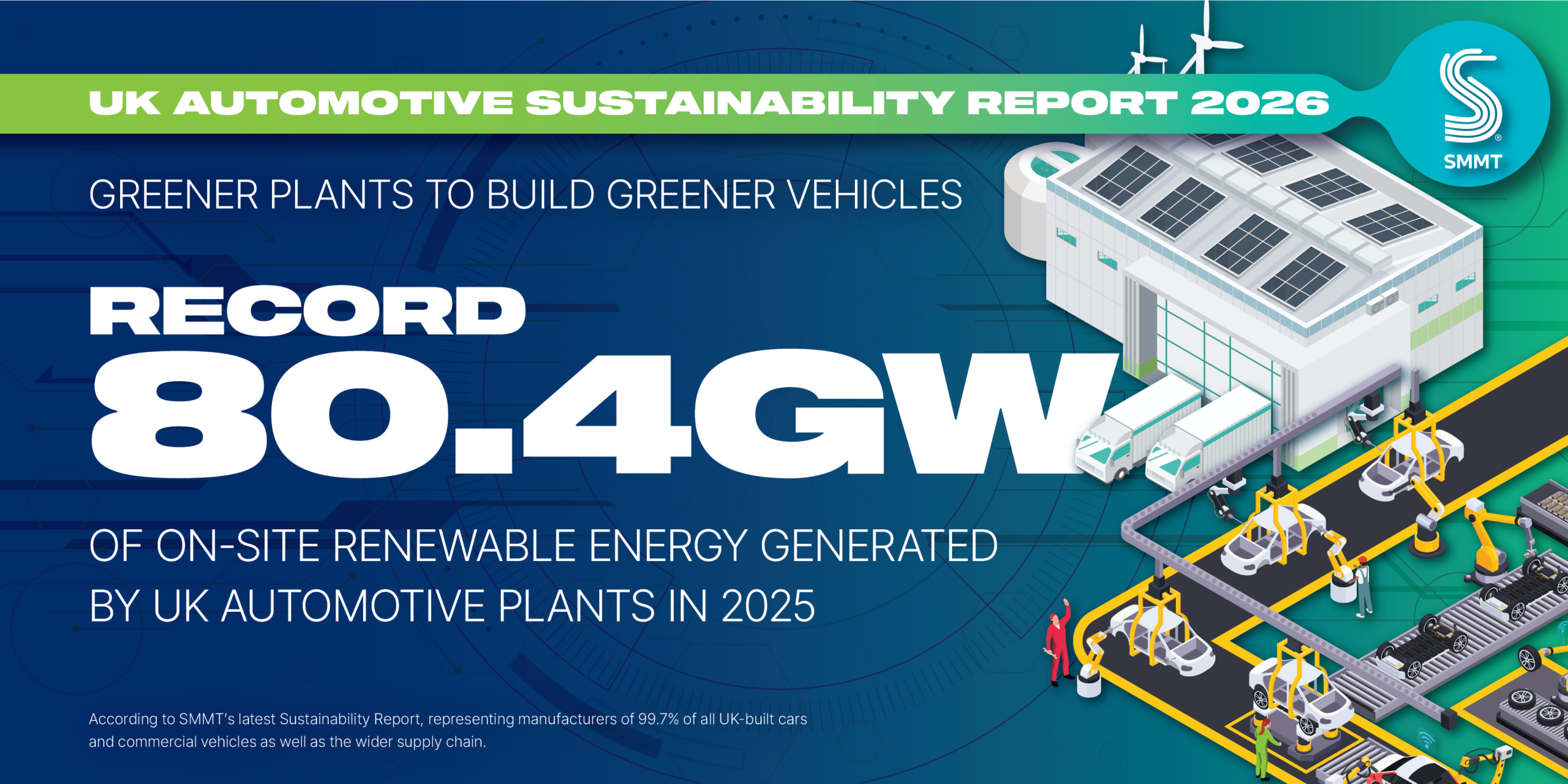
UK vehicle makers are accelerating investment in sustainable production with on-site factory renewable energy generation rising by more than a third last year to reach record levels, according to new analysis from the Society of Motor Manufacturers and Traders (SMMT).
SMMT’s latest UK Automotive Sustainability Report, published today, shows the sector’s on-site renewables generation rose 36.0% to 80.4GWh in 2025 – enough to provide more than 32,000 British homes with electricity for a year1 and removing around 14,000 tonnes of CO2 from production.2 The analysis, representing manufacturers of 99.7% of all UK-built cars and commercial vehicles as well as the wider supply chain, reflects huge industry investment to cut carbon, reduce resource use and build greener plants for greener vehicles.3

The progress is part of a wider sustainability drive across the industry. In addition to renewables generation, more than a third (36.5%) of all industry’s electricity was supplied through green energy from the grid last year, while more than 93% of manufacturing waste was reused or recycled. The broader industry is also bringing more zero emission vehicles to market – with more than 160 models on offer and almost half a million (470,000) new battery electric cars registered in the UK in 2025.
Meanwhile, investment is also supporting people, with UK automotive apprenticeship and trainee numbers up almost a third to more than 6,000 roles, helping build the skills needed for net zero and a more circular economy.
Manufacturers want to go further, but scaling on-site renewables generation is not straightforward. It requires complex planning, substantial upfront capital and grid reinforcements, with the largest projects facing connection waits of up to 15 years.4 Removing these barriers would enable more factories to generate their own clean power, further cutting embedded carbon in UK-built vehicles and strengthening Britain’s appeal as a competitive, low carbon manufacturing location.
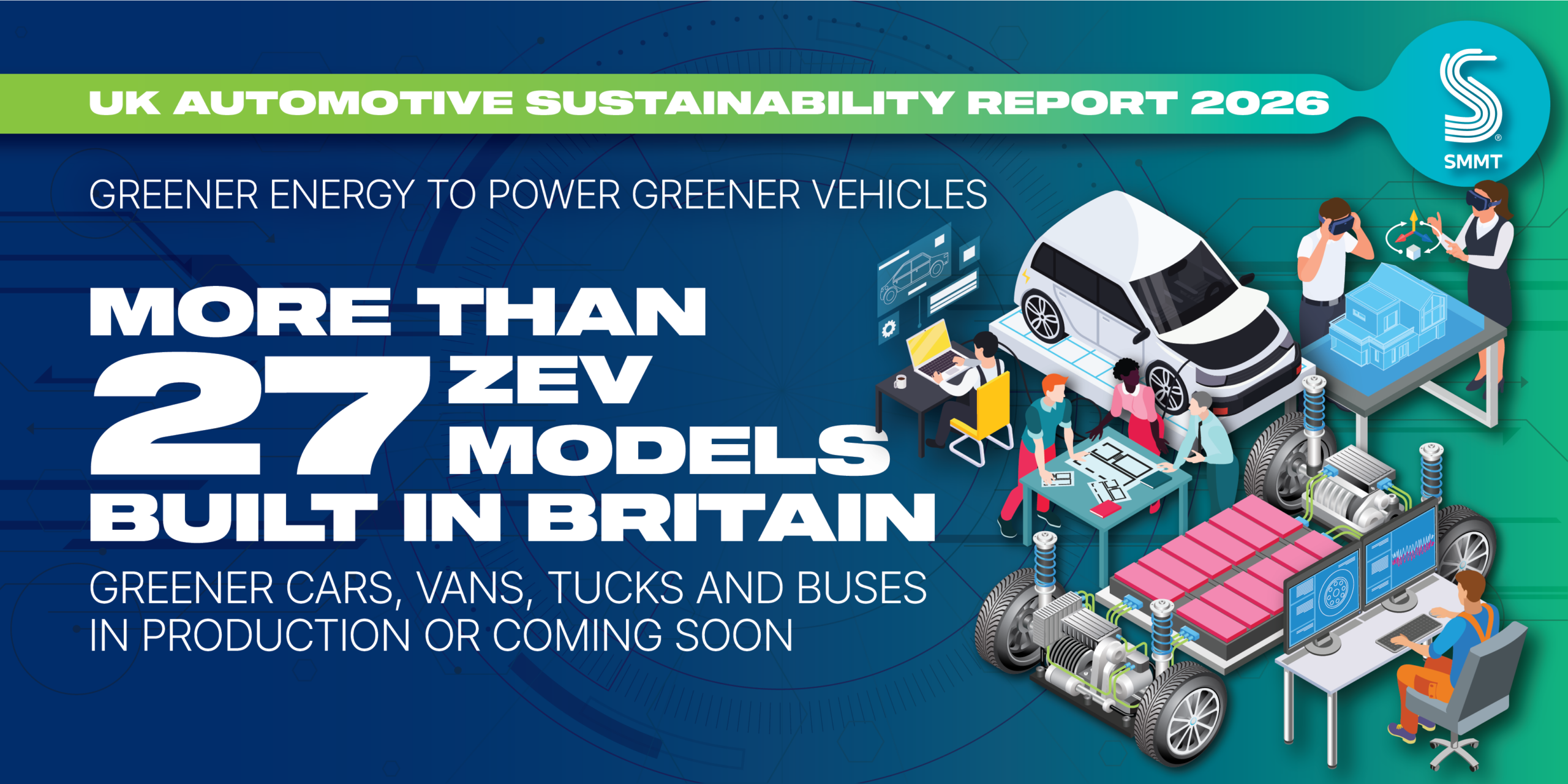
The grid must also decarbonise faster and more affordably if the sector is to build the next generation of electrified vehicles in volume. EV production is more energy intensive than conventionally fuelled vehicle production and, with 27 zero emission models already in or announced for UK production, manufacturers need reliable access to low-carbon electricity that is internationally competitive. Faster grid upgrades, clearer connection pathways and reforms to the way electricity costs are set would help ensure that green power is accessible and affordable.
Cost remains a critical issue. Renewables generation helped manufacturers save £20 million on their annual energy bills last year, but those savings are dwarfed by UK industrial electricity prices that are more than double (115%) the European average,5 having surged since 2019 when UK costs were around 65% higher. The British Industrial Competitiveness Scheme will provide important support, cutting electricity costs by up to 25% for eligible businesses,6 but UK industry as a whole is still expected to face costs some 60% higher than the European average.
A more holistic approach is therefore needed, accelerating grid infrastructure, streamlining connections for renewables projects, decoupling electricity prices from the international price of gas, and reforming grid network charges and standing charges. Together these measures would help unlock further investment in decarbonisation, renewables generation and domestic capability – supporting government’s Industrial Strategy ambition to restore the UK to a 1.3-million vehicle and ZEV manufacturing hub by 2035.
Mike Hawes, SMMT Chief Executive
The UK automotive industry is investing significant amounts to try and remain competitive, innovating to decarbonise from well to wheel and creating greener factories for greener vehicles in every nation of the UK. But ambition alone cannot deliver sustainability at the pace needed. Manufacturers need faster connections, more low-carbon power and energy costs that are internationally competitive. With the right conditions, industry can go faster and further, delivering investment, jobs, economic growth and decarbonisation for generations to come.
SMMT’s Sustainability Report, now in its 27th year, is an annual benchmark detailing the UK automotive industry’s progress toward net zero, circular economy goals and broader environmental, social and economic metrics. Launched in 2000, it was the first ever sustainability report by any UK industry and remains an important reflection of the sector’s long-term commitment to delivering decarbonisation, resilience and prosperity.
Notes to editors
- Ofgem analysis from April 2026 shows medium single-rate electricity consumption is typically 2,500 kWh per year. ofgem.gov.uk/consultation/review-typical-domestic-consumption-values
- SMMT, UK Automotive Sustainability Report 2026.
- At least 13 zero emission (ZE) cars, four ZE vans, three ZE trucks and seven ZE buses are either currently being built in the UK or have been announced to enter production.
- DESNZ, UK Government, March 2026: gov.uk/government/news/government-to-tackle-speculative-demand-grid-connection-requests
- UK Government, International Energy Price Comparisons, May 2026 data covering July-December 2025: assets.publishing.service.gov.uk/media/6926dbebce50d215cae95ff6/table_541.xlsx
- www.gov.uk/government/news/government-cuts-electricity-bill-for-10000-manufacturers-in-boost-for-uk-competitiveness