Following the opening of the second window of the Government’s Depot Charging Scheme (DCS), fleet operators are now able to apply for a share of £38m to install depot chargers for their electric commercial vehicles.
The scheme seeks to promote the growth of zero emission vehicles (ZEVs) – trucks, vans and coaches – at a critical moment, with the latest application window recognising that operators cannot invest confidently in such vehicles without somewhere practical and affordable to charge them.
This second slice of the government scheme will fund 60% of charge point and civil costs – down from 70% in the first round – up to £1m across all sites.
Buses and Local Transport Minister Simon Lightwood said: “Britain’s businesses keep the country moving, and we want to help them power up for the future.
“This funding will help firms put chargers in their depots, so more electric trucks, vans and coaches can get on the road.
“By cutting the cost of installing charge points, we’re helping businesses build cleaner fleets, reducing exposure to volatile fuel prices and driving growth up and down the country.”
Applications for Window 2 opened on 11 November through the gov.uk Find a Grant portal and will stay open until midday on 26 February 2027.
These will be assessed on a first-come, first-served basis, or competitively if oversubscribed, with award decisions due by 28 May 2027.
There is no limit to the number of sites that can be applied for, but the scheme is limited to one application per organisation up to the £1m combined cap.
Successful projects will be delivered during the 2027/28 financial year and must be completed by 31 March 2028
Also, the organisation and vehicle fleet applying must have been operating in the UK for at least a year at the time of application, owning or leasing one or more depots in this country.
Meanwhile, operators must demonstrate “sufficient grid capacity on site, provide evidence of an electrification date within the project delivery window and/or share plans to upgrade power available to their chargers with additional grid supply outside of the delivery window”.
Tim Griffen, Commercial Vehicle and Bus & Coach Section Manager at SMMT, said the new round of funding is “hugely exciting news for those HGV, coach and van operators who are ready to make the switch but cannot do so” due to higher costs for infrastructure, which remain “a major barrier to viability”.
“The case for making the fleet transition is more compelling than ever thanks to massive ZEV model rollout by manufacturers, years ahead of demand, offering ever improving technology,” he added.
However, Griffen underlined there is “still a long way to go” in the transition with wider barriers including, to name a few, “improved model affordability, lower energy usage costs, simplified infrastructure planning, fast-tracked grid connections, and rapid rollout of public charge points for larger vehicles”.
“With new ZEV markets still in an early adoption phase, government regulation must reflect real-world conditions to ensure the transition is viable, for operators and industry alike.”
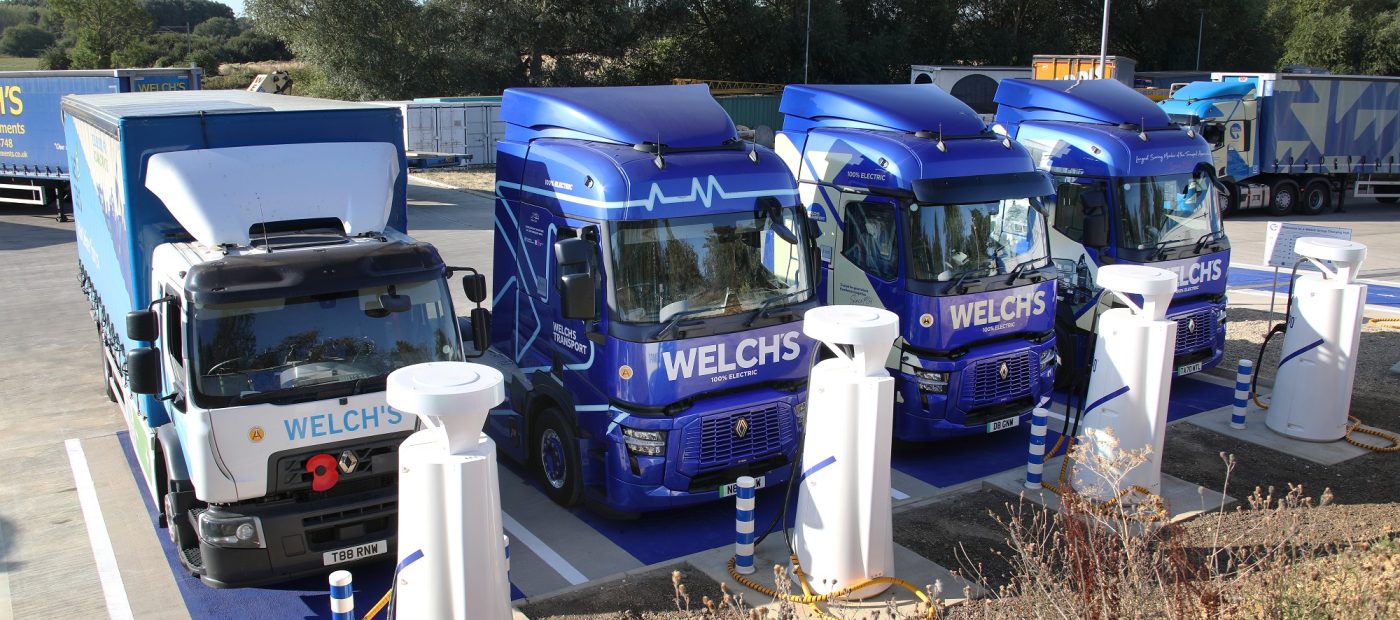
Aymeric Larcher, Managing Director of Renault Trucks UK & Ireland, said installing the charging facilities needed to operate electric trucks represents a substantial investment, and for many operators, it is one of the main barriers to making the switch.
He added: “With more than 3,500 Renault Trucks electric vehicles having collectively covered over 130 million kilometres in real-world conditions, electric trucks are already proving themselves across a wide range of operations.
“But having the right charging infrastructure in place is as important as the right vehicle.
“This funding will help more businesses invest in the depot charging facilities they need, whether introducing electric trucks and vans for the first time or expanding their existing fleets.
“It’s a positive signal to the industry and an important step in making electric trucks a more accessible commercial choice.”
Further funding rounds are planned for 2028/29 and 2029/30, with timings and grant rates expected to be announced during 2027.
However, the government has indicated that grant rates are expected to reduce over the lifetime of the programme as charging infrastructure becomes more affordable.
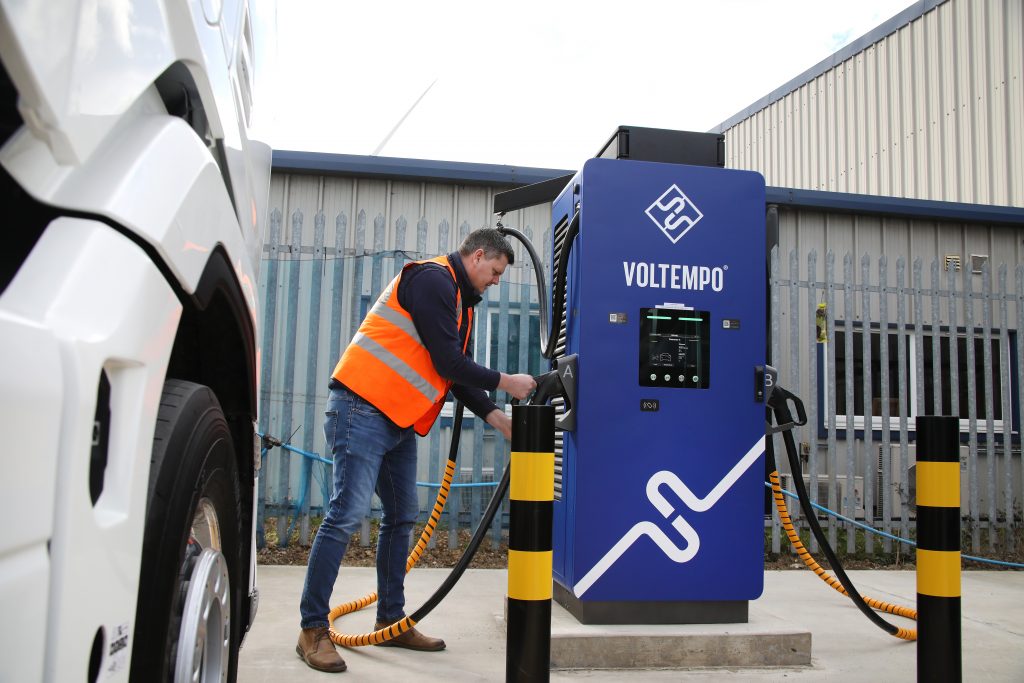
Megawatt fleet charging specialist Voltempo has already helped several operators install charging infrastructure from previous DCS rounds.
For example, earlier this year, the company delivered a high-power charging solution, including a Rolec UltraCharge 400 unit with dual CCS2 connectors, charge monitoring, and two dedicated charging bays at the headquarters of Bartrums Haulage in Eye, Suffolk.
As an early adopter of electric vehicles, Bartrums already operated a Volvo FH Electric on bulk tipping work, which was initially charged off-site at a customer’s premises.
However, the latest installation has supported the addition of further electric trucks to Bartrums’ fleet, including two Mercedes-Benz eActros 600 tractor units.
Voltempo managed the project from design and planning through to installation and grid connection, providing a single point of contact throughout. This included ensuring the application for the DCS funding was successful.
Simon Smith, CEO of Voltempo, said: “Getting chargers in the ground is only half the story. Energy costs, grid connections and making better use of that infrastructure are critical to getting the economics right.
“By bringing fleet demand together, we can secure cheaper, more predictable energy and help operators earn revenue from charging capacity that would otherwise sit unused.
“Electric freight has to pay. Charging is at the heart of that equation. Get the economics right and fleet electrification becomes a commercial opportunity.”
The latest portion of funding follows the £1bn package announced in March for the new Zero Emission Truck and Van grants for 2026/7 to help businesses switch to electric.
This provides up to 40% of the cost for heavy goods vehicles – saving up to £81,000 per truck – while securing as much as £5,000 off new electric vans.
Diverse fleets have distinct requirements: a van returning to base each evening has a different charging need compared to a long-distance HGV or a coach carrying passengers far from its depot.
Grid capacity and connection delivery must also be treated as key considerations in the process – not a time-consuming and complicated administrative challenge for operators to deal with.
Toby Poston, chief executive of the British Vehicle Rental and Leasing Association (BVRLA), said the DCS is providing valuable support to fleet operators looking to invest in electric vehicles.
He added: “Access to affordable, reliable charging infrastructure remains a significant challenge, particularly for rental businesses and smaller operators where upfront costs can be a barrier.
“Businesses need clarity to plan investment and make informed decisions about when and how to electrify their fleets.
“This is practical, targeted support that can help more operators make the transition with confidence.”
More funding for depot charging alongside defined application phases and timelines is welcome news for businesses working to decarbonise HGVs, vans and coaches.
It also recognises the important role road transport has in the UK economy and the need to make the move to electric more affordable.
Details of the Depot Charging Scheme and how to apply are online here.