With fleet operators currently drawing up plans to acquire electric vehicles, a significant number are also switching to HVO fuel for their existing diesel vehicles to help them meet short- and medium-term decarbonisation targets.
HVO – or Hydrotreated Vegetable Oil – is an advanced, renewable diesel fuel, which can be produced from waste fats and oils, that can reduce CO2 emissions from a vehicle by up to 90% compared with conventional diesel.
As a drop-in replacement for fossil diesel, it is designed to be used with the latest Euro-6 trucks, with no modifications required for existing engines.
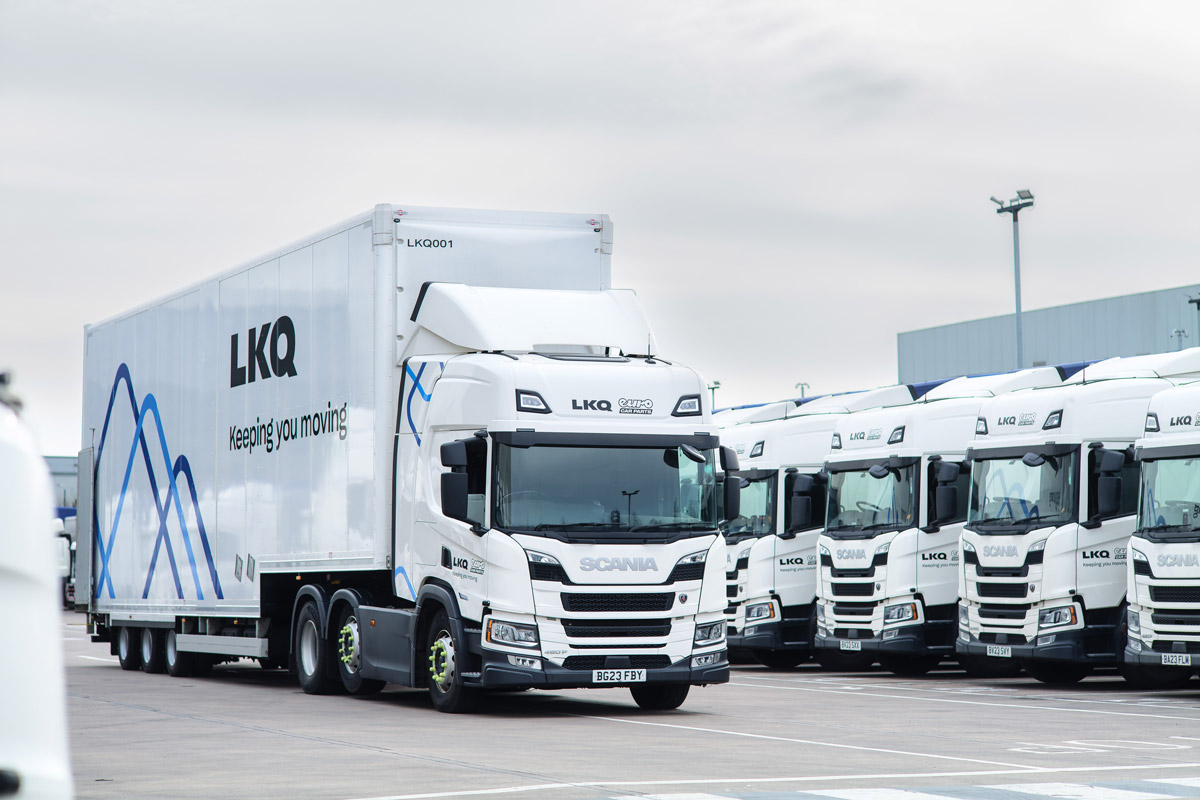
For example, LKQ UK and Ireland is currently transitioning its HGVs to run on HVO – part of a broader investment into the sustainability of its 3,000-strong delivery fleet.
The predicted saving of more than 4 million kilogrammes of CO2e per year, represents a significant contribution towards meeting the company’s goal of achieving net zero scope 1 and 2 emissions by 2050.
The trucks are part of the LKQ Euro Car Parts’ logistics fleet which completes 55,000 deliveries each day, transporting a 136,000-strong stock range from hubs in Tamworth to a network of 280 branches.
As part of its decarbonisation plan, LKQ UK and Ireland also added 30 compressed natural gas Scania tractor units to its fleet during 2024, and is currently acquiring a batch of battery electric vans.
Stewart Giles, director of group logistics at LKQ UK and Ireland, said: “The sheer mileage that our HGVs cover makes them the ideal candidate for introducing biofuel to, because of the significant carbon savings that we’re able to achieve immediately.
“Introducing biofuel works in tandem with other schemes to reduce our fleet’s emissions, enabling us to make headway towards our goal to operate sustainably at all levels of business.”
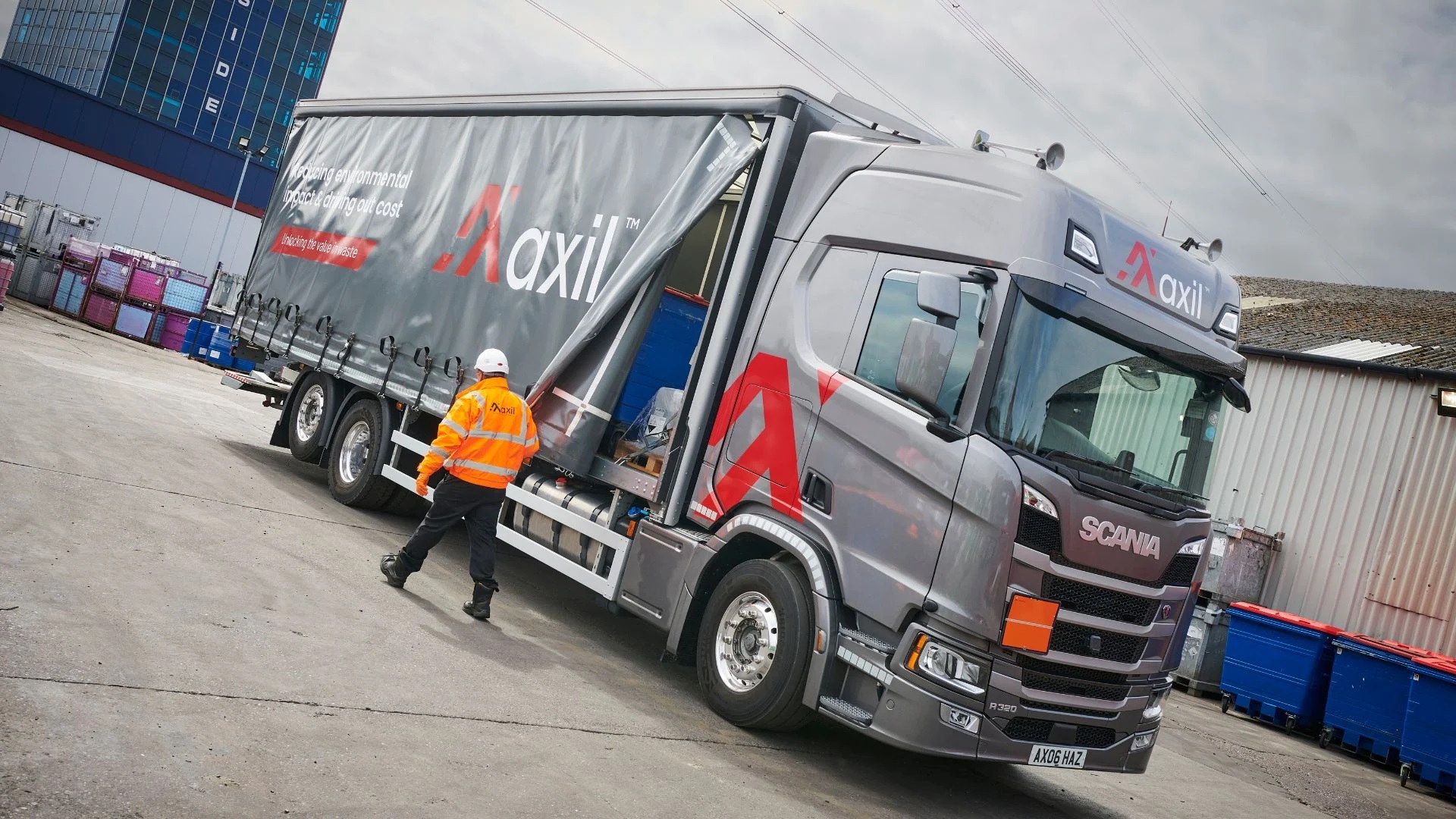
Also, waste management specialist Axil has switched its entire HGV fleet to HVO sustainably sourced from waste-derived raw materials, and containing no virgin palm oil or Palm Oil Mill Effluent (POME).
HVO fuel is fossil-free and fully compliant with EN 15940 fuel standards, as well as ISCC-certified for sustainability and traceability
In addition, the HVO also has nitrogen oxides and particulate matter emissions which is good for air quality.
This move supports the company’s 2030 carbon reduction roadmap and marks a major milestone in its broader Environmental, Social, and Governance (ESG) strategy.
The transition is also helping enhance supply chain sustainability for customers across the manufacturing, food production, logistics, and pharmaceutical sectors such as Beko Europe, CBRE, BMW Group and Lush.
Gina Rudkin – Head of Sustainability & Zero Waste said: “This isn’t just a fuel switch – it’s a strategic investment in cleaner, smarter logistics.
“By adopting HVO across our HGV fleet, we’re cutting Scope 1 emissions significantly and helping our clients reach their Scope 3 reduction goals too.
“It’s a win for the environment and a win for future-focused waste management.”
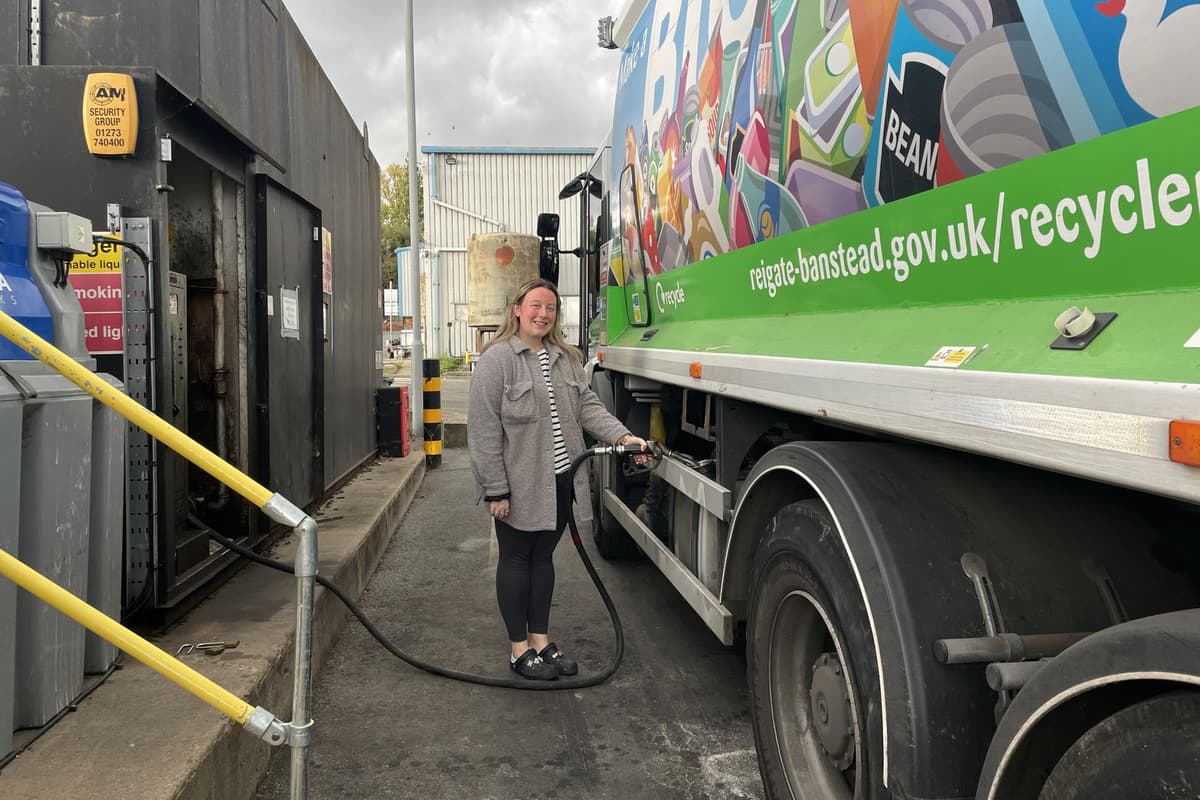
Meanwhile, Reigate & Banstead Borough Council has begun running its fleet of 28 waste collection vehicles on biofuel instead of diesel.
The switch to HVO fuel is expected to reduce the carbon emissions of each of the 26-tonne refuse trucks by at least 76% and reduce the council’s total operational carbon emissions by one quarter.
This reduction in carbon emissions will equate to about 500 tonnes of carbon saved each year, according to the council.
HVO is compatible with the council’s waste collection vehicles without any conversion costs.
The Council is also continuing to carry out trials of electric refuse collection vehicles, and currently looking to procure a viable electric garden waste collection vehicle.
Executive Member for Neighbourhood Services at Reigate & Banstead Borough Council, Cllr Hannah Avery, said: “Running our existing refuse vehicles on HVO fuel will cut our operational carbon emissions by at least a quarter.
“This allows us to take significant steps towards meeting our net zero target by 2030, while we continue the longer-term work towards replacing the waste collection fleet with electric or other low carbon alternatives.”
In a new move, ports operator DP World has launched the Low Carbon Truck Programme (LCTP) at its London Gateway and Southampton logistics hubs, offering HGV operators access to HVO.
With more than 4,000 truck visits per day at its two UK ports, DP World will support at least 500 trucks to transition to the alternative fuel, in partnership with providers Certas Energy and New Era Fuels
Hauliers will be able to access the HVO at the same cost as diesel, helping remove financial barriers to greater adoption.
The trial, which will run into 2027 for operators who regularly use DP World’s UK ports with fully laden import or export containers, aims to create a pathway for them to transition to fully electric HGVs.
Every truck that visits a DP World UK port with a loaded container more than 90 times over a three-month period will qualify for up to 5,000 litres of HVO per vehicle per port.
The low carbon fuel can be accessed either via bulk delivery to fuel tanks at truck operators’ yards or via fuel card at UK refuelling station locations.
This Low Carbon Truck Programme is funded by the Energy Transition Contribution which is levied on all Import Laden Containers transiting DP World UK port facilities
John Trenchard, Vice President for Sustainable International Supply Chains at DP World, said: “Cargo owners and freight forwarders can significantly reduce their supply chain scope 3 emissions if they use trucking companies that participate in the programme.
“This is an innovative first for the container sector and we estimate that more than 30,000 tonnes of carbon dioxide could be reduced each year if all our trucking partners register.
“Our hope is to encourage early adoption as a transitional step towards the eventual goal of electrification.”
For transport operators with diesel trucks who are preparing to purchase electric HGVs or where switches to EV or hydrogen are not yet possible, HVO is an important transitional fuel.
It is therefore heartening that the sector is increasingly choosing it as a useful stopgap solution on its journey to net zero.